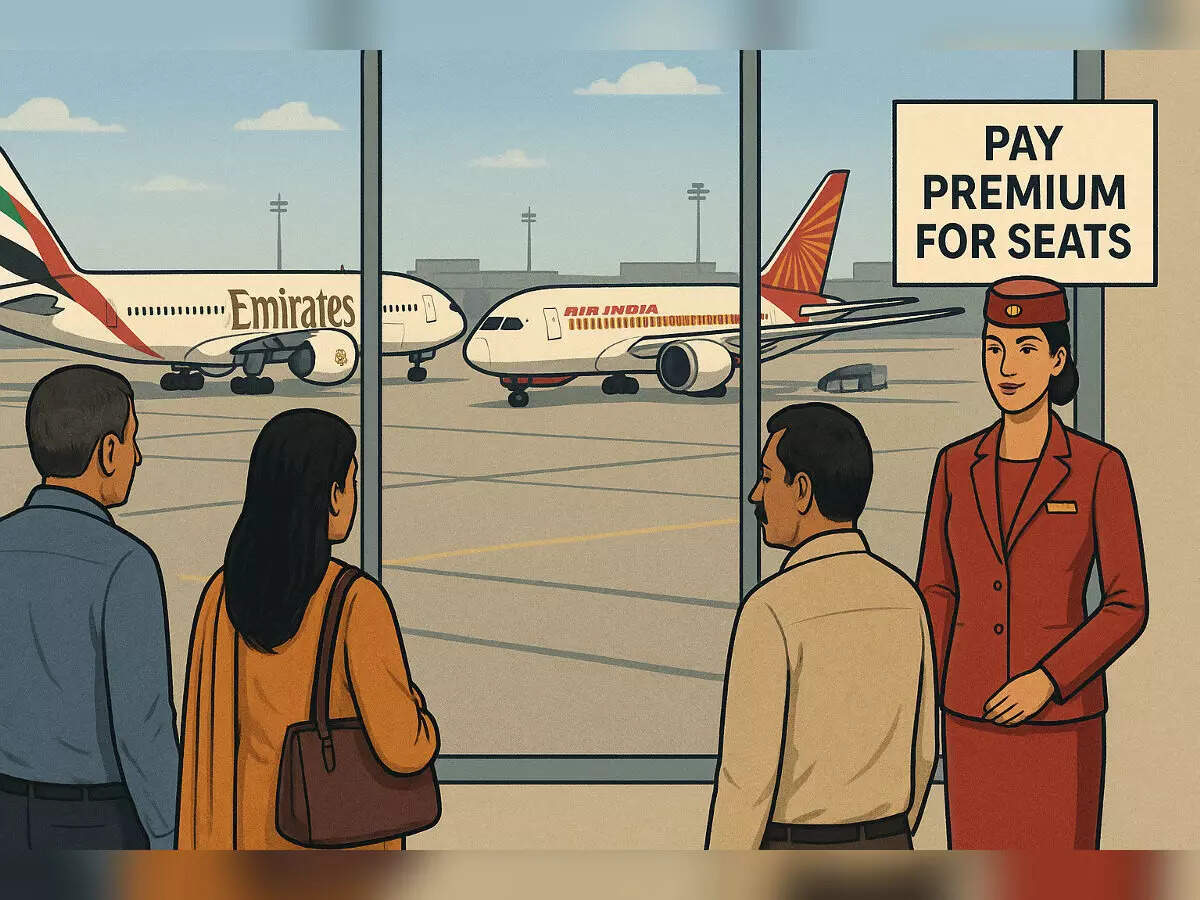
In a move that signals a pivot from rapid infrastructure growth to aggressive consumer protection, the Ministry of Civil Aviation (MoCA) has issued a sweeping set of directives aimed at restoring transparency and “emotional ease” to the Indian skies. As India cements its position as the world’s third-largest domestic aviation market, the government is now tackling the “quiet threat” of service commoditization by mandating human-centric standards across the board.The Ministry of Civil Aviation has issued a fresh set of directives through the Directorate General of Civil Aviation (DGCA), aimed at strengthening passenger convenience and ensuring uniform practices across airlines. The move outlines a significant intervention in how airlines manage everything from seat assignments to pet policies.
The latest guidelines include a mandate for airlines to allocate a minimum of 60 per cent of seats free of charge, ensure passengers on the same PNR are seated together, and introduce clearer policies for baggage categories such as sports equipment, musical instruments and pets. Airlines have also been directed to prominently display passenger rights across digital and physical touchpoints, and to communicate entitlements in regional languages.
Industry observers say the measures reflect a broader transition in India’s aviation policy—from infrastructure-led expansion to passenger-centric governance.
Over the past decade, schemes such as UDAN have significantly expanded regional connectivity, making air travel more accessible across Tier-II and Tier-III cities. Complementary initiatives like UDAN Yatri Cafés, airport Wi-Fi and passenger amenities such as “Flybrary” have further reinforced the government’s focus on inclusivity and ease of travel.
However, the rapid growth of the sector has also exposed gaps in service consistency, pricing practices and passenger grievance redressal—particularly during disruptions such as delays, cancellations and operational breakdowns.
The DGCA’s renewed emphasis on strict adherence to passenger rights frameworks is widely seen as a response to these challenges, especially in the wake of recent high-profile disruptions that affected thousands of travellers and brought airline practices under scrutiny.
The requirement to allocate a majority of seats without additional charges is particularly significant, as it addresses long-standing concerns around ancillary revenue practices, including seat selection fees that have increasingly become a source of friction for passengers.
Similarly, mandating adjacent seating for passengers under a single booking aims to address frequent complaints from families and groups who are often separated unless they pay additional fees.
The Supreme Court has termed the issue of unpredictable airfare fluctuations a “serious concern” and granted the Centre four weeks to conclude deliberations on a PIL seeking regulatory guidelines. The court previously called exorbitant airfare hikes during festivals “exploitation” and urged the government and DGCA to respond to pleas for binding regulations.
Experts note that while the directives strengthen consumer protection, they may also have implications for airline revenue models, which have increasingly relied on ancillary services to offset rising operational costs.
The push for greater transparency in areas such as baggage policies, pet travel and special equipment carriage is expected to reduce ambiguity and improve passenger confidence, particularly among first-time flyers and travellers from non-metro markets.
At a broader level, the policy shift signals the government’s intent to align India’s aviation ecosystem with global best practices as the country positions itself as a major aviation hub.
With passenger volumes expected to grow significantly over the next decade, the focus is now turning towards building a more predictable, accountable and passenger-friendly aviation environment—one that balances rapid expansion with service reliability and consumer trust.