
As Basant (spring season) ushers in, Delhi’s public parks, gardens, and semal forests come alive in bloom, even as the season’s last rajnigandhas and nargis flowers begin to fade. Amid this transition, a 15-acre oasis in the heart of the capital — the Amrit Udyan, formerly known as the Mughal Gardens — bursts into a riot of spring colours, exuding heritage, green diplomacy, and history.
The winter edition of the Amrit Udyan festival is open to visitors until March 30. A thriving biodiversity hub, the garden offers a meditative retreat from the usual hustle and bustle of city life, stressing the importance of green spaces and green living in our cities.

A floral spectacle and heritage trees
This year, as in previous ones, a stunning variety of tulips in pink, purple, red, yellow, and multicoloured hues grace the gardens alongside more than 150 varieties of roses. The space is home to heritage trees, including a 225-year-old sheesham and numerous banyan trees. A bonsai garden called “Arogya Vanam,” various herbs and shrubs, a “Bal Vatika,” and a nature classroom—complete with swings, a treehouse, and child-friendly infrastructure—enhance the garden’s appeal for visitors.
The garden is divided into four main sections: the central lawn, the east lawn, the circular gardens, and the long garden. Its architecture is heavily influenced by the char bagh style, featuring beautifully curated walkways and waterways with red sandstone elements.
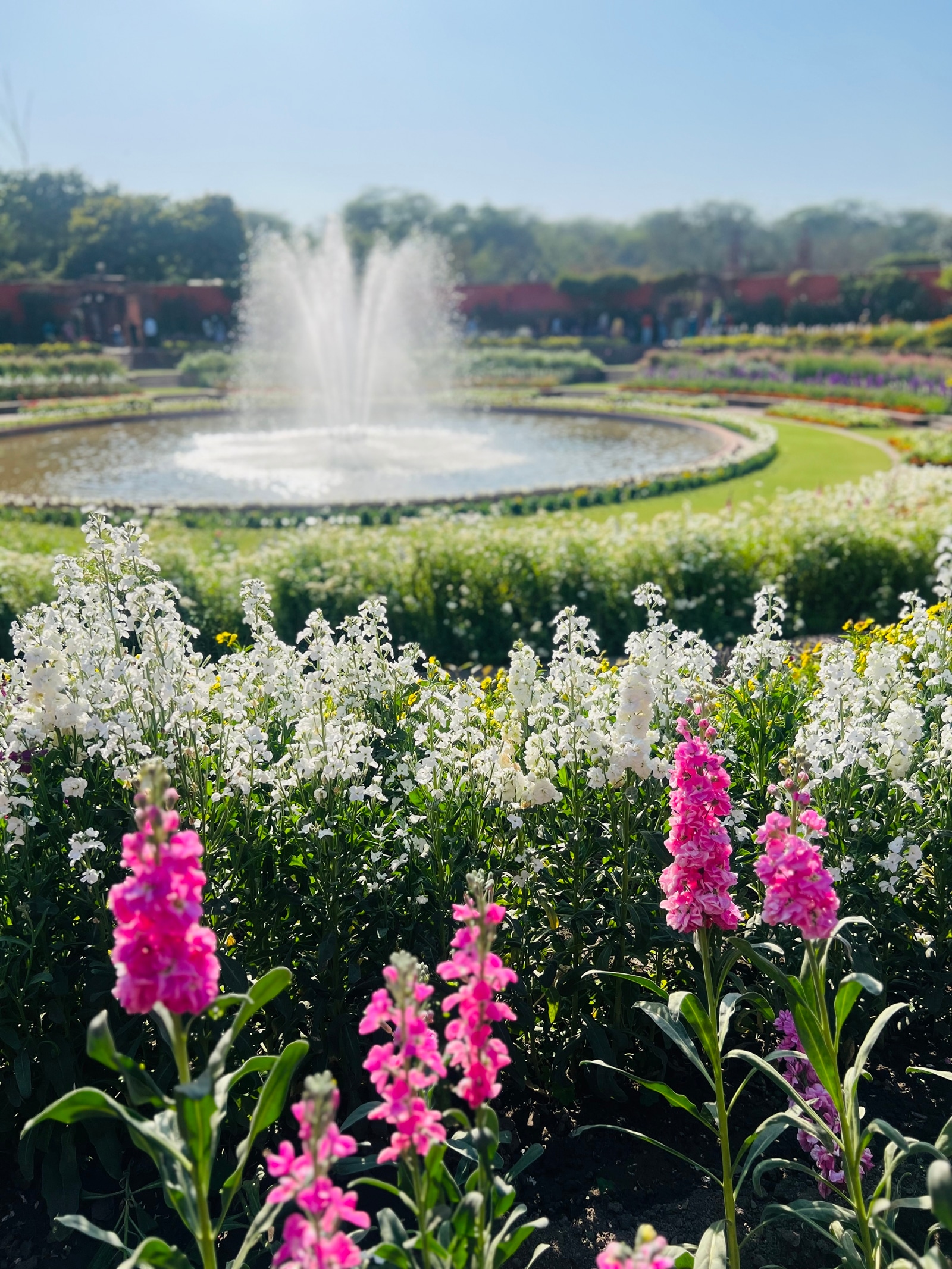 Fountains at the circular garden in Rashtrapati Bhavan. (Photo: Swasti Pachauri)
The dedicated efforts of gardeners and security professionals ensure that the garden flourishes, transforming into an ecological sanctuary that attracts bees, butterflies, and birds. Against the backdrop of Delhi’s pollution concerns, this vibrant ecosystem serves as a vital green lung, balancing urbanisation with ecological conservation.
Other flowers at the Udyan include calendulas, violas, phlox, and daisies. An apiary is near the garden, as it is a central bee-attracting hub.
A walk through the gardens
The circular gardens with fountains in the center are a sight to behold. Tall pink, yellow, white, magenta and orange dahlias against ochre walls form a wide circular boundary. In circular rows are pink, white, violet, magenta, and stock flowers, followed by abundant marigolds in all shades. Tulips, pansies, and lovely purple, blue, and white cineraria appear in manicured rows and clusters. One can spend hours here adoring the beauty of nature, reminiscing the saying,”Earth truly laughs in flowers.”
Story continues below this ad
The long garden has rose varieties on both sides, with dancing wind chimes, climbers, creepers, and bougainvillea hanging from the roofs. White, red, and orange roses are a delight to see. Kumquat trees and flame vines with lovely orange flowers against the sounds of water and wind chimes make strolling through this garden a peaceful experience.
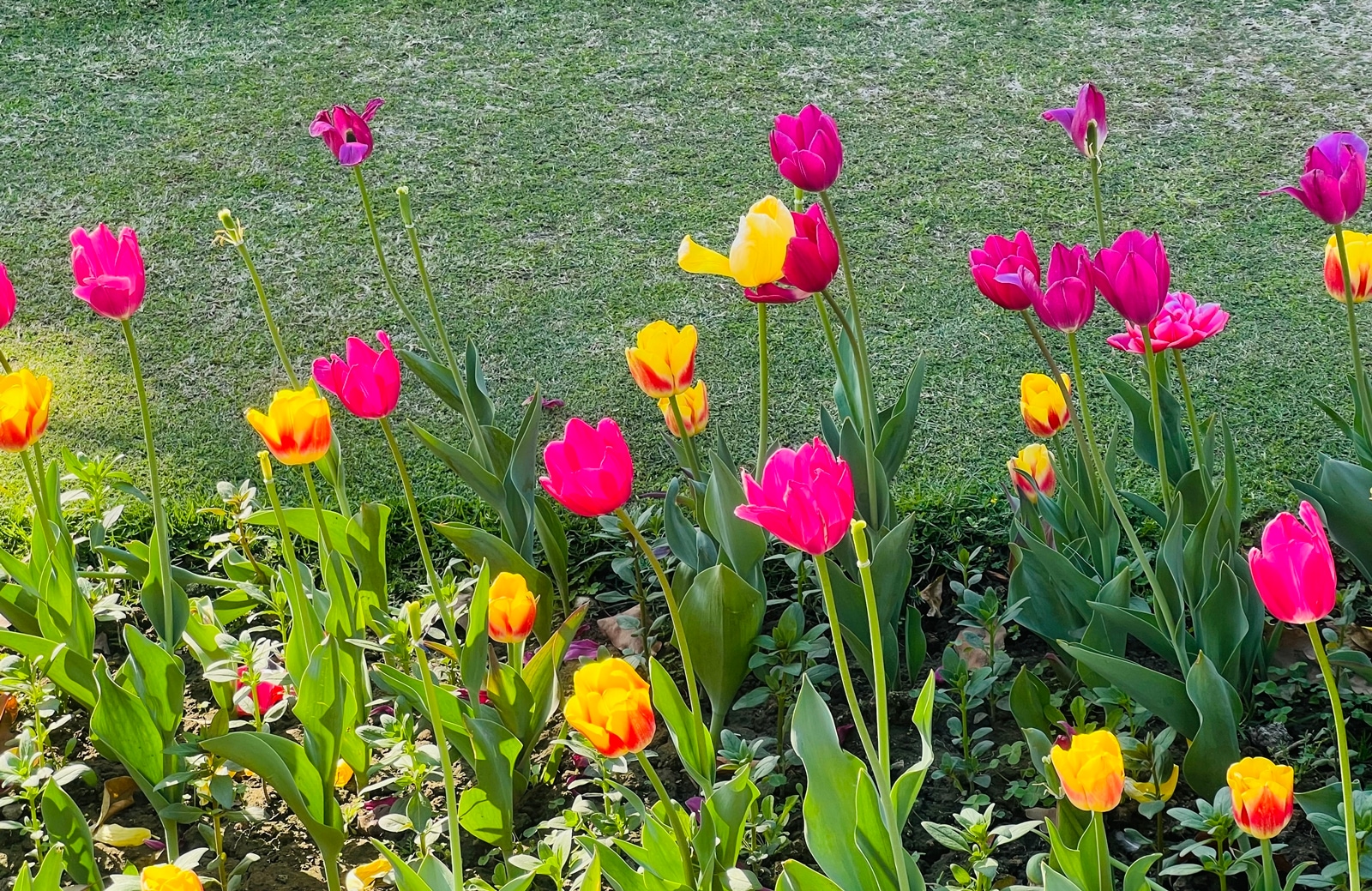 Multicoloured tulips at Amrit Udyan. (Photo: Swasti Pachauri)
An ecological and educational hub
Beyond its beauty, Amrit Udyan fosters education and environmental awareness. The QR codes against each flowerbed make for an educational experience. Many school and college students visit Amrit Udyan to take a lesson or two in environmental studies, botany, and sustainable development. Many other groups visit nature trails and nature walks to understand the heritage and history of the Rashtrapati Bhavan.
Floral rangolis, carpets made from marigolds and rajnigandha petals, a beautifully arranged cacti display, and floral clocks contribute to the garden’s artistic appeal. Amrit Udyan, aptly called the soul of Rashtrapati Bhavan, truly embodies a green sanctuary.
Many peacocks flock from tree to tree against the melodious koyals and bulbuls. The vertical gardens serve as an example of urban gardening solutions, inspiring visitors to explore green living in space-constrained cities. A photography contest has also been organized to encourage citizens’ participation in such events.
Story continues below this ad
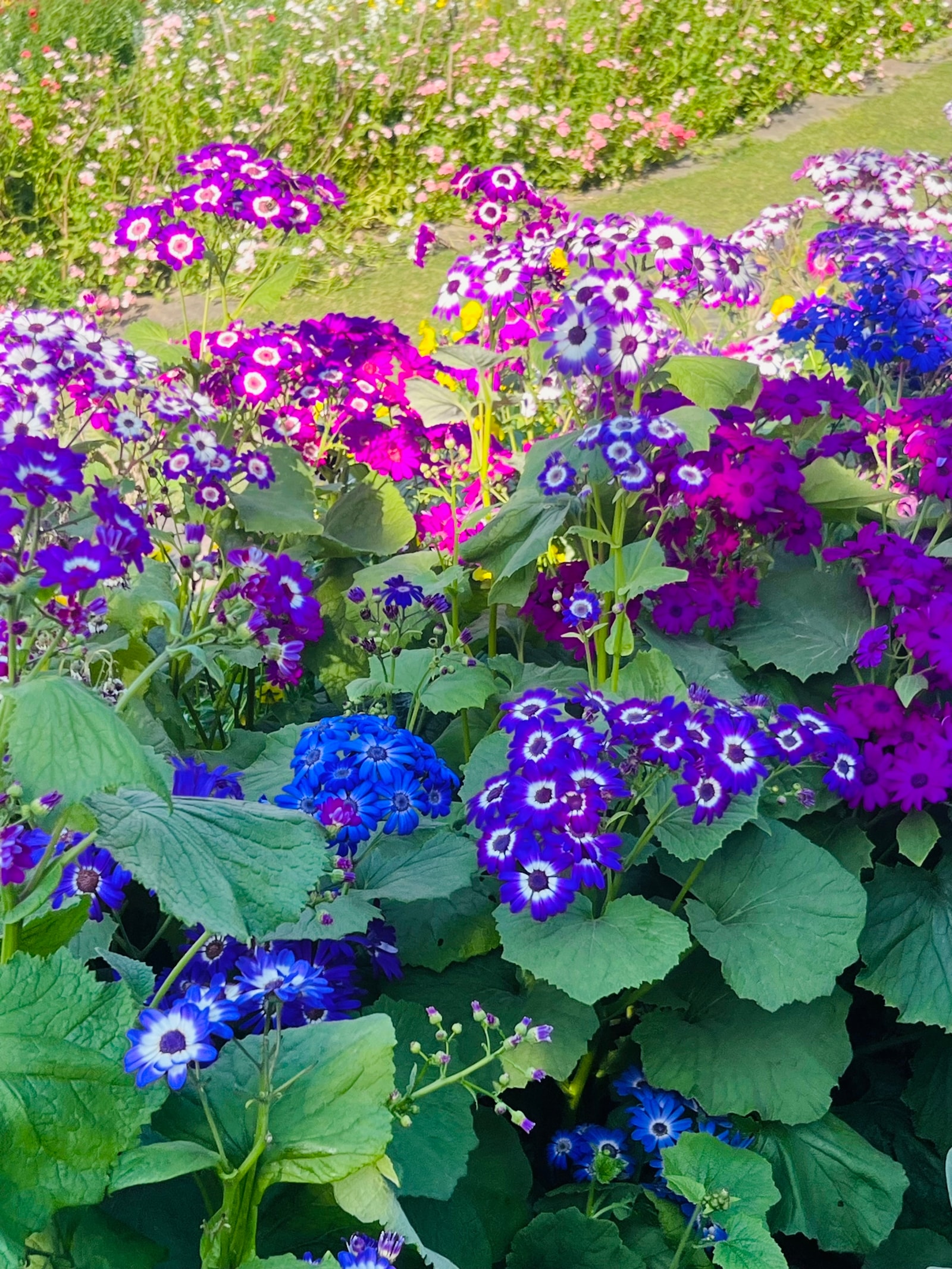 Blue, purple, white Cinerarias at Amrit Udyan. (Photo: Swasti Pachauti)
A cultural and culinary delight
This year, “Culinary, Crafts, Clicks, Mood, and Magic Festival” ran until February 23 just outside the gardens. Organised by the Ministry of Housing and Urban Affairs (MoHUA), it showcased street food and handicrafts made by “lakhpati didis” and self-help groups (SHGs). Tourists and visitors enjoyed paan, ayurvedic shikanji, regional cuisine, ice creams, and other beverages. A dedicated pavilion featured arts, crafts, homemade pickles, jams, and savoury snacks, highlighting small businesses while adhering to eco-friendly practices with no single-use plastic.
Within Rashtrapati Bhavan, “Mitti Cafe” supports entrepreneurship among persons with disabilities. Amrit Udyan remains closed on Mondays for maintenance and on select days for visits by senior citizens, SHGs, persons with disabilities, and defence, paramilitary, and police personnel, making it an inclusive space for all.
In essence, visit Amrit Udyan not only for an enlightening journey into green heritage but also for the rejuvenating floral detox one truly deserves.
