
Poha is a light and popular Maharashtrian breakfast made with flattened rice, onions, herbs, spices, and sometimes peanuts or potatoes. It has many regional versions like Kanda Poha, Dadpe Pohe, and Indori Poha. This Kanda Poha recipe is made with onions, potatoes, peanuts, and basic spices. It is easy to cook, filling, and naturally vegan and gluten-free.
About Poha Recipe
The word poha (plural pohe) refers to two things – the ingredient (flattened rice) and the dish made with it. Both are widely eaten across India.
In Maharashtra, the popular versions are Kanda Poha (with onions) and Batata Poha (with potatoes).
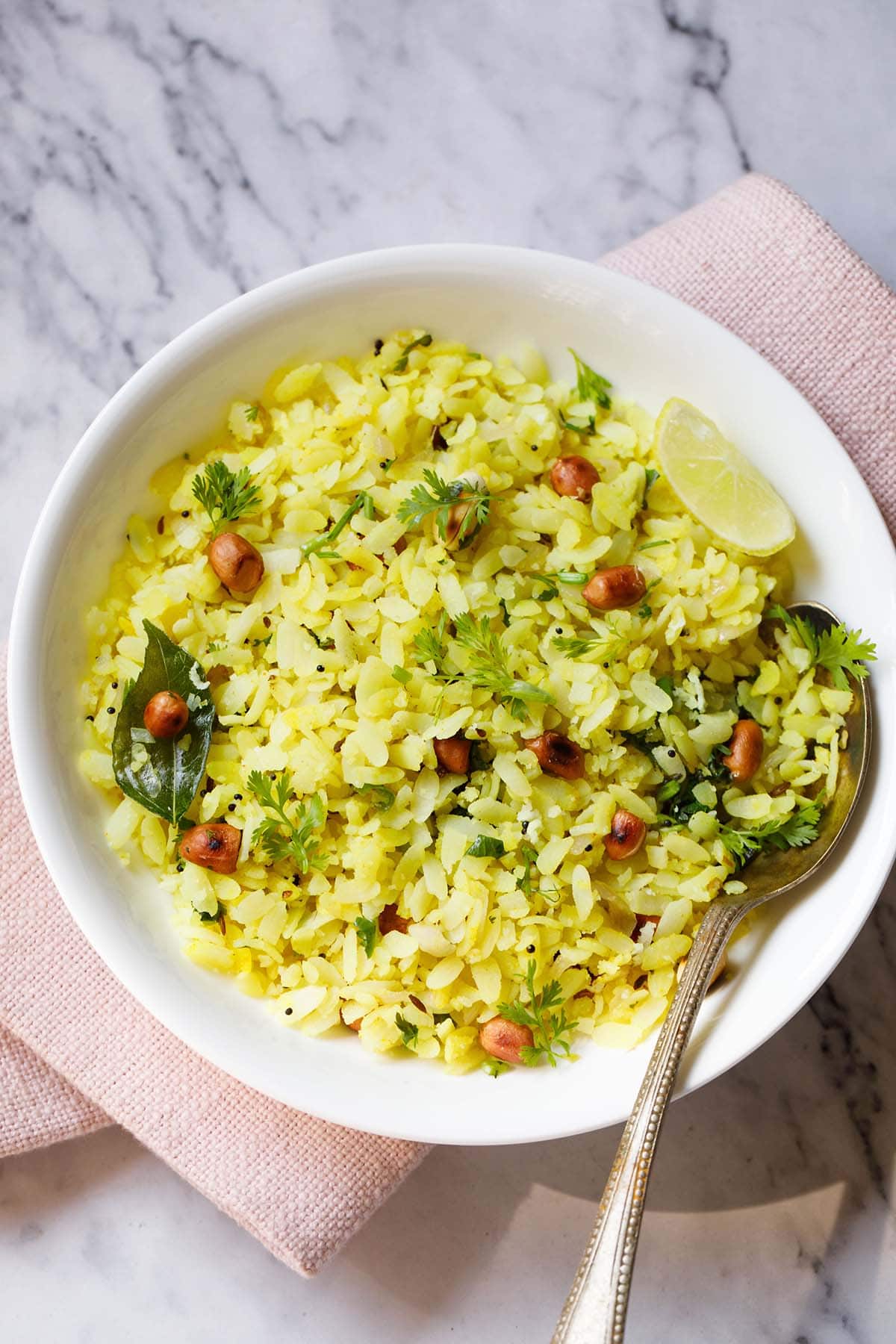
You’ll also find various poha recipe variants made in Madhya Pradesh, Gujarat, Goa, Karnataka, Telangana, Rajasthan, West Bengal and Odisha, where it is eaten as breakfast or snack.
Here I share my family Kanda Poha recipe made with both onions and potatoes. You can easily adapt it – skip the potatoes or roasted peanuts, add fresh coconut, or even vegetables like peas and carrots.
In Marathi language, kanda means onion and poha means flattened rice. My recipe uses onions, potatoes, peanuts, and sometimes coconut. The sautéed potatoes give extra taste, while onions add sweetness.
This dish is light, and easy to digest. I usually enjoy it with a hot cup of tea. Each family has its own version, and you can customize it too.
If you like regional variations, try:
- Batata Poha – Simple homestyle version with just potatoes.
- Indori Poha – From Madhya Pradesh with fennel seeds, sev, boondi and an occasional pomegranate.
- Chura Matar – Flavorful winter snack from Uttar Pradesh.
- Aval Upma – South Indian breakfast with spices and curry leaves.
How to make Kanda Poha Recipe
Making kanda poha is quick and simple. Just prepare the ingredients first and then bring everything together in a pan.
Preparation
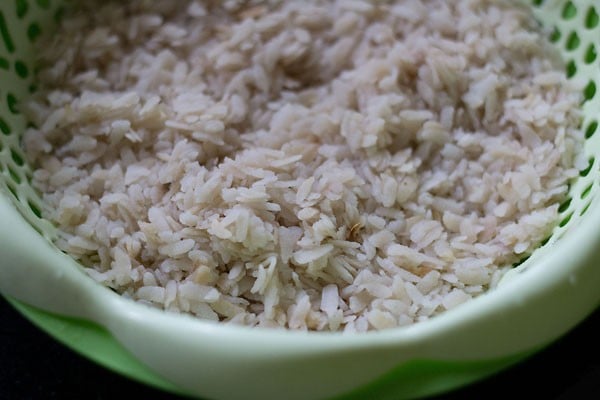
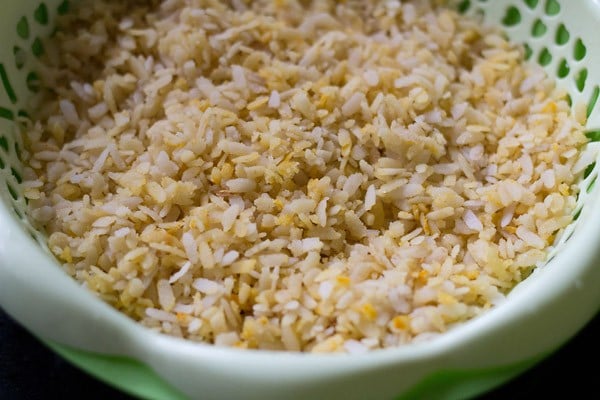
1. Pick 1.5 cups thick or medium-thick poha first. Rinse them in clean running water in a strainer or colander twice or thrice.
Rinsing in fresh clean water softens them as they absorb water.
Make sure not to overdo the rinsing. This will make them mushy and pasty.
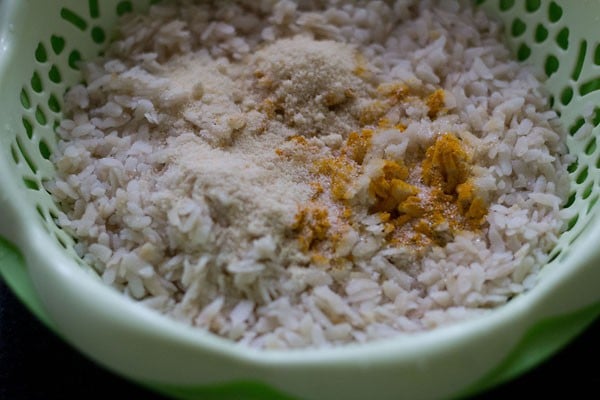
2. Sprinkle ¼ teaspoon turmeric powder, 1 teaspoon sugar (or as required) and salt according to taste on the rinsed flattened rice flakes.
3. Gently mix with your hands or with a spoon.
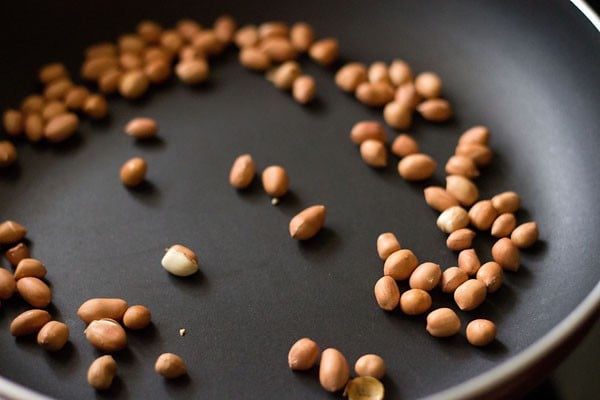
4. Dry roast 2 tablespoons peanuts in a heavy pan on medium-low heat until they become crunchy. Stir often for even cooking of the peanuts.
The peanuts should be roasted well and must not have any rawness in them. Roast till they become crunchy and have a few blisters on their skins.
Once they have roasted well enough, remove them from the pan and set aside in a plate.
Tip: If you like, you can also opt to pan-fry the peanuts in 1 tablespoon of oil.
Note: If you have nut allergy or do not like peanuts, simply choose to omit adding them. As a variation, you can also add cashews if you prefer.
Sauté Potatoes
5. Peel 1 medium to large size potato and chop into small cubes. In the same heavy kadai or pan, heat 2 to 2.5 tablespoons oil. Sauté the potatoes in medium hot oil.
Make sure to cut them in small cubes or else they will take more time to cook.
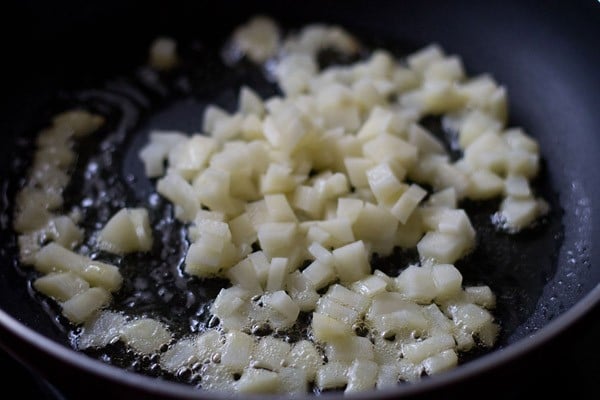
6. Sauté them until light golden and crisp. Stir them often while sautéing. Ensure that the potatoes are cooked soft and tender. They should not be undercooked.
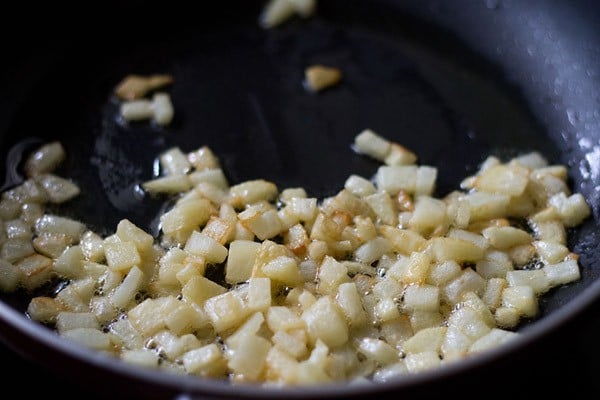
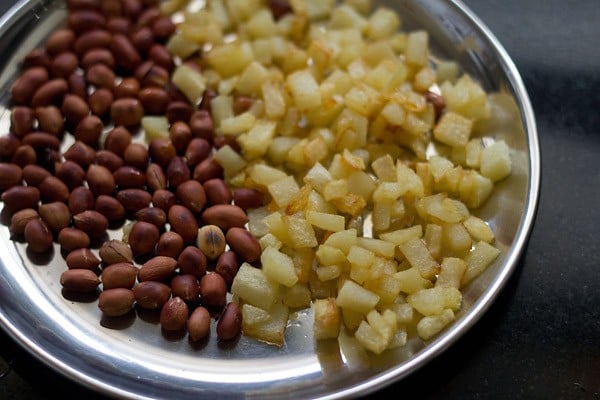
7. Once the potatoes become light golden and crisp, remove them with a slotted spoon draining the extra oil. Keep aside with the roasted peanuts.
Sauté Spices & Onions
8. In the same kadai, there will be some oil left. Add ½ teaspoon mustard seeds to the hot oil. If there is no oil, add 1 tablespoon oil and heat it gently.
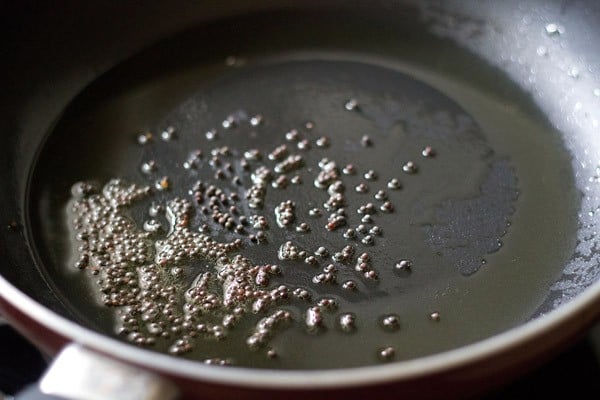
9. When the mustard seeds splutter, add ½ teaspoon cumin seeds.
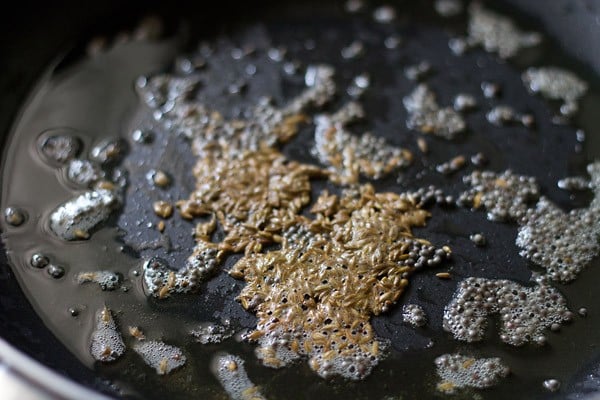
10. When the cumin seeds splutter, add ⅓ cup finely chopped onions. Sauté the onions until they soften and become translucent.
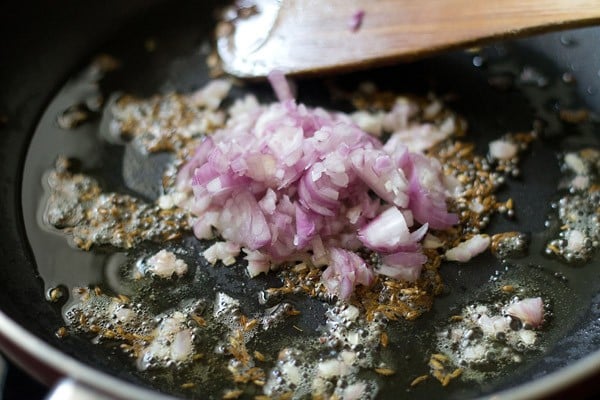
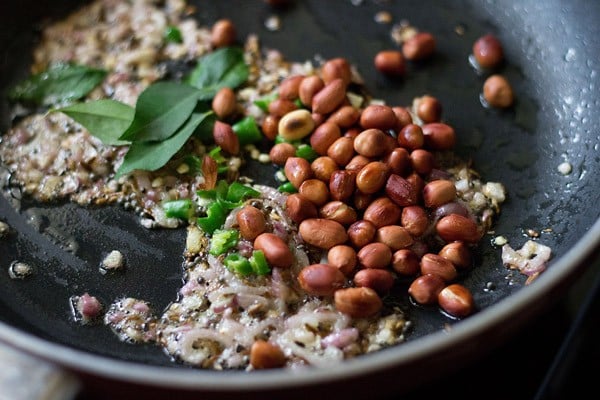
11. Now, add 8 to 9 curry leaves (medium to large size), 1 teaspoon chopped green chilies and the roasted peanuts. Mix well on low heat.
Make Kanda Poha
12. Add the rinsed flattened rice.
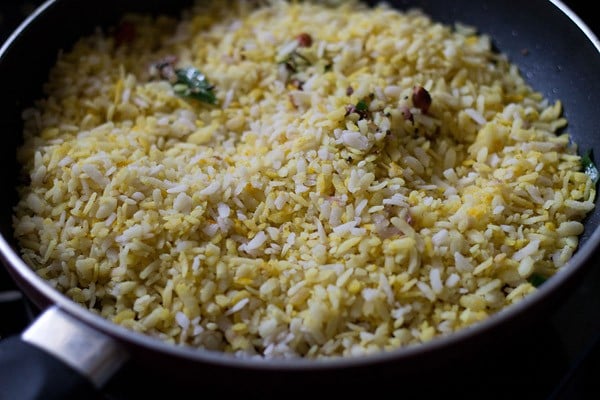
13. Mix gently with the rest of the ingredients.
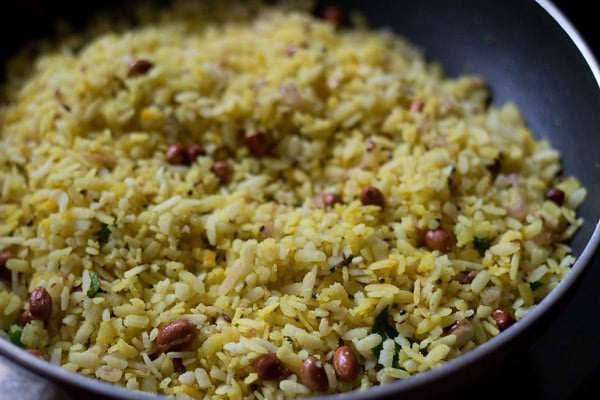
14. Add the potatoes and mix very well. Cover the pan tightly with a lid and steam the poha for about 2 minutes on low heat. Remove the lid and check the taste. If required, add more salt and sugar.
Tip: When you add the potatoes, if the flattened rice flakes look dry to you, sprinkle about 1 to 2 tablespoons of water all over. Stir to mix gently and cover the pan with lid and steam for 2 to 3 minutes on a low heat.
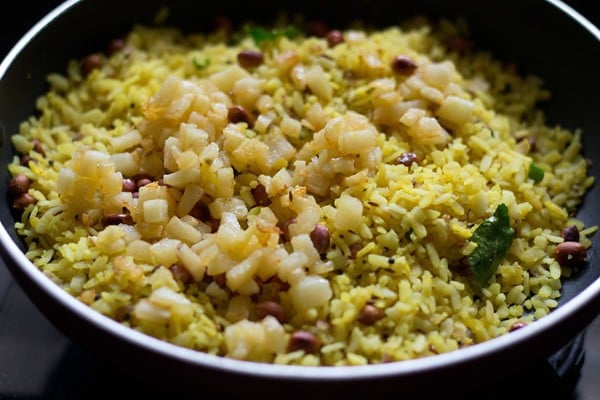
15. Garnish with 2 to 3 tablespoons chopped coriander leaves and 2 to 3 tablespoons grated fresh coconut (optional).
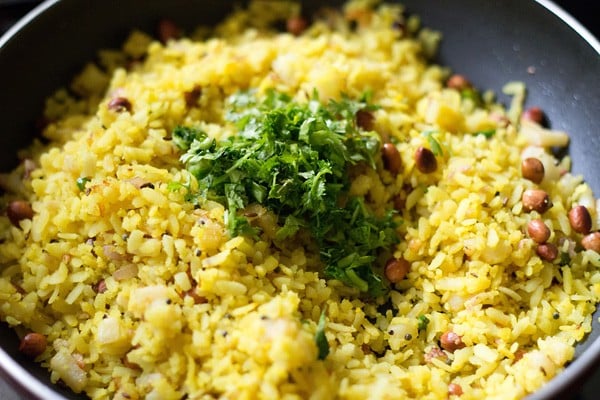
16. Mix gently.
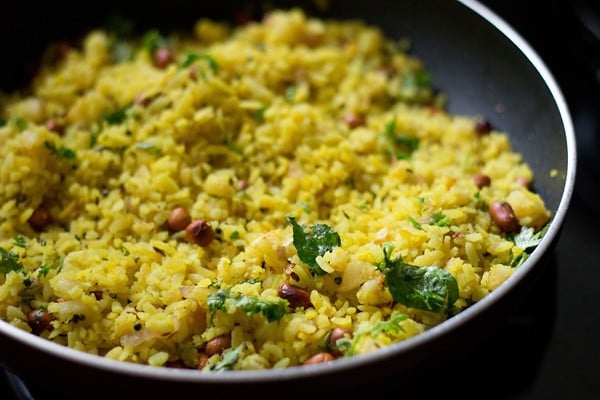
Serving Suggestions
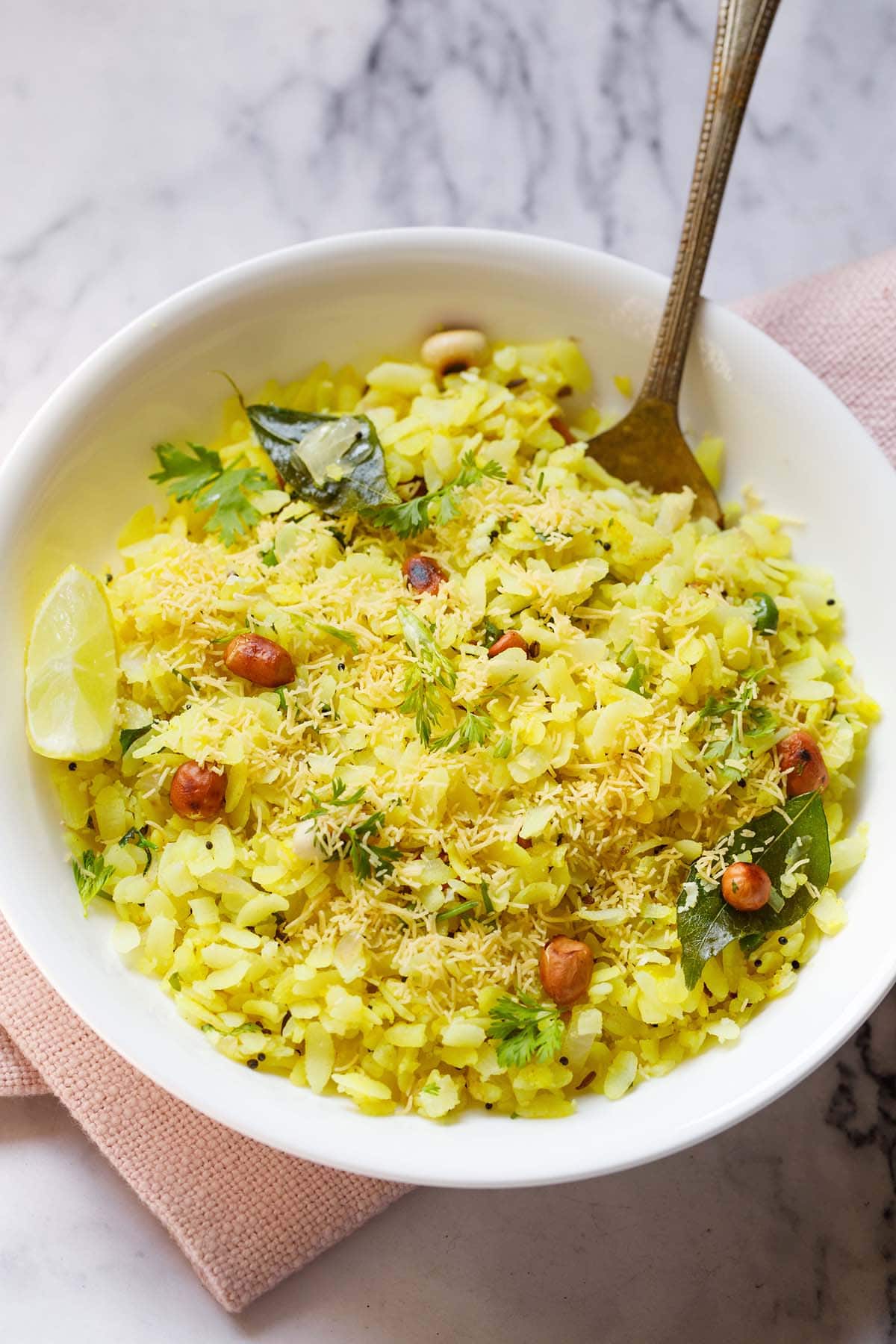
Serve Kanda Poha hot or warm with lemon wedges. The lemon juice has to be squeezed on the dish before eating it.
Alternatively, you can also follow this method. When the poha recipe is cooked, drizzle about 1 to 2 teaspoons lemon juice on it. Mix well and garnish with grated coconut, coriander leaves while serving.
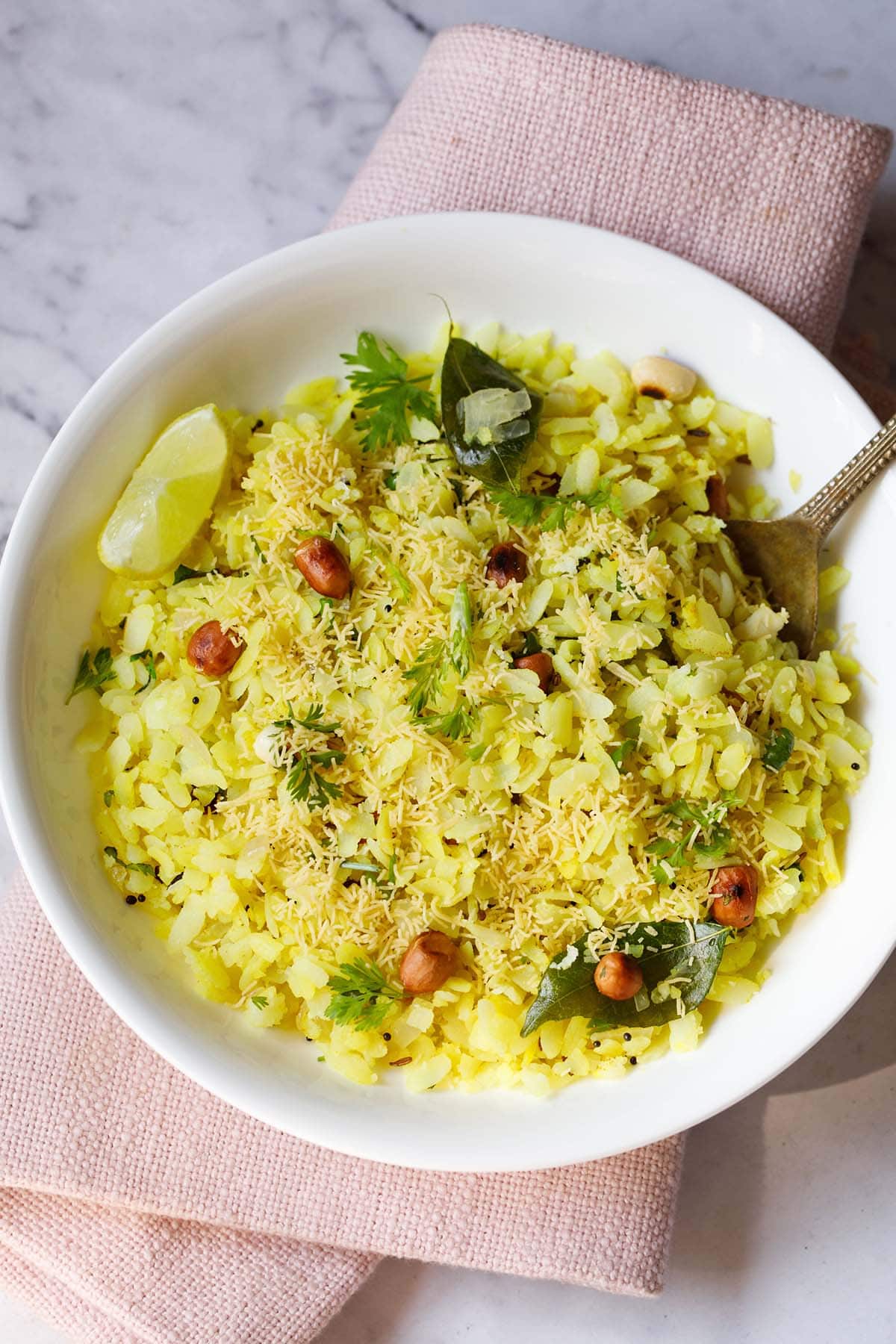
You can also top your poha with sev (fine fried gram flour vermicelli) or farsan/mixture if you like. Pair the dish with Masala Chai or Ginger Tea if you like.
Storage Suggestions
Store poha in an airtight container at room temperature, in a cool and dry place. Since it absorbs moisture easily, keep it away from humid spots like near the stove or sink.
Use glass jars, steel tins or good-quality BPA free plastic containers to maintain its crispness. In humid regions, divide the rice flakes into smaller batches and keep the extra sealed in ziplock or vacuum bags.
To prevent insects, you can place a few dried neem leaves or bay leaves in the container.
Cooked poha should always be refrigerated in an airtight box and consumed within 1 day. Reheat by sprinkling a little water and steaming or microwaving until warm.
Dassana’s Notes
- Type of Poha: I use both the white and red varieties to make this dish. So both the varieties can be used to make this recipe. But always use thick or medium-thick variety to make this breakfast dish. Thin variety will become a mush and pasty after rinsing and cooking.
- Poha Texture: After rinsing, press a beaten rice flake. It will easily crush or mash if it is soft enough. You can cook with this. If not, then it must be still dry. In this case, sprinkle little water on the flattened rice flakes and mix gently.
- Rinsing Flattened Rice: I usually use a colander or strainer to rinse the flattened rice flakes under running water and not soak them. Rinsing helps to soften the flakes easily. But take care not to rinse too much or soak them in water as this can make them mushy or lumpy.
- Vegetables: To make it healthier, add boiled peas, finely chopped capsicum and grated carrots or your preferred veggies. Steam, boil, sauté, pan-fry the vegetables accordingly before you add to the dish.
- Garnish: I garnish my recipe with coriander leaves and grated fresh coconut. While I would not suggest you to skip the coriander, you can give the coconut a miss. For some cruncy and crispy texture you could also opt to garnish or top with sev or farsan.
- Taste Preferences: If you don’t like the slight sweet taste in the dish, don’t add sugar. You can also squeeze some lemon juice on the dish before eating it or opt not to. For a spicy recipe, add more green chillies. If you like a bit of gingery taste, add about ½ teaspoon of finely chopped or minced ginger.
Poha, The Ingredient
Poha is made by parboiling and flattening rice grains into thin, dry flakes. It softens quickly when soaked in water or milk.
It is known by different names: pauwa (Hindi), paunva (Gujarati), chira (Bengali), phov (Konkani), aval (Tamil, Malayalam), atukulu (Telugu), avalakki (Kannada).
Varieties include thin, medium and thick poha, plus red or brown variant made from whole rice. For this recipe, use thick or medium varieties.
Flattened rice is versatile – besides breakfast dishes, you can also make snacks like Poha Chivda by roasting or frying it.
Pohe, The Dish
Poha is a light and nutritious breakfast made by cooking flattened rice with spices, curry leaves and seasonings. Onions, potatoes or both are often added.
To make it more wholesome, you can add peas, carrots, cashews, peanuts and garnish with coriander and coconut.
For me, poha has been a comfort food since childhood. My mother often made it for breakfast or brunch, and it remains one of my go-to simple meals.
Your Questions, My Answers
Is poha healthy for breakfast?
Yes, it is light, easy to digest, and a good source of carbohydrates, iron, and some protein. When combined with peanuts, vegetables, and coconut, it becomes more nutritious and filling.
Which type of Flattened Rice is best for making kanda poha?
Thick or medium-thick poha works best. Thin variety tends to turn mushy quickly.
How do I stop the rice flakes from turning mushy?
Do not soak the flattened rice flakes for too long. Just rinse it in water a couple of times and let it sit in a colander for 2 to 3 minutes to soften. Avoid leaving it submerged in water.
Can cooked poha be stored and reheated?
Yes, you can refrigerate cooked poha for 1 day in an airtight container. Sprinkle some water and steam or microwave it before serving.
Is red poha healthier than white poha?
Yes. Red poha is made from red rice and retains more fiber and iron, compared to white poha. It has a slightly nutty taste, keeps you full for longer, and has a lower glycemic index, making it a better choice for people looking for a healthier alternative.
Preparation
Pick the poha first of any debris or small stones. Rinse the flattened rice flakes in clean running water in a strainer or colander twice or thrice.
Make sure that you do not rinse the poha flakes too much or else they break and get mushy. While rinsing, the poha flakes absorb enough water and they become soft.
The poha must become soft but remain intact, whole and separate. If they do not become soft, add a splash of water on them in the strainer and mix till they get softened.
After rinsing, the flattened rice flakes should loose their crunchiness and when you break them between your fingers, they should easily get crushed or mashed.
When the poha have softened nicely, sprinkle the turmeric powder, sugar and salt evenly on them. Gently mix with a spoon or with clean fingers.
Roast the peanuts in a small frying pan till they become crunchy with a few blisters on the peanut skins. Set aside.
Also peel the potatoes and chop them into small cubes.
Making kanda poha
In a heavy kadai, heat oil. Sauté the potatoes in medium hot oil till light golden and crisp. Stir them often for even frying.
Remove the potatoes with a slotted spoon and set aside.
- In the same kadai, there will be some oil left. Add mustard seeds to the hot oil. If there is no oil, then add 1 tablespoon oil and heat it gently and then add the mustard seeds.
When the mustard seeds splutter, add the cumin seeds.
When the cumin seeds crackle, add the onions. Sauté the onions till they become translucent and soften.
Now add the curry leaves, chopped green chillies and roasted peanuts. Sauté for a minute on low heat.
Add the fried potatoes and then the rinsed poha. Mix gently with the rest of the sautéed ingredients.
Cover the pan tightly with a lid for the poha to get steamed for about 2 minutes on low heat.
Remove the lid and check the taste and if required add more salt and sugar.
Turn off the heat and cover the pan tightly with a lid for the poha to get steamed for a few minutes.
Remove the lid and garnish with chopped coriander leaves and grated fresh coconut.
Serve Kanda Poha hot with chopped lemon pieces. The lemon juice has to be squeezed on the poha before eating it.
Alternatively, you could also follow this method. Once the poha is cooked, sprinkle about 1 to 2 teaspoons lemon juice on it.
Mix and then garnish it with coconut and coriander leaves.
- Texture: After rinsing the flattened rice flakes, press a few flakes and if they get crushed or mashed easily then they are soft enough to be cooked. If they are dry or crunchy, add a splash of water on them and gently mix.
- Rinsing: I always rinse these rice flakes in a strainer or colander under running water and don’t soak them in water. Rinsing softens them easily. But if you get a hard variety which do not soften on rinsing, soak them in water for a few minutes until they soften.
- Veggies: To make the recipe more nutritious, opt to add boiled peas, finely chopped capsicum or grated carrots or your preferred veggies. Chose to steam/boil/sauté/pan fry the vegetable as needed before you add.
- Garnish: I like to add grated fresh coconut but it is optional. Do add coriander leaves and do not skip them. If you like crunchy and crispy texture, top some sev or mixture or farsan on the dish.
- Type of poha: Both white and red poha can be added in the recipe. Also be sure to use thick or medium-thick variety. Take care not to use thin flakes as they will become a mush after rinsing and cooking.
- Flavor & Taste Additions: Adding sugar is optional. You can skip it completely if you don’t prefer a slightly sweet taste in the kanda poha. You could also opt to not add lemon juice. For a spicy version, add more green chillies. If you like ginger, feel free to add finely chopped or minced ginger.
- Scaling: Easily scale the recipe to reduce or increase the servings according to your needs.
Calories: 564kcal | Carbohydrates: 93g | Protein: 11g | Fat: 16g | Saturated Fat: 3g | Polyunsaturated Fat: 2g | Monounsaturated Fat: 11g | Sodium: 217mg | Potassium: 521mg | Fiber: 5g | Sugar: 4g | Vitamin A: 125IU | Vitamin B1 (Thiamine): 0.2mg | Vitamin B2 (Riboflavin): 0.1mg | Vitamin B3 (Niacin): 34mg | Vitamin B6: 0.4mg | Vitamin C: 69mg | Vitamin E: 4mg | Vitamin K: 3µg | Calcium: 61mg | Vitamin B9 (Folate): 347µg | Iron: 2mg | Magnesium: 64mg | Phosphorus: 199mg | Zinc: 2mg
Poha Recipe from the archives was first published on August 2013.