
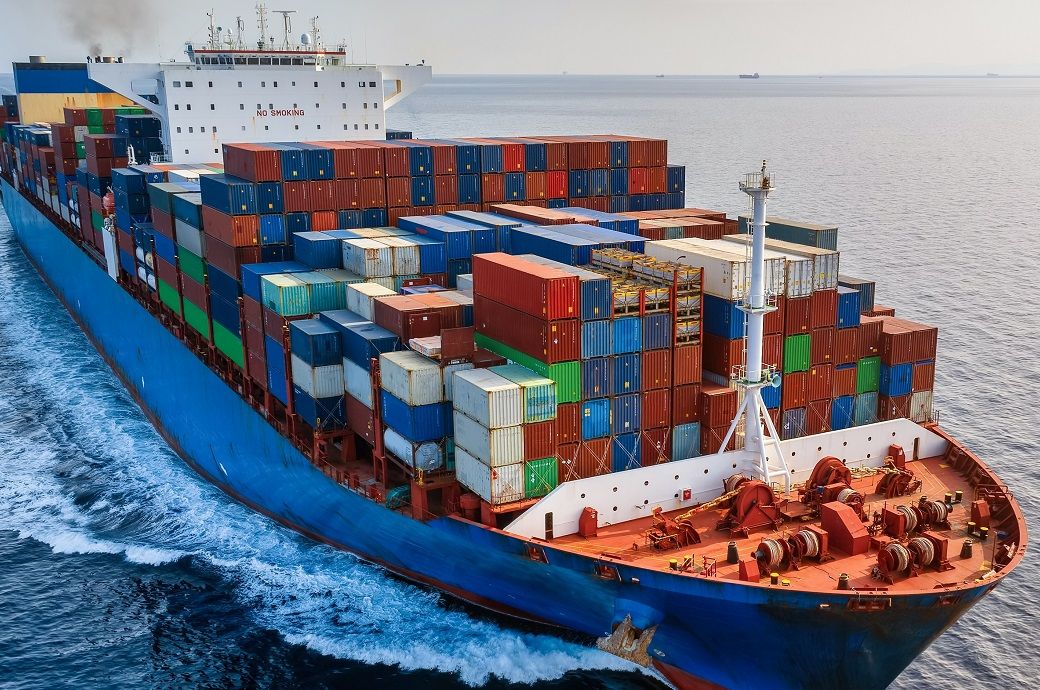
Spot rates from Shanghai to New York declined 7 per cent to $2,969 per 40-foot container, while rates from Shanghai to Los Angeles fell 4 per cent to $2,442 per 40-foot container. According to Container Capacity Insight, carriers have announced 63 blank sailings in February, up from 27 in January, as demand remains weak ahead of Chinese New Year factory closures. Drewry expects spot rates to continue declining in the coming weeks.
Drewry WCI fell 4.74 per cent to $2,107 per FEU in the week ending January 29, marking a third straight weekly decline.
Weak demand ahead of Chinese New Year weighed on Transpacific and Asia–Europe rates, prompting more blank sailings.
Divergent carrier strategies, including selective Suez Canal usage, suggest capacity will return gradually, limiting the risk of a sharp rate collapse.
Spot rates on Asia–Europe trade routes also fell for the third consecutive week. Rates from Shanghai to Rotterdam dropped 5 per cent to $2,379 per 40-foot container, while those from Shanghai to Genoa declined 6 per cent to $3,293. Amid falling rates, carriers are adopting divergent strategies for the Suez Canal: CMA CGM is withdrawing its Asia–Europe services from the region, while Maersk plans to resume its scheduled service from India to the US East Coast via the canal.
Rates from New York to Rotterdam increased 1 per cent to $988 per FEU, while Rotterdam–New York rates rose 2 per cent to $1,605 per FEU. Freight rates on the Rotterdam–Shanghai route were unchanged at $504 per FEU, while Los Angeles–Shanghai rates increased 2 per cent to $721 per 40-foot container.
These contrasting operational decisions suggest that effective shipping capacity will be reintroduced to the market gradually rather than all at once. This ‘drip-feed’ approach allows carriers to assess risks carefully and adjust future networks, helping to prevent a sharp collapse in spot rates.
Fibre2Fashion News Desk (KUL)
