
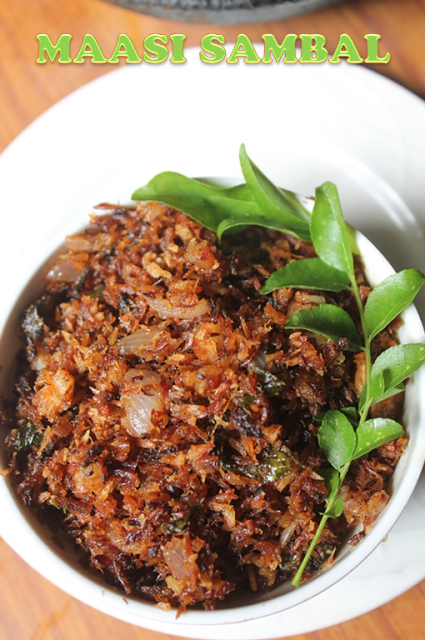
Maasi sambal is a flavourful and spicy dry dish made with Maldive fish and aromatic spices. It is a popular dish in Maldives, Sri Lanka and South Indian and is known for its unique strong and savoury aroma. This sambal pairs well with bread, roti, idiyappam, appam or rice for a satisfying meal.
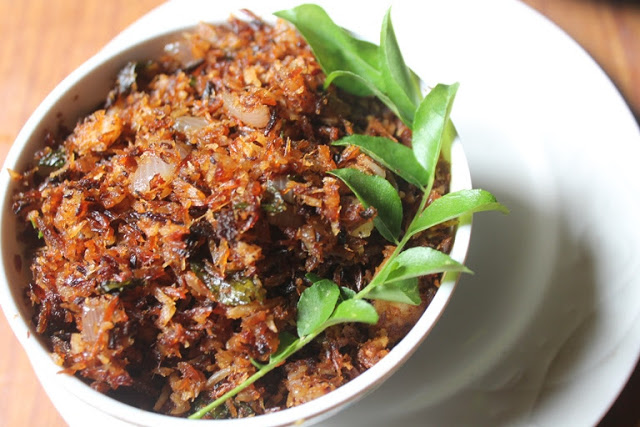
Maasi Sambal Recipe
My husband absolutely loves anything that is made with fish, especially dried fish. I enjoy making different fish recipes for him and love seeing him relish the dishes I prepare. This maasi sambal is such a simple recipe that I made for him and it instantly became a hit.
Jump to:
If you enjoy dry fish recipes, then try this maasi sambal for a change and is definitely worth trying.
What is Maasi?
Maasi, also known as Maldives fish, is a dried skipjack tuna that is salted, sun dried and mildly smoked. It is widely used in Maldivian, Sri Lankan, Indonesian and South Indian cuisine to make strong and savoury flavour dishes.
Maasi is commonly used for preparing sambals, curries and spicy condiments that pairs well with rice, roti, appam or idiyappam for a flavourful meal.
About Maasi Sambal
If you love dried fish flavour, then this maasi sambal will quickly become your favourite. This traditional Maldivian and Sri Lankan dish is packed with rich umami flavour that is so addictive and you just can’t stop with one spoon.
You can find these dried maasi in dry fish ( Karuvaadu ) shops or purchase them online.
This sambal is quick to prepare and uses basic pantry ingredients like garlic, shallots, coconut and curry leaves.
It can be made in no time and delivers a delicious, spicy and smoky fish that can be enjoyed on its own or paired with rice, roti, bread, appam and idiyappam.
Similar Recipes
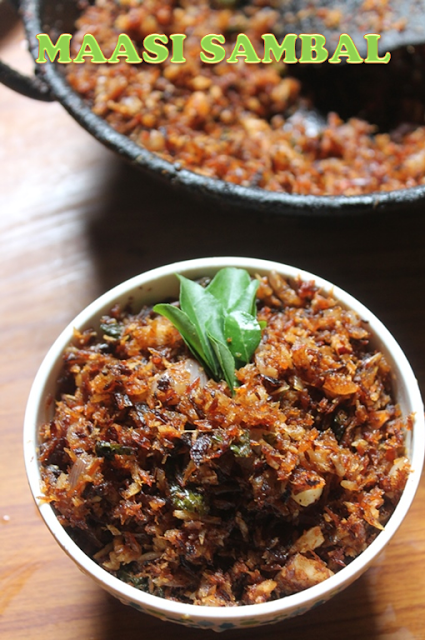
Difference Between Maasi and Karuvadu
Maasi is usually made with Maldives tuna which is sun dried and smoked. It is rich in umami flavour and commonly used to make sambal and curries.
Karuvadu is made with different types of fishes like mackerel, anchovies and sardines. These are also salted and sun dried and have a mild flavour compared to maasi.
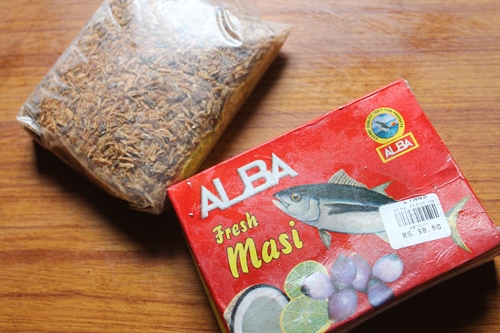
Hubby bought a packet of masi from supermarket. I am not so sure what to do with it. So I looked at the pack and adapted recipe from it.
This is a quick dish to make, you can make it in under 15 mins. When i looked online about maasi I learned that it is smoked dried piece of tuna.
In some places you will find a whole piece of it which you have to pound it. But I bought the pack which is already pounded.
Fish Maasi Podi is another name for Maldives fish. Maldives fish is cured tuna fish that has traditionally been produced in the Maldives. It is a staple of Maldivian and Sri Lankan cuisines, as well as Kerala, and Tamil Nadu, and it is known as masi karuvadu.
This powdered tuna is packed nowadays in small plastic packets, already pounded or crushed.
Ingredients
- Maasi : Maasi is the main flavouring ingredient used for making this sambal. It adds rich smoky flavour and umami taste to the sambal.
- Coconut : Coconut adds mild sweetness and texture that balances well with maasi.
- Oil : Oil used to cook the ingredients together. Use any neutral oil of your choice. It helps to keep the sambal moist and slightly crispy.
- Garlic & Chillies : Garlic and chillies has an aromatic pungent flavour that enhances the taste of sambal.
- Curry leaves : Curry leaves are an aromatic ingredient essential in South Indian cooking. That adds a distinct flavour to the dish.
- Shallots / Small onion or Onion : Shallots add mild sweetness, texture and form the base of sambal.
- Salt : Enhances the flavour and balances the taste. Adjust the quantity according to your preference.
- Lemon juice : Lemon juice added at the end to give a bright, tangy flavour to the sambal.
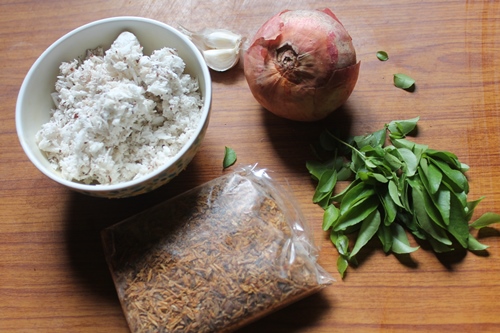
Step by Step Pictures
1)take finely shredded coconut in a bowl. If your coconut is large grates, you can powder them in a blender.
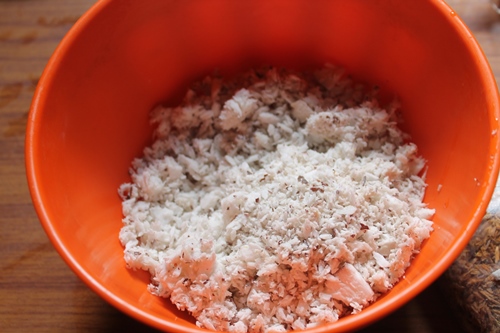
2)Add in pounded maasi.
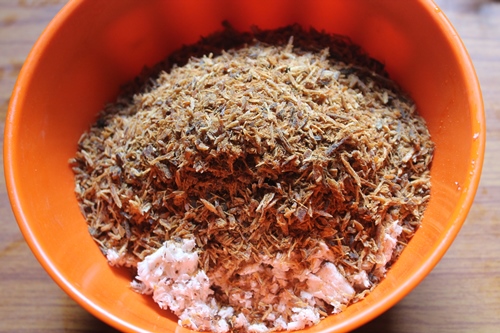
3)Mix well and set aside.
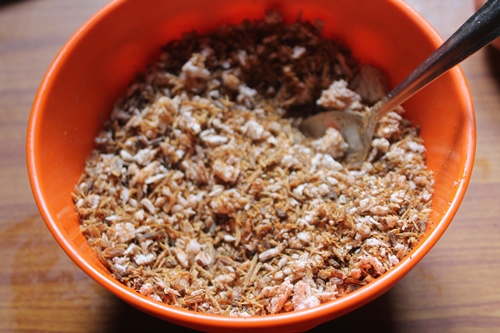
4)prepare ingredients for tempering.
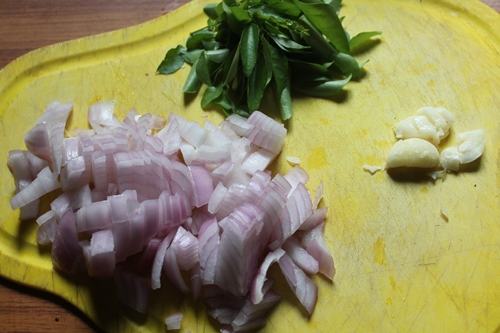
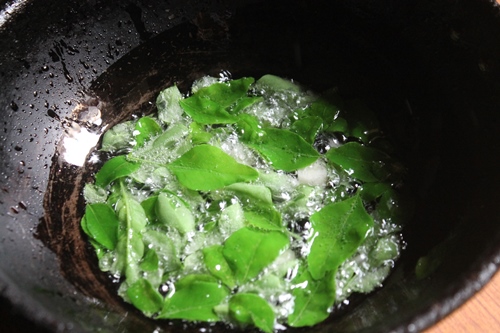
5)Heat coconut oil in a kadai. Add in curry leaves and garlic and let them sizzle.
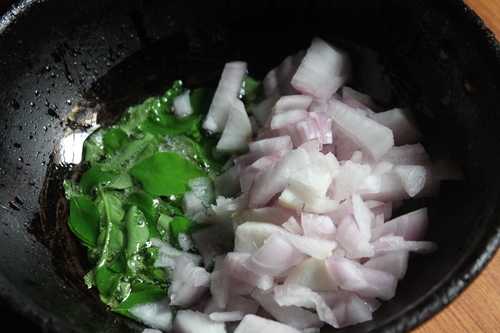
6)Add in onions.
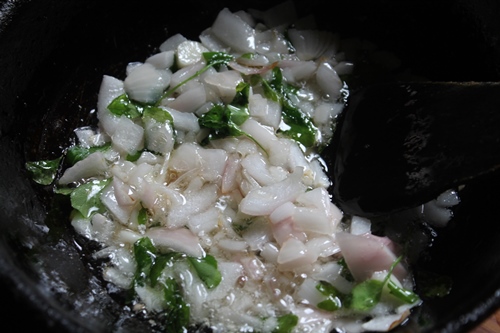
7)Saute the onions till wilted and cooked.
8)add in the coconut and maasi mixture.
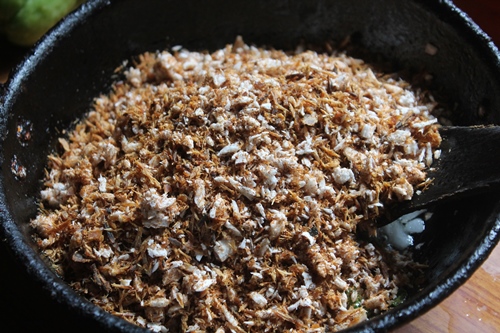
9)Add in some red chilli powder at this point and toss well.
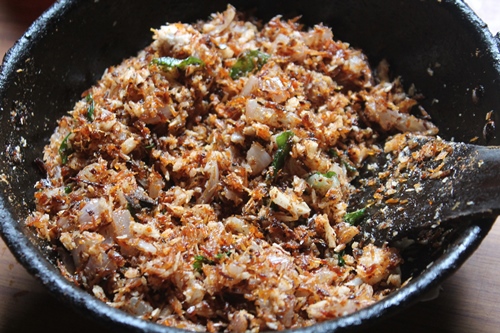
10)Now roast this on low to medium heat until the coconut and maasi is roasted well.
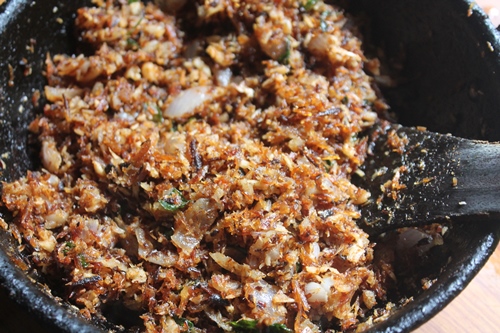
11)It will get crispy and well toasted.
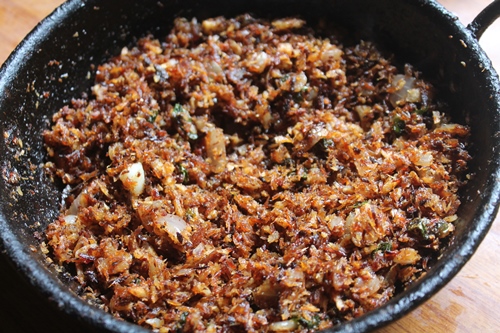
12)Add in lemon juice and turn off the heat.
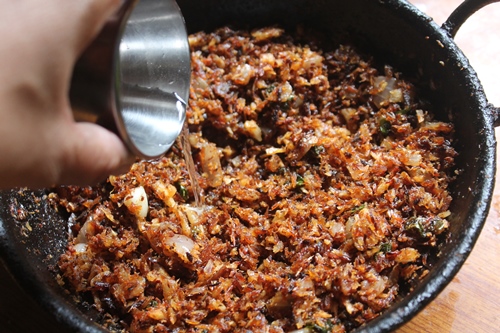
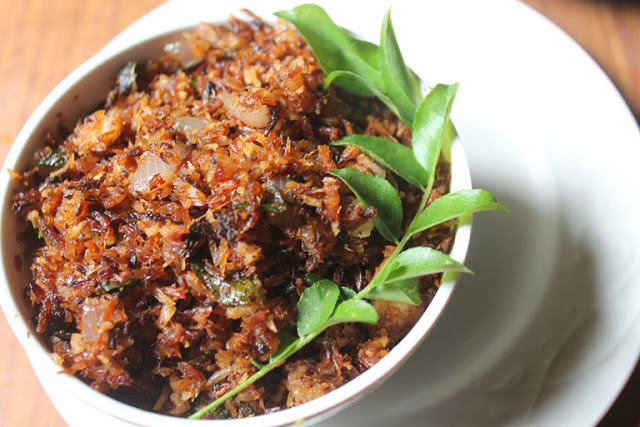
13)maasi sambal is ready to serve.
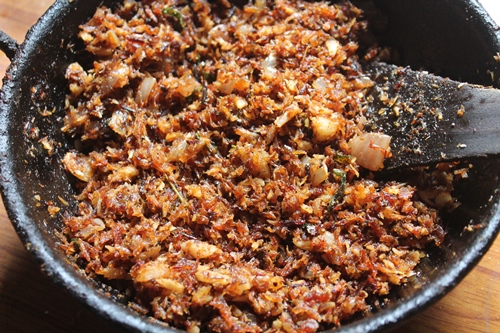
14)Enjoy with rice.
Expert Tips
Use fresh coconut : Fresh coconut gives you the best taste and texture to the sambal.
Perfect maasi : If you get a whole piece of dried tuna, pound them before cooking for best texture and taste.
Mortar and pestle : Traditionally sambal is crushed using stone mortar pestle. This helps to release the flavours and aroma from the ingredients naturally.
Cook on low heat : After adding coconut and maasi, saute them on low flame. This way they get a slightly crispy texture and enhances the taste.
Serving & Storage – Sambal tastes best when served hot and fresh. Maasi sambal is a tasty and versatile dish that you can serve with appam, idiyappam, puttu, roti, rice or dosa for a flavourful meal.
FAQ
Yes, you can use frozen coconut. But the fresh coconut gives the best texture and flavour.
If maasi is not available, you can use regular dried fish as an alternative. But the texture and taste may differ.
The sambal tastes best when eaten immediately after cooking. If needed, it can be stored in the fridge for a day or two. But the flavour and texture may vary when refrigerated.
📖 Get Recipe
Maasi Sambal Recipe | Maldive Fish Sambal | Coconut Sambal Recipe
Maasi sambal is a flavourful and spicy dry dish made with Maldive fish and aromatic spices. It is a popular dish in Maldives, Sri Lanka and South Indian and is known for its unique strong and savoury aroma. This sambal pairs well with bread, roti, idiyappam, appam or rice for a satisfying meal.
Nutrition
Nutrition Facts
Maasi Sambal Recipe | Maldive Fish Sambal | Coconut Sambal Recipe
Amount per Serving
% Daily Value*
* Percent Daily Values are based on a 2000 calorie diet.
