
3 min readNew DelhiMar 9, 2026 06:00 AM IST
A user posed an intriguing question on Quora: “I drank reverse osmosis water for ~10 years with no minerals added. Did this possibly damage my health?” Reverse osmosis (RO) systems are widely used in Indian homes to remove contaminants. But in the process, they also strip away naturally occurring minerals. Does that pose a long-term risk?
To address the concern, indianexpress.com spoke to Dr Nikhil Bhasin, Consultant Nephrologist and Renal Transplant Physician, Wockhardt Hospitals, Mumbai Central, who offered a perspective grounded in kidney and metabolic health.

Does RO water cause mineral deficiency?
“RO filtration removes impurities but also strips away minerals like calcium and magnesium,” says Dr Bhasin. However, he emphasises that drinking water is not the primary source of these nutrients for most people.
“The majority of calcium and magnesium comes from food, not water,” he explains. “If someone eats a balanced diet with dairy, pulses, nuts, seeds and vegetables, the risk of deficiency purely from RO water is low.” The concern becomes more relevant when overall diet quality is poor.
“Problems are more likely if the diet itself is lacking in essential nutrients,” Dr Bhasin notes.
Are there specific tests to check for impact?
“Serum calcium, magnesium, vitamin D, kidney function tests, and electrolytes are useful starting points,” says Dr Bhasin. These tests help evaluate whether any clinically significant imbalance exists.
“If there are symptoms like muscle cramps, fatigue, or bone pain, these investigations help rule out deficiencies,” he adds. In older adults or those with prolonged concerns, additional evaluation may be warranted.
Story continues below this ad
“Bone density scans can be considered in individuals with long-standing concerns, especially if there are risk factors for osteoporosis,” Dr Bhasin advises.
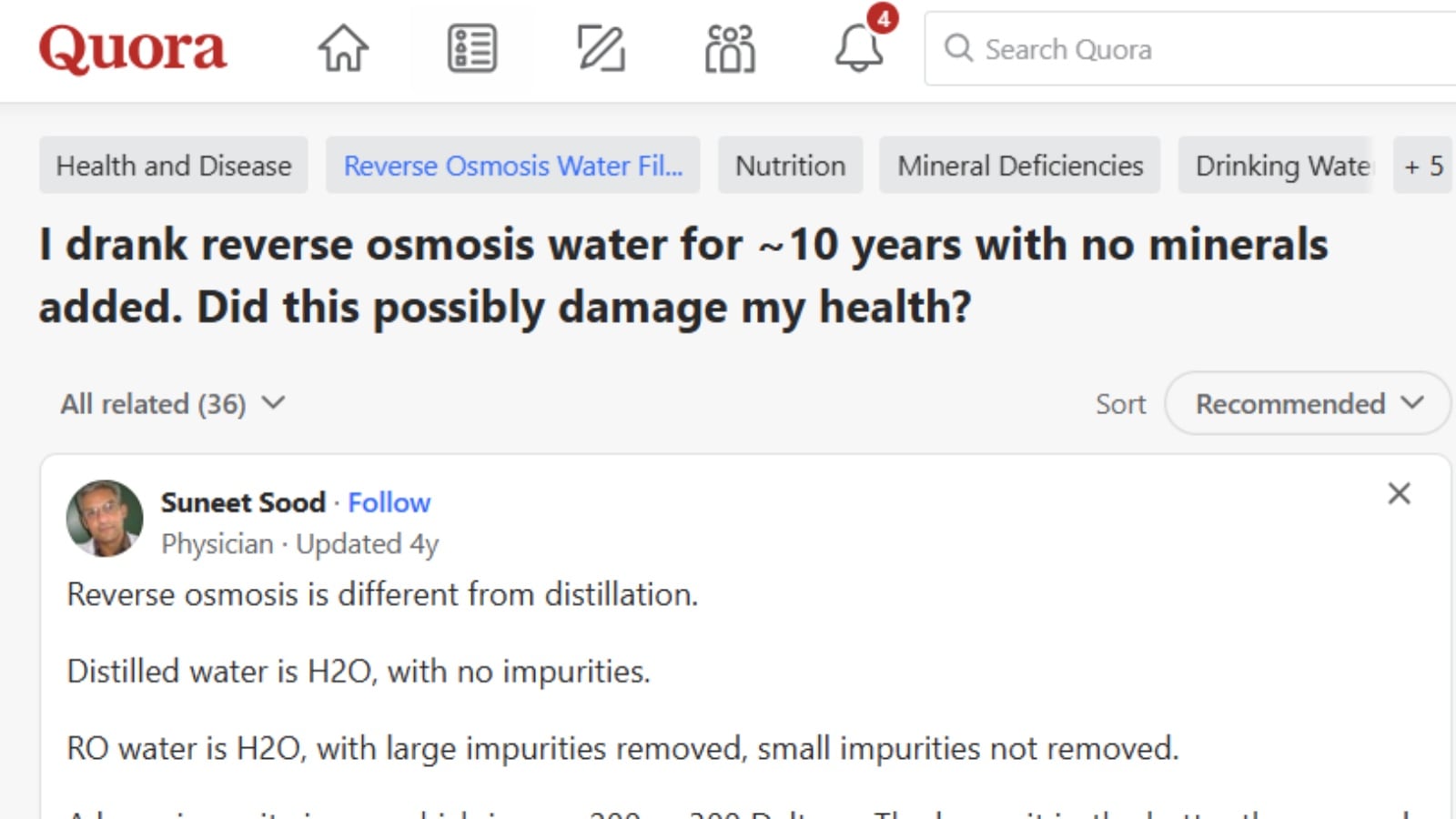 Is RO water not safe? (Photo: Website/Quora.com)
What corrective steps can be taken now?
If someone has been drinking non-remineralised RO water for years, Dr Bhasin suggests starting with a diet. “First, review your nutrition. Ensure adequate intake of calcium-rich foods, leafy greens, nuts, and good-quality protein,” he says.
If lab results reveal deficiencies, supplementation may be necessary — but only under medical supervision. “If levels are low, supplements can be prescribed appropriately. Self-medication is not advisable,” he cautions.
From a water systems perspective, there are also practical solutions “Switching to a remineralised RO system or adding mineral cartridges is reasonable,” Dr Bhasin suggests. “Natural mineral water sources may also be considered where safe and feasible.”
Story continues below this ad
So, did 10 years of RO water cause damage?
“For the majority of people, long-term RO water alone is unlikely to cause major damage,” Dr Bhasin states. He underscores a broader message: “Diet quality and overall lifestyle matter far more than the mineral content of water alone.”
In essence, while RO systems do remove beneficial minerals, they are rarely the primary driver of deficiency in someone who eats a balanced diet, he concludes.
DISCLAIMER: This article is based on information from the public domain and/or the experts we spoke to. Always consult your health practitioner before starting any routine
