
Overcoming water and food stress will be a big challenge for India as it becomes a Viksit Bharat. As India charts its path toward becoming a developed nation by 2047, few challenges loom as large as food security. Feeding a population of over 1.4 billion, under the growing pressures of climate change, land degradation and water stress, will require more than incremental gains.
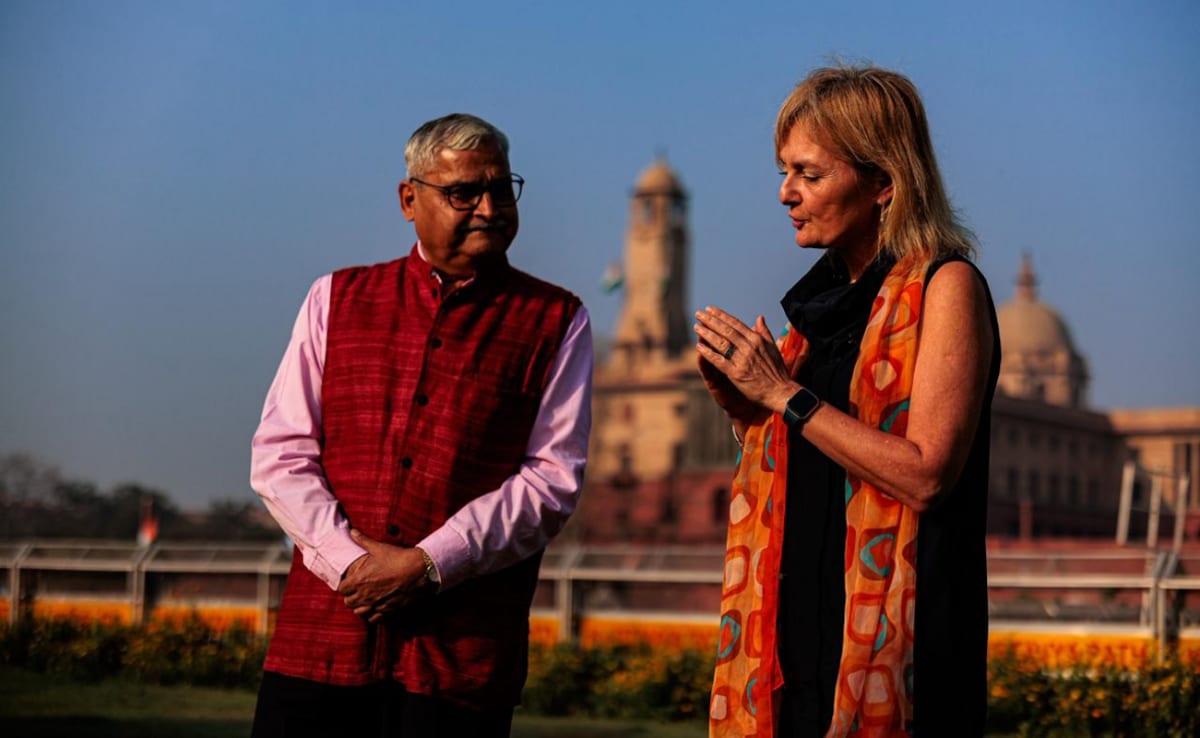
In an exclusive interview with NDTV, Dr. Magdalena Skipper, Editor-in-Chief of Nature journal and a geneticist by training, made a clear and unambiguous case: India must embrace genetically modified (GM) food crops, guided by science rather than fear. Incidentally, Nature is one of the most venerated scientific journals and is over 150 years old.
Dr. Skipper, one of the most influential global voices in science and technology, argued that opposition to GM crops is increasingly disconnected from scientific reality. “Today genetic modification is so precise that most of these crops are not genetically recognizable from a crop that would otherwise have taken decades and decades to breed,” she said. Early genetic modification techniques, she acknowledged, raised legitimate concerns because changes to the genome were less controlled. “But today the precision of genome engineering is such that all of these concerns are simply non-existent. You modify a single letter in the genetic code exactly how you want it.”
For India, the stakes are exceptionally high. Agriculture remains deeply vulnerable to climate variability, while demand for food continues to rise. Dr. Skipper warned that natural evolution and conventional breeding cannot keep pace with the environmental changes humanity itself is driving. “We are contributing to changing our environment at a pace that cannot be matched by evolution,” she said. “It cannot be matched successfully by artificial selection which is done by breeders.” In this context, genome modification is not a luxury, but a necessity.
India already has a powerful precedent. The country adopted Bt cotton, its first genetically modified crop, and the results transformed cotton farming. Bt cotton helped farmers reduce losses from pests, improved yields and turned India into one of the world’s leading cotton producers. Bt cotton is widely seen as a runaway success, proof that Indian agriculture can safely and effectively deploy GM technology when supported by policy and regulation. The contrast between Bt cotton’s acceptance and the continued stalemate over GM food crops underscores what Dr. Skipper described as a failure of science communication rather than a failure of science itself.
“There has never been convincing demonstration of any ill health effects of consuming genetically modified food,” she said plainly. Environmental concerns, she added, have also been shown to be manageable with proper safeguards. What modern genetic technologies now offer goes far beyond pest resistance.”We can fortify with vitamins, make food crops more nutritious,” she said. “We can make them more resistant to drought, to climate change.” The result is not only higher yields, but better nutrition, critical for a country still battling malnutrition even as it grows economically.
Crucially, Dr. Skipper rejected the sharp distinction often drawn in public debates between genetic modification and genetic engineering. “No, I don’t actually,” she said when asked whether one was acceptable and the other not. In her view, this semantic divide reflects early missteps by the scientific community in engaging the public. Whether described as GM or genome-edited, the underlying goal is the same: to introduce precise, well-understood changes that improve crop performance and resilience.
Her message to India’s leadership was direct. Asked whether India should adopt GM food crops to meet future food demands, Dr. Skipper responded without hesitation. “I would,” she said. “Not just India, many different parts of the world should consider genetically modified food crops.” With India’s population set to remain among the largest globally, she argued that the country has a responsibility not only to feed itself, but also to contribute to global food stability. “I would certainly support it,” she said when asked whether this was a recommendation for Prime Minister Narendra Modi.
The argument fits squarely within India’s broader development ambitions. Science-led agriculture aligns with the government’s emphasis on technology-driven growth and evidence-based policy. Just as India has demonstrated global leadership in space, renewable energy and digital public infrastructure, agriculture once again demands the same scientific confidence.
Dr. Skipper’s position is ultimately pragmatic and forward-looking. Genetic modification, she argued, is simply another tool, albeit a powerful one, in humanity’s effort to nourish itself sustainably. For India, delaying its adoption in food crops risks falling behind both scientifically and economically. The success of Bt cotton has already shown what is possible. The question now, as India looks toward 2047, is whether policy will catch up with science.
