
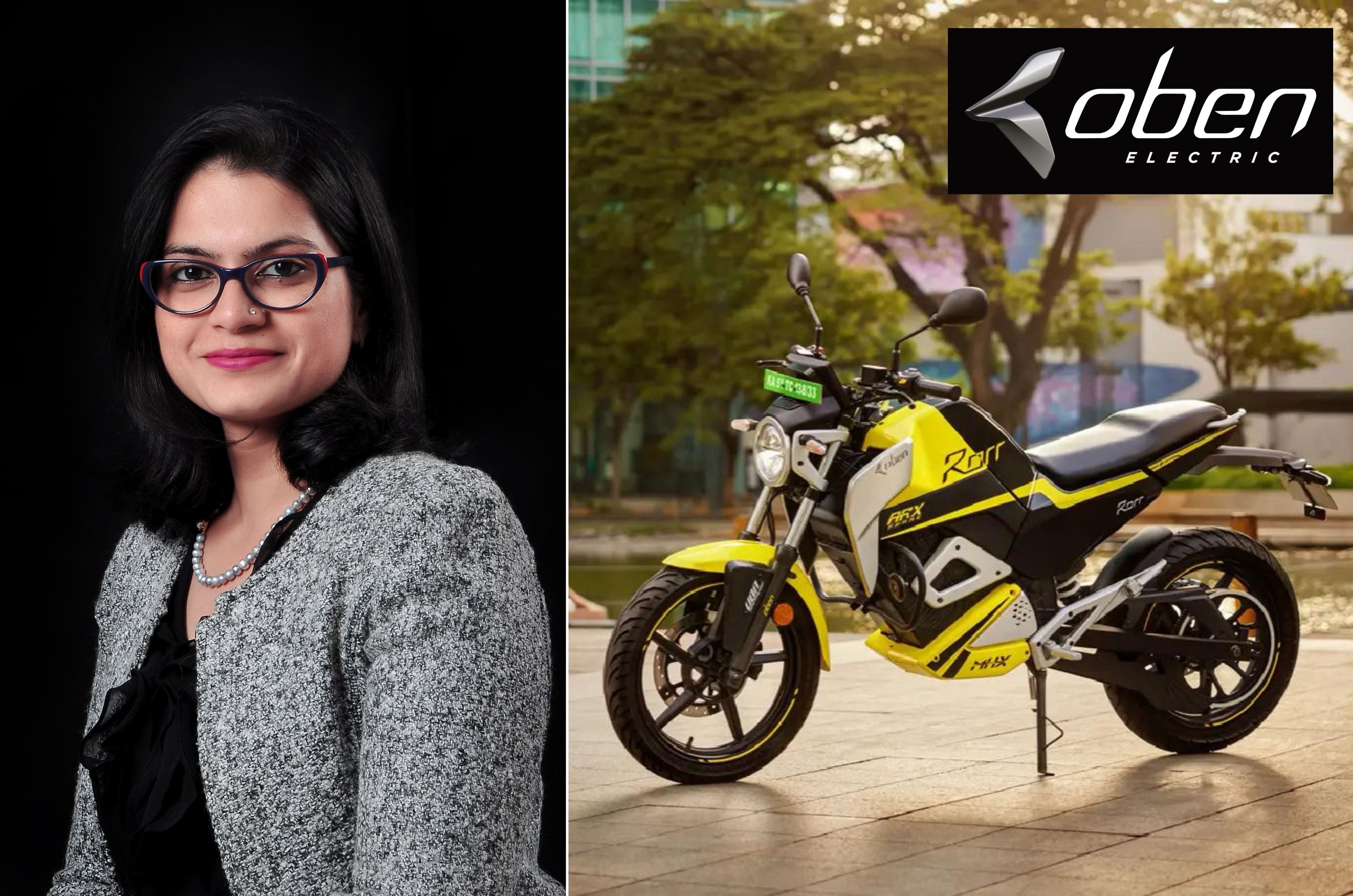
In a market where electric scooters have dominated early EV adoption, Madhumita Agarwal believes the real opportunity lies in motorcycles. As the Founder and CEO of Oben Electric, she is focused on building motorcycles that cater to India’s vast commuter base. In this interview, she discusses the company’s growth plans, its focus on after-sales and customer trust, the choice of LFP battery technology, and what it will take for electric motorcycles to truly go mainstream.
Could you share a quick update on Oben Electric?
I think these are definitely exciting times ahead. Last year was quite foundational for us because, as a new brand, getting into distribution brings its own nuances—how you scale and stabilise. As an organisation, it has been an exciting year with around 100 stores and multiple dealer partners. Our products are now reaching tier 1 to tier 4 cities, which we had always envisioned. The coming years are about growth, scaling, and building on that trust further, with more cities, states, and new products.
Are there plans to expand into multiple segments, or will the focus remain on motorcycles?
We are a motorcycle brand and will remain focused on that. There is a massive gap in the electric two-wheeler motorcycle segment, and that’s where we want to concentrate.
What is the brand’s key focus over the next 2–3 years?
Our key focus right now is after-sales and service. As more vehicles come on the road, ensuring a good customer journey becomes important. It’s a long-term relationship between the OEM and the consumer, so building customer trust is our top priority.
Which battery chemistries are you most optimistic about for electric motorcycles?
LFP still has a long way to go. I don’t see new chemistries coming into two-wheelers anytime soon at a viable cost. Technologies like solid-state are still in the R&D phase. Within LFP itself, there is a lot of scope for innovation, which is why we chose it over NMC.
How much of your product is localised?
Around 99% is localised. Like most global players, we import cells and magnets since they are largely produced in China. All critical components are manufactured in-house, and the rest of the components like brakes and suspension are sourced domestically.
What does demand look like, and are there plans to scale production?
The electric motorcycle market has barely been tapped. Demand is massive, but the market hasn’t been fully explored yet. Our current capacity is around 1 lakh units, and we will scale once we get closer to that limit.
What’s your view on Battery-as-a-Service (BaaS)?
It’s purely a business decision. While it may benefit consumers initially by lowering upfront costs, someone has to bear that cost. If it impacts the company’s financials heavily, it may not be sustainable in the long run.
What will convince a commuter to choose an electric motorcycle over a petrol one?
Design is the most important factor—it cannot be average. It’s a primary mode of commute and also a status symbol. Next is performance—acceleration, agility, and overall ride feel must match a motorcycle. Then comes range, which should comfortably meet daily usage. Price is evaluated much earlier. The questions from consumers regarding safety comes slightly later. While operational cost savings are understood, consumers are not willing to compromise on performance or ride experience.
Scooters offer more practicality with storage space, ease of use, and are usually used for city commutes only. In that case, why would a customer pick an EV motorcycle over an EV scooter?
It comes down to availability and consumer behaviour. The EV transition initially followed China, where scooters dominate, so early adoption in India was also scooter-led. Motorcycles were simply not available. India is the world’s largest motorcycle market, and this consumer segment has not been served yet. It’s a tougher problem to solve, but the opportunity exists and we have taken up that challenge.
The main and most expensive component of an EV is the battery and it has a limited lifespan. How much of a concern is that for customers today?
Not in our case. Most two-wheelers EVs use NMC batteries with around a three-year lifecycle. LFP offers longer life and more cycles. We’ve adapted car-grade LFP technology for motorcycles, which is a significant engineering effort. Our batteries are designed for around eight years, and even after that, they continue to function, but with some impact to the performance.
