
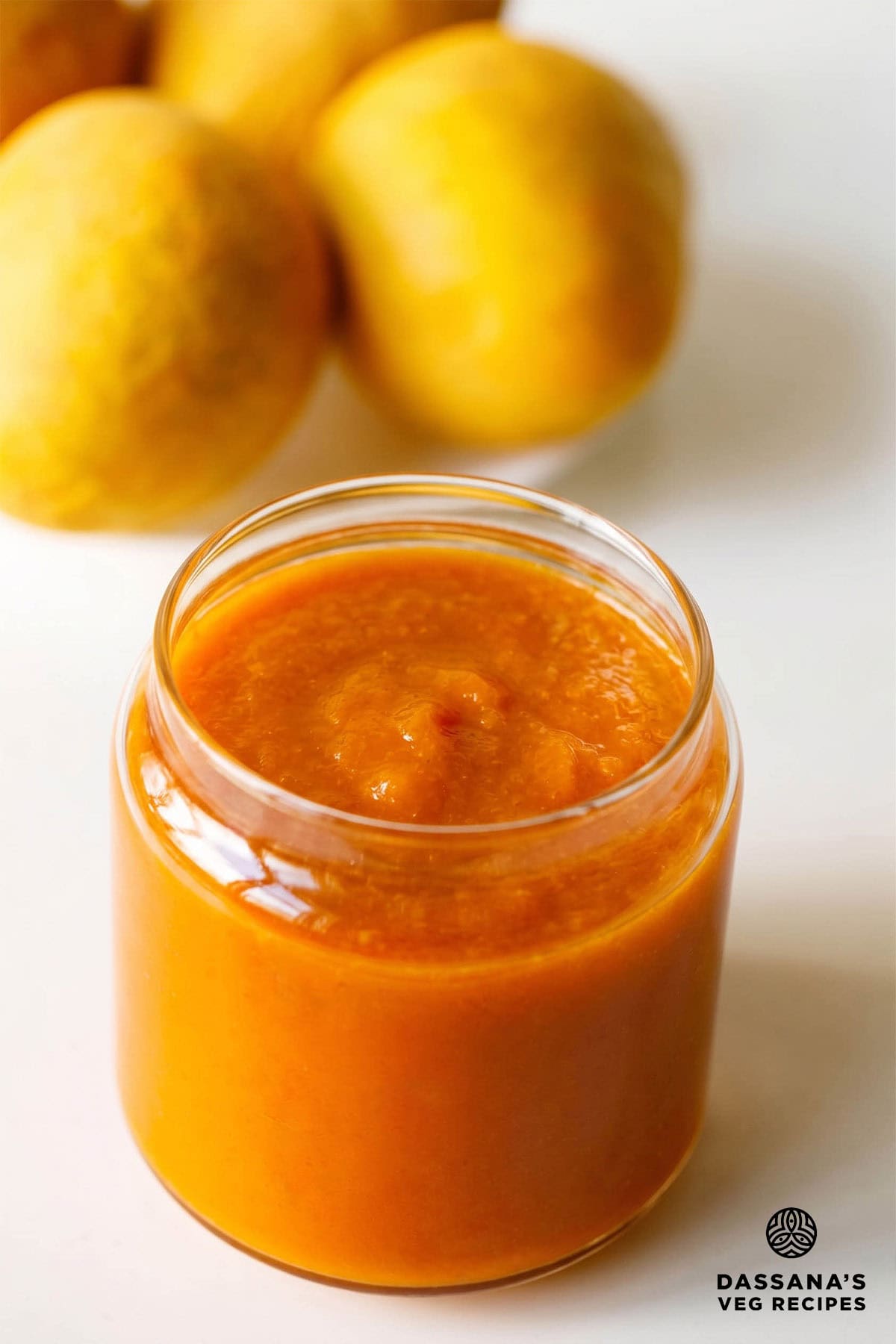
Mango jam is a simple fruit preserve made by cooking ripe mango puree with sugar and a little lemon juice. This recipe uses sweet alphonso mangoes, but you can use other varieties too. The jam has a soft, spreadable consistency since mangoes are low in natural pectin. It tastes sweet, lightly tangy, and works well to make toast, desserts or fillings.
About Mango Jam Recipe
I love making homemade fruit jams and preserves, and have shared recipes like Apple Jam, Strawberry Jam and Fig Jam, with pineapple jam coming soon.
Mango jam is a good way to use up extra ripe mangoes during the season. If you have a lot at home, this is one of the easiest preserves to make.
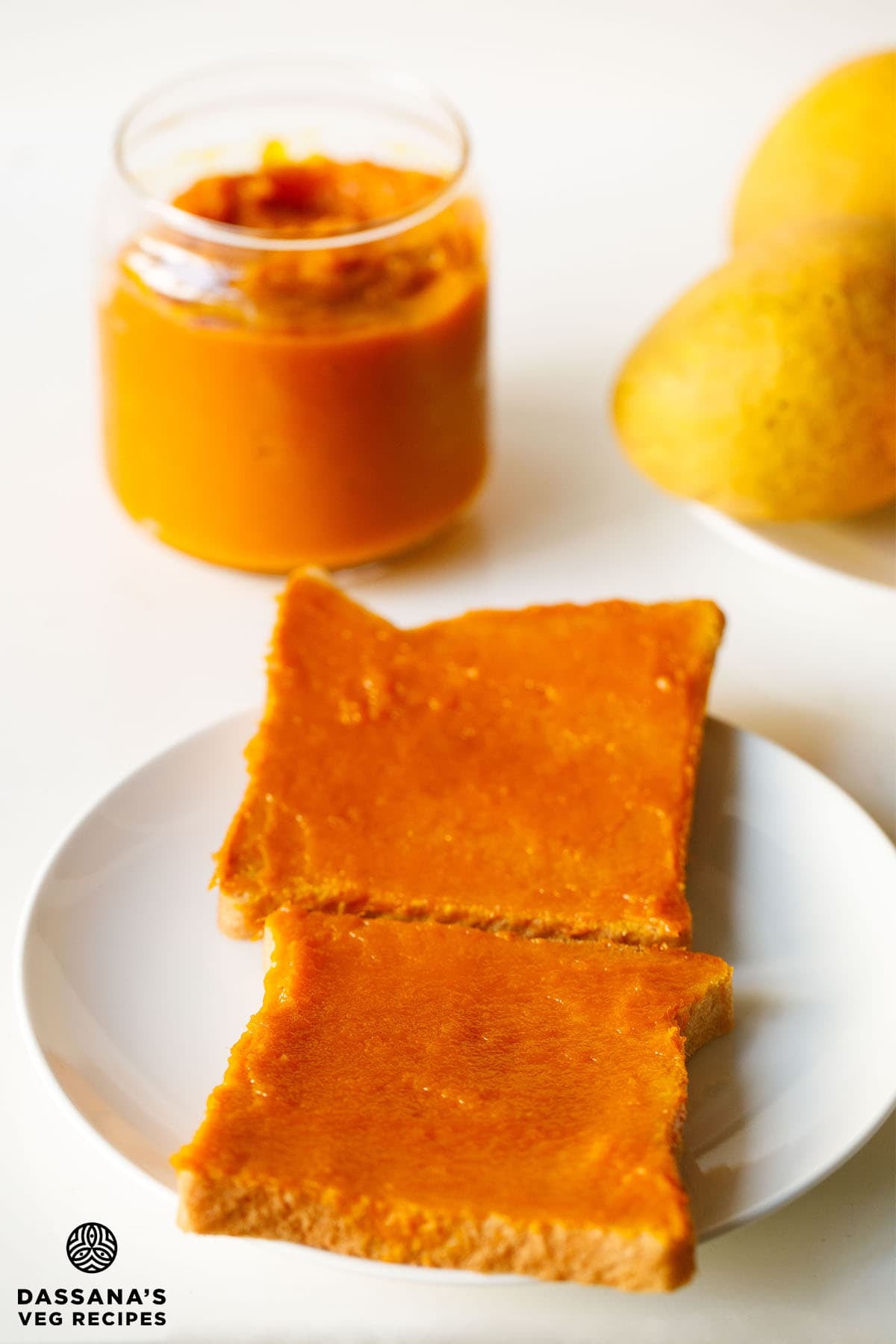
Even if mangoes are sweet, sugar is still needed. It helps preserve the jam, improves texture, and balances the flavor over time.
Mangoes are naturally low in pectin, so this jam will not set firm like apple or strawberry jam. It has a soft, spoonable consistency and spreads easily.
Lemon juice is added towards the end. It balances the sweetness, adds a light tang and helps the jam thicken slightly while keeping the color bright.
Mango Varieties To Use
The consistency of the jam depends on the mango variety you use. Alphonso gives a thick, smooth pulp, while some other varieties can be thinner.
In India, alphonso and kesar are commonly used. Both give good flavor and color.
Internationally, you can use ataulfo, kent or keitt mangoes. Just avoid fibrous varieties.
Explore More Sweet Mango Recipes
How to Make Mango Jam (Stepwise)
1. Rinse, peel and chop about 1.15 kg mangoes or 5 medium-sized alphonso mangoes. You should get around 4 to 4¼ cups of chopped mangoes.
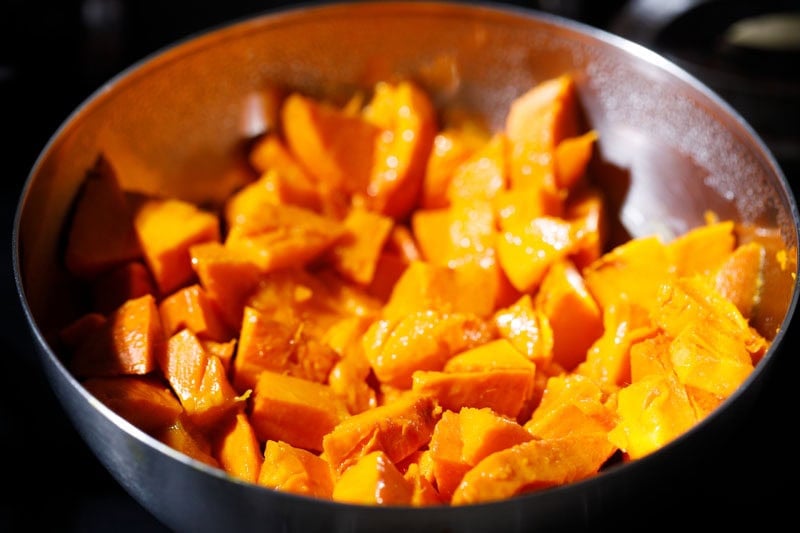
2. Add the chopped mangoes to a blender.
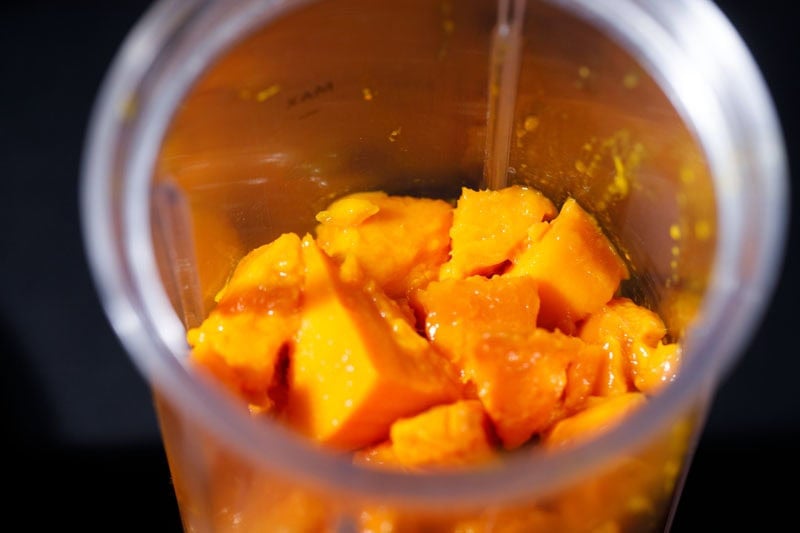
3. Make a smooth puree. You will need 3 cups of mango puree.
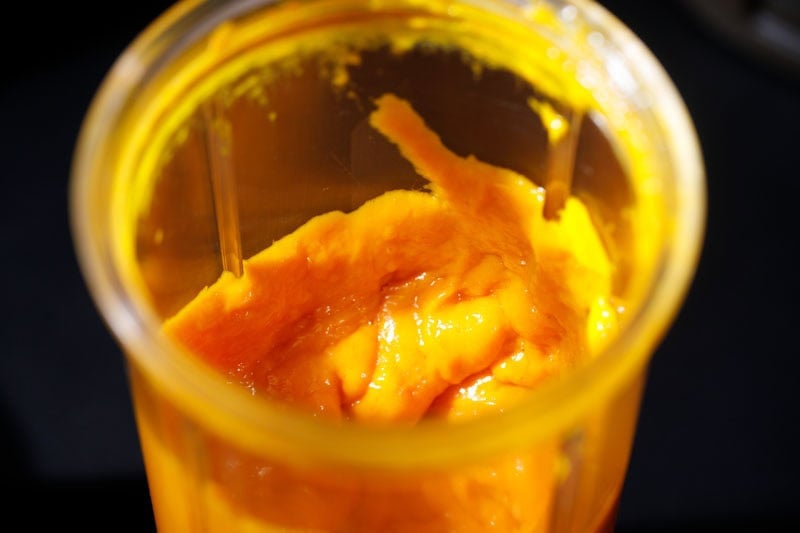
4. Take a thick, heavy and deep pan. Add the mango puree and ¾ cup (150 grams) sugar.
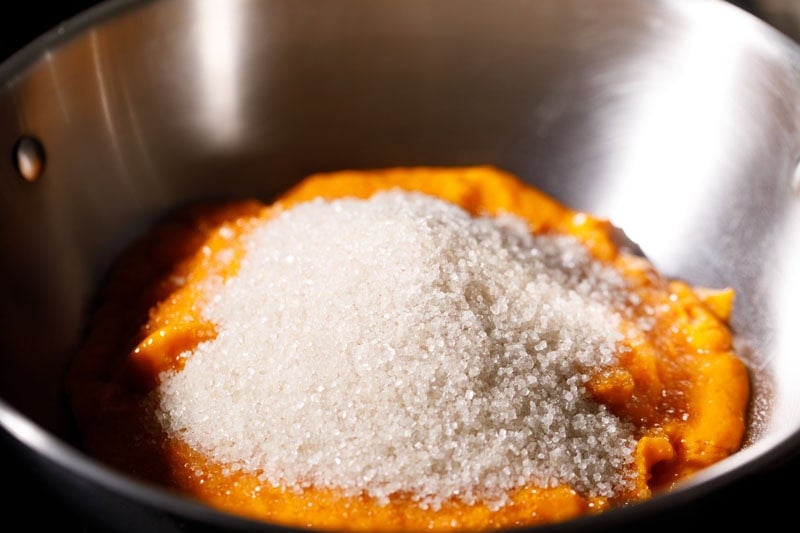
5. Keep heat low and mix well so the sugar dissolves evenly.
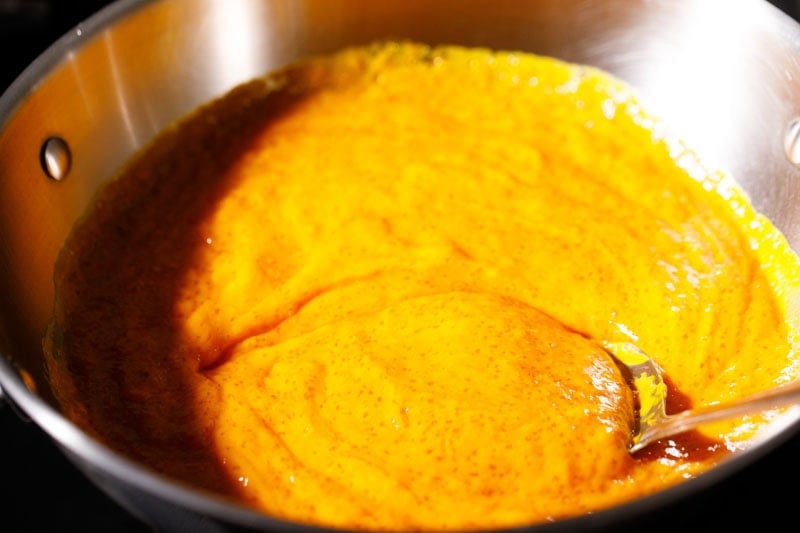
6. Cook on low to medium heat for 3 to 4 minutes. Stir often so it does not stick.
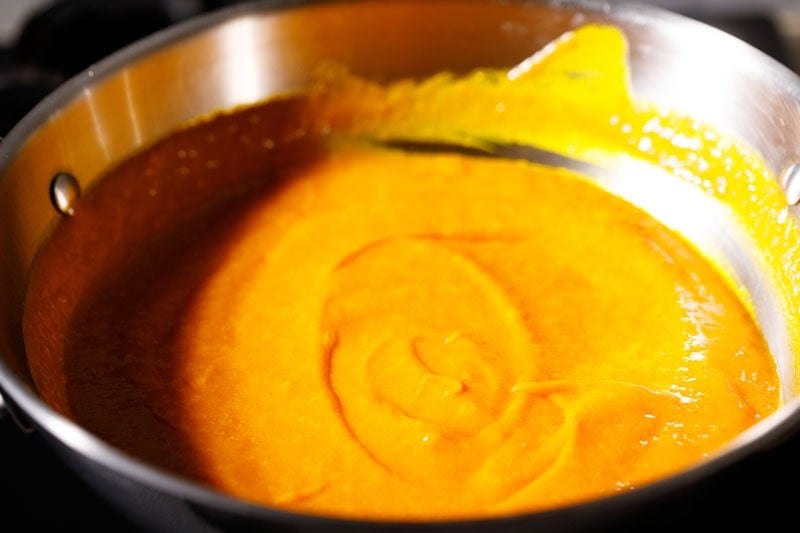
7. The mixture will begin to bubble and splutter, especially with thick alphonso pulp. Cover partly with a lid or use a mesh lid. Do not cover fully.
I kept the pan partly covered with a lid for about 15 minutes to control the spluttering.
Tip: Use a deep, heavy bottomed pan. Mango pulp, especially thick varieties like alphonso, bubbles and splutters a lot while cooking. A deep pan helps contain the splutter and prevents burns.
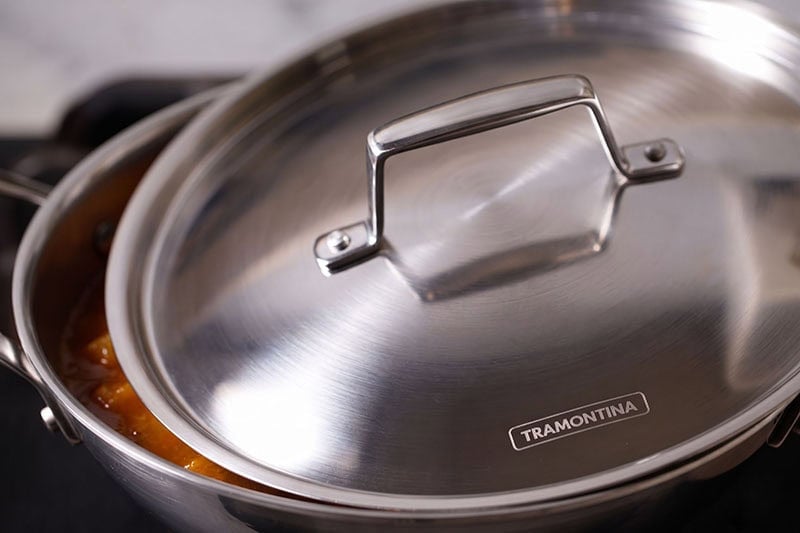
8. If spluttering is too much, reduce the heat. Stir every 2 to 3 minutes using the lid as a shield.
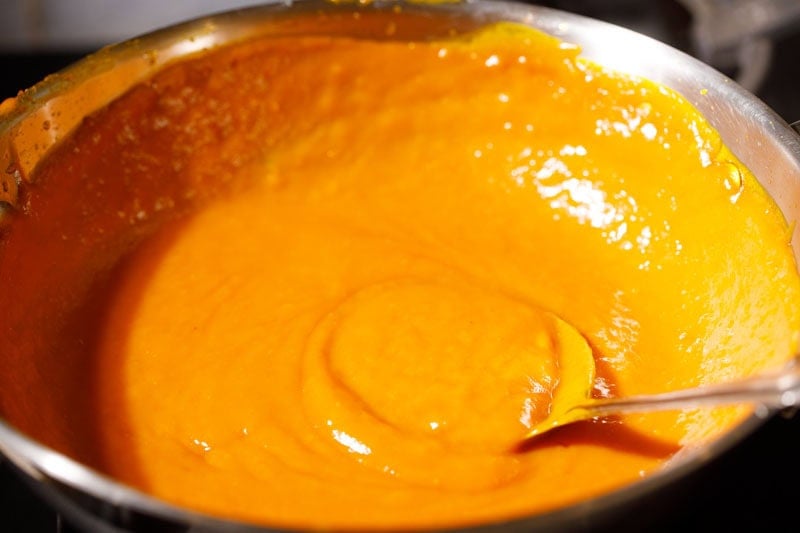
9. As it cooks, the mixture reduces and the spluttering will stop. Once the spluttering stops, remove the lid and simmer the mango mixture.
Keep stirring more often as it thickens to avoid sticking or browning at the bottom.
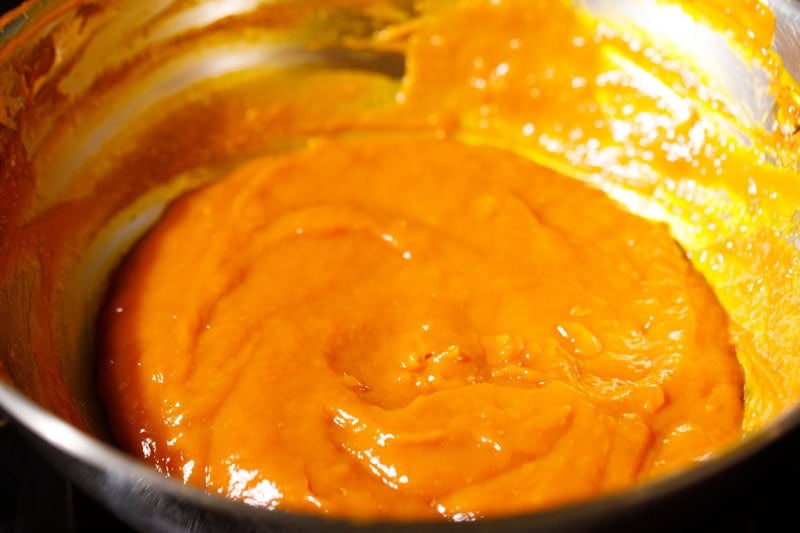
10. After about 3 to 4 minutes, the jam would begin to look glossy and thick.
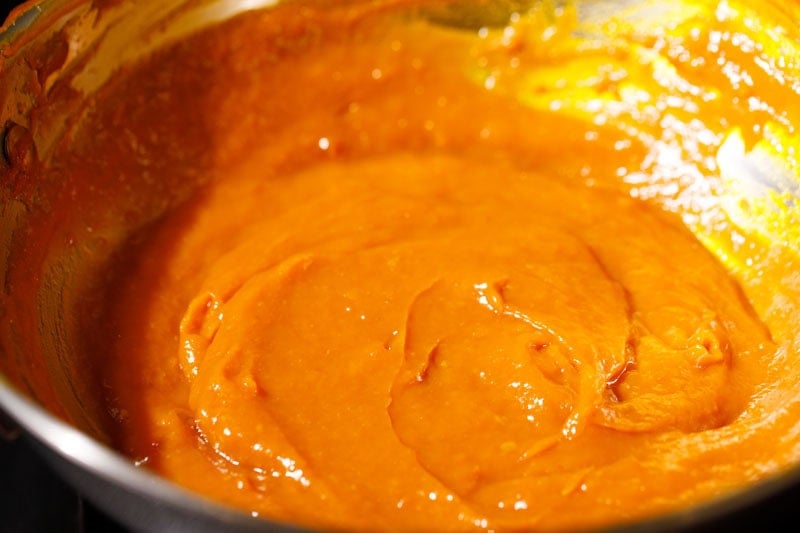
11. Add 2 tablespoons lemon juice. You can also add 1½ tablespoon lemon juice.
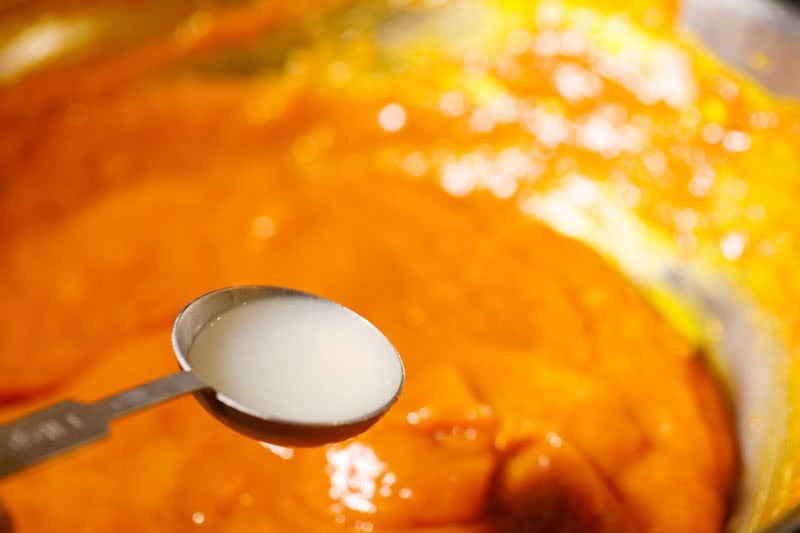
12. Mix and cook for 4 to 5 minutes more. The jam should fall from the spoon in sheets.
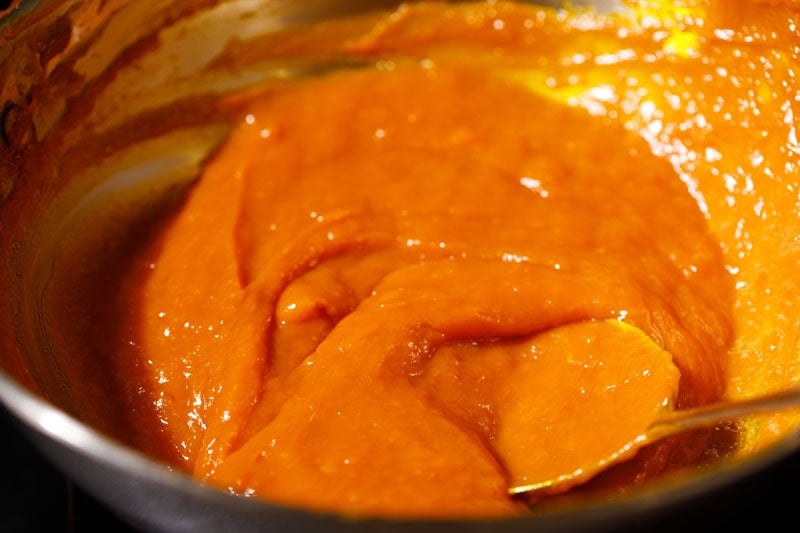
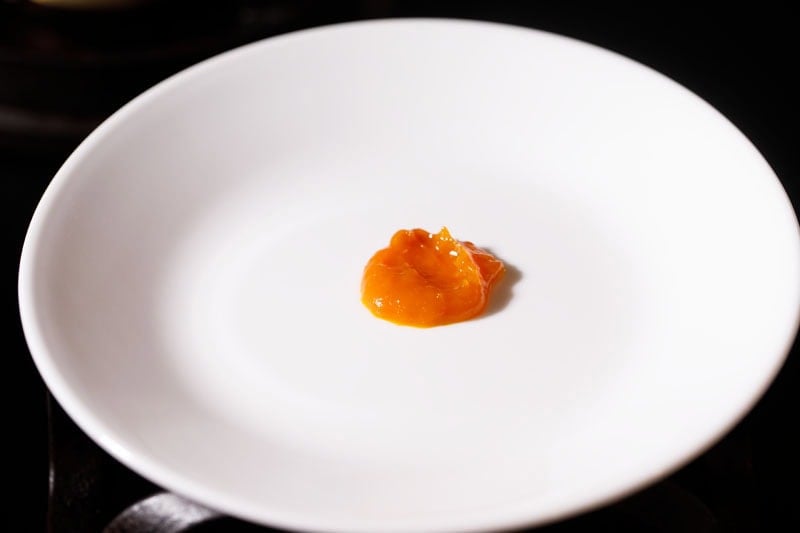
13. As the mango jam cooks, it will gradually thicken and turn glossy. Since mangoes are low in pectin, it is important to check the consistency rather than rely only on time. Use these simple tests to know when the jam is ready:
- Plate test: Place a small spoon of mango jam on a cold plate. Let it cool for a few seconds, then push gently. If it wrinkles and does not flow, it is ready.
- Sheet test: Dip a spoon in the jam and lift it. If it falls in thick sheets or flakes instead of a thin, runny stream, the jam has reached the right consistency.
- Spatula path test: Run a spatula through the jam in the pan. If it leaves a clear path and the jam does not flow back quickly, it is thick enough.
Note: Cooking time can vary from about 20 to 40 minutes depending on the thickness of the mango pulp, pan used and heat level. Cook until thick, glossy and it passes any of the above tests.
14. Turn off heat and place the pan on the kitchen countertop.
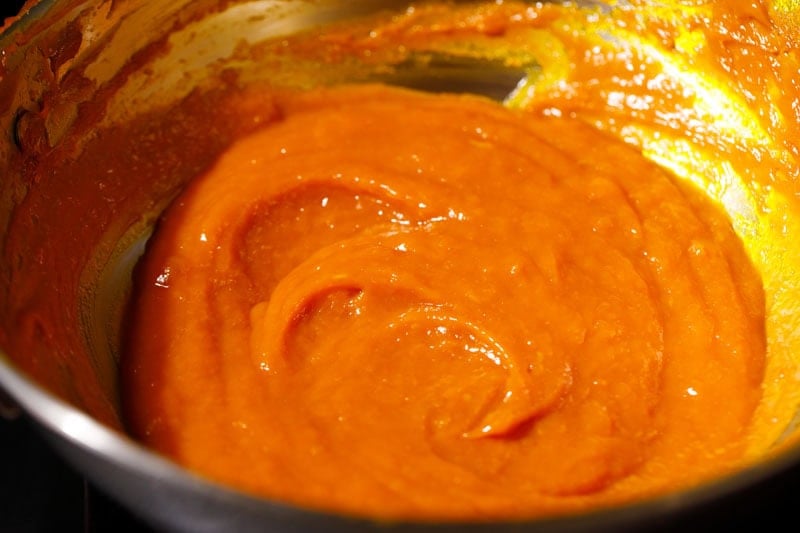
15. Add ½ teaspoon vanilla extract if using. Mix well.
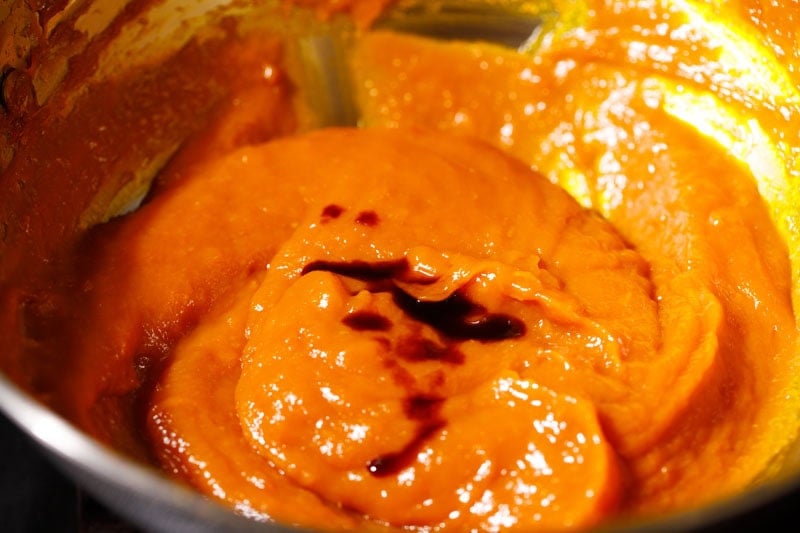
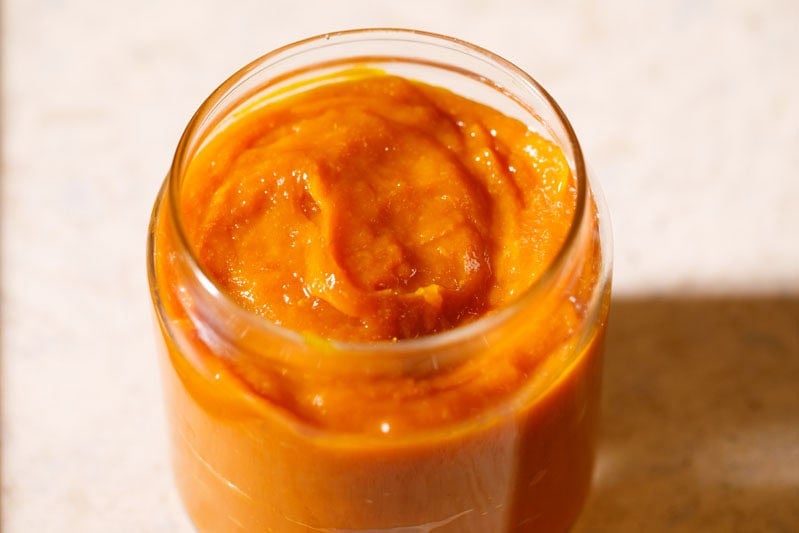
16. Pour the hot mango jam into a clean, dry glass jar. Seal. Let it cool completely, then refrigerate.
Serving Suggestions & Storage
Use mango jam on toast, bread, roti or paratha. It also works well as a cake or cookie filling, or with yogurt.
You can swirl it into desserts like cheesecake, mousse or ice cream, or serve with pancakes.
Cool completely before storing in the fridge. Use within 2 weeks.
Dassana’s Recipe Tips
- Cooking time: It took me about 40 minutes to cook this jam, but the time can vary. Thick mango pulp like alphonso, larger quantity, lower heat and frequent stirring can increase the cooking time. Using a wide, heavy pan and cooking on low to medium heat can reduce it to about 20 to 30 minutes.
- Do not overcook: The jam thickens more after cooling. If overcooked, it can turn too chewy or dense.
- Stirring often: Stir more as the jam thickens. It can catch at the bottom quickly.
- Spluttering: Thick mango pulp splutters a lot. Use a lid partially or a mesh cover and keep heat low.
- Lemon juice timing: Add lemon juice towards the end. It balances the sweetness and gives a clean, slightly tangy taste.
- Mango choice: Use sweet, non-fibrous mangoes. Fibrous mangoes affect the texture.
- Spice flavoring: You can add a pinch of cardamom powder, a very small pinch of cinnamon or a few saffron strands at the end for a mild flavor. Keep it light so the mango taste remains the main flavor.
Quick Help
Why add sugar if mangoes are already sweet?
Sugar helps preserve the jam and gives it body and thickness. Even if mangoes are sweet, sugar is needed for the right consistency and shelf life.
Why add lemon juice?
It adds slight tang, improves flavor and helps with mild thickening and color.
Why is my mango jam not thick like store-bought jam?
This jam sets to a soft, spreadable consistency. It may feel thick but will not hold a firm, jelly-like shape like commercial jams.
Can I skip vanilla extract?
Yes, it is optional. The mango jam tastes good without it.
Blend chopped ripe mangoes to a smooth puree.
Heat mango puree and sugar in a thick, heavy and deep pan on low heat. Stir well until the sugar dissolves.
Cook on low to medium heat, stirring often so it does not stick.
The mixture will begin to bubble and splutter, especially with thick mango pulp. Partly cover with a lid or use a mesh lid. Do not cover completely.
If spluttering is too much, reduce the heat. Stir every few minutes using the lid as a shield.
As it cooks, the mixture will reduce and the spluttering will stop. Remove the lid and continue to cook, stirring more often as it thickens.
Cook until the jam looks glossy and thick.
Add lemon juice and mix well. Continue to cook until the jam thickens further and falls from the spoon in sheets.
Check doneness using simple tests. For the plate test, the jam wrinkles when pushed. For the sheet test, it falls in thick sheets. For the spatula test, it leaves a clear path in the pan briefly.
The jam should be thick, glossy and spreadable.
Turn off the heat and place the pan on the countertop.
Add vanilla extract if using and mix well.
Pour the hot jam into a clean, dry glass jar. Seal and let it cool completely, then refrigerate.
Serve on toast, bread, roti or paratha. It can also be used as a cake or cookie filling, or with yogurt and desserts.
- Do not expect a firm set like apple or berry jams.
- Jam thickens after cooling, so avoid overcooking.
- Stir frequently, especially when the jam begins to thicken.
- Use non-fibrous mangoes for smooth texture.
- Add lemon juice at the end for best flavor.
Calories: 524kcal | Carbohydrates: 134g | Protein: 3g | Fat: 2g | Saturated Fat: 0.4g | Polyunsaturated Fat: 0.3g | Monounsaturated Fat: 1g | Sodium: 5mg | Potassium: 660mg | Fiber: 6g | Sugar: 128g | Vitamin A: 4140IU | Vitamin B1 (Thiamine): 0.1mg | Vitamin B2 (Riboflavin): 0.2mg | Vitamin B3 (Niacin): 3mg | Vitamin B6: 0.5mg | Vitamin C: 145mg | Vitamin E: 3mg | Vitamin K: 16µg | Calcium: 44mg | Vitamin B9 (Folate): 167µg | Iron: 1mg | Magnesium: 39mg | Phosphorus: 55mg | Zinc: 0.4mg
