
4 min readNew DelhiMay 6, 2026 06:00 AM IST
Blood sugar level fluctuations can vary from person to person, depending on a mix of lifestyle, medical, and situational factors. However, if a particular pattern keeps repeating, it might be a sign that your body is signalling something important. One internet user noticed a pattern and took to Quora to share the experience: ‘Why do I have low blood sugar only after breakfast?’
We decided to dig deeper and reached out to Dr Rajiv Kovil, Head of Diabetology and a weight-loss expert at Zandra Healthcare, and to Zandra Healthcare and Co-founder of Rang De Neela Initiative, seeking answers.

DISCLAIMER: This article is based on information from the public domain and/or the experts we spoke to. Always consult your health practitioner before starting any routine.
Why your body is different in the morning
“Morning metabolism is unique. After an overnight fast, the body is insulin-sensitive,” explains the diabetologist.
The pancreas sometimes overshoots with insulin, leading to a post-breakfast dip. “Think of it as the pancreas being overenthusiastic.”
This pattern is commonly referred to as reactive hypoglycaemia, which can lead to a drop in sugar 1–3 hours after a meal for many. “It’s not classical diabetes hypoglycaemia, it’s more of a metabolic overcorrection,” wherein the glucose rises fast and sugar later dips.
“Add early morning cortisol fluctuations, and this becomes more pronounced,” Dr Kovil points out, while stressing that the pattern is surprisingly common among “pre-diabetic” Indians.
Story continues below this ad
Why your breakfast could be the real trigger
The bigger issue often lies in what’s on your plate. Diets high in refined, fast-digesting carbohydrates can cause a quick spike followed by a crash.
Common maida-based Indian breakfast options like “white bread, cornflakes”, or even “sugary masala chai” can trigger a sharp rise in blood glucose. “The more ‘soft, white, and processed’ the breakfast, the higher the risk,” the diabetologist cautions while admitting that it is very common in “Indian dietary patterns.”
“Even typical South Indian breakfasts like idli, dosa, poha can spike sugar quickly,” says Dr Kovil, while adding that the spike is often followed by a “delayed insulin surge”, leading to a crash.
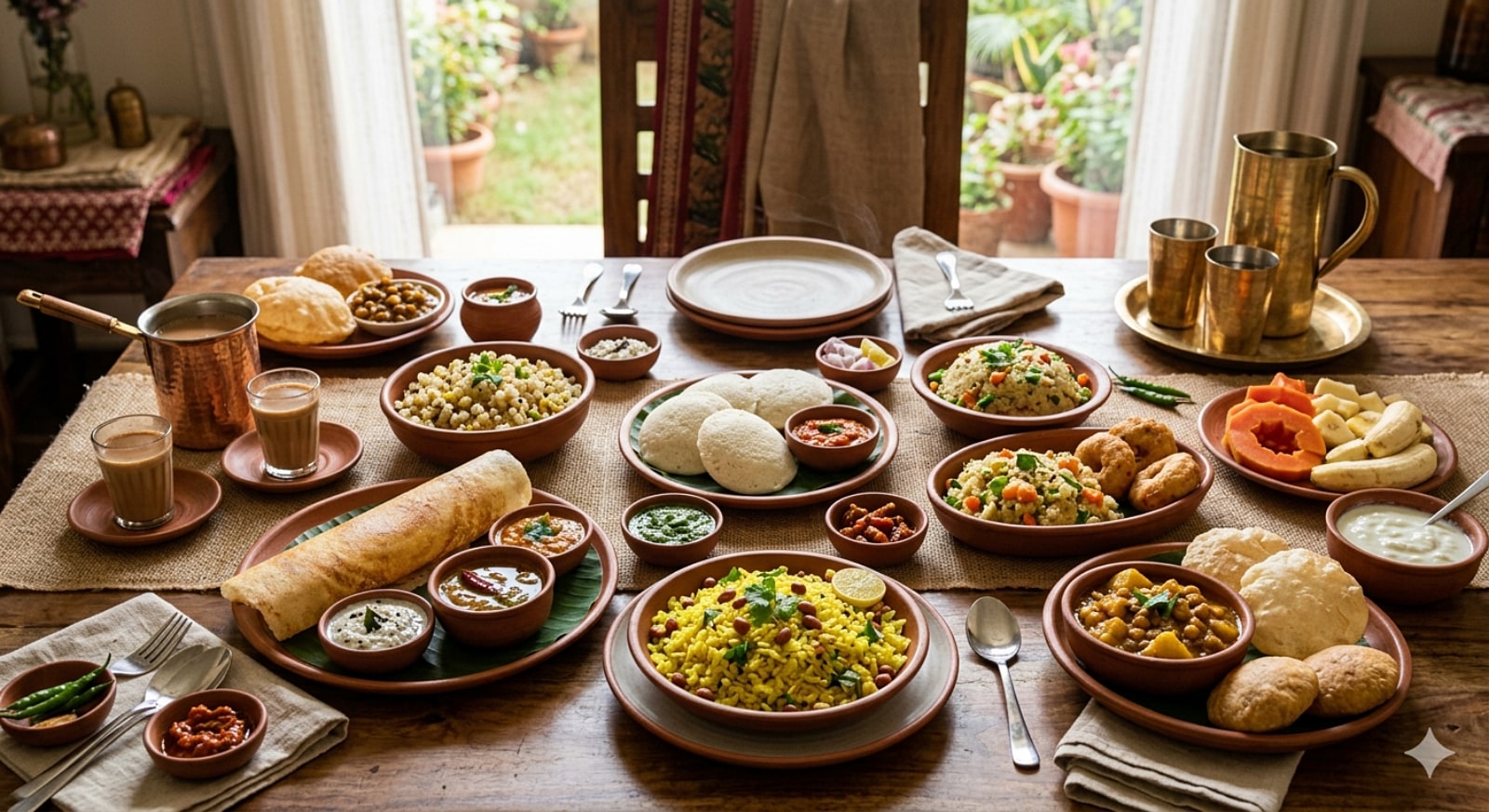 Indian breakfast items are often “soft, white, and processed,” which increases the risk (Image: Gemini)
This is why many people experience symptoms like sweating, tremors, hunger, irritability, or light-headedness a couple of hours after eating—often improving soon after they eat again, which as Dr Kovil, is an important sign to watch out for.
Story continues below this ad
While these episodes are “not panic-worthy, but definitely not to be ignored,” as frequent dips can point to early metabolic dysfunction.
“If episodes are frequent, severe, or associated with confusion or blackouts, it needs evaluation,” the diabetologist cautions. Similarly, if low sugars start occurring in the “fasting glucose state”, instant medical evaluation is needed.
The solution, is relatively simple: “Balance the plate, don’t spike the sugar.” An ideal breakfast should look something like: Protein + fiber + healthy fat + low GI carbs. Dr Kovil suggests a few breakfast options, that align with the Indian palate, below:
- Eggs + multigrain roti / vegetable omelette
- Paneer bhurji / tofu scramble
- Sprouts chaat with nuts
- Greek yogurt + seeds
- Eggs, chicken, fish with sautéed vegetables
DISCLAIMER: This article is based on information from the public domain and/or the experts we spoke to. Always consult your health practitioner before starting any routine.
