
A large new review of more than 1.5 million cancer cases has found that obesity is linked to a higher risk of 19 different types of cancer, reinforcing its role as a major, preventable risk factor. A study published in Nature Metabolism identified new associations with cancers such as leukaemia, non-Hodgkin lymphoma, bladder cancer, and glioma, while highlighting that the strength of these links can vary by sex and region.
Commenting on the findings, Dr Saneya Pandrowala, Consultant GI & HPB Oncosurgery, KIMS Hospitals, Thane, says the study adds significant weight to the growing evidence that excess body fat is far more than a cosmetic concern.

DISCLAIMER: This article is based on information from the public domain and/or the experts we spoke to. Always consult your health practitioner before starting any routine.
Why this study is significant
According to Dr Pandrowala, the sheer scale of the review makes its conclusions particularly compelling. “This analysis is important because it combines data from a large population across many regions. As oncologists, we have known that obesity raises the risk of several cancers, but this study strengthens the evidence and shows that the impact is broader than we previously thought.”
She explains that obesity contributes to cancer risk through several biological mechanisms. “Excess body fat is not just stored energy; it behaves like an active organ that releases inflammatory chemicals, changes hormone levels, and affects insulin metabolism. These changes create an environment that can promote cancer development over time.”
Dr Pandrowala adds that the findings reinforce the need to treat obesity as a preventable cancer risk factor.
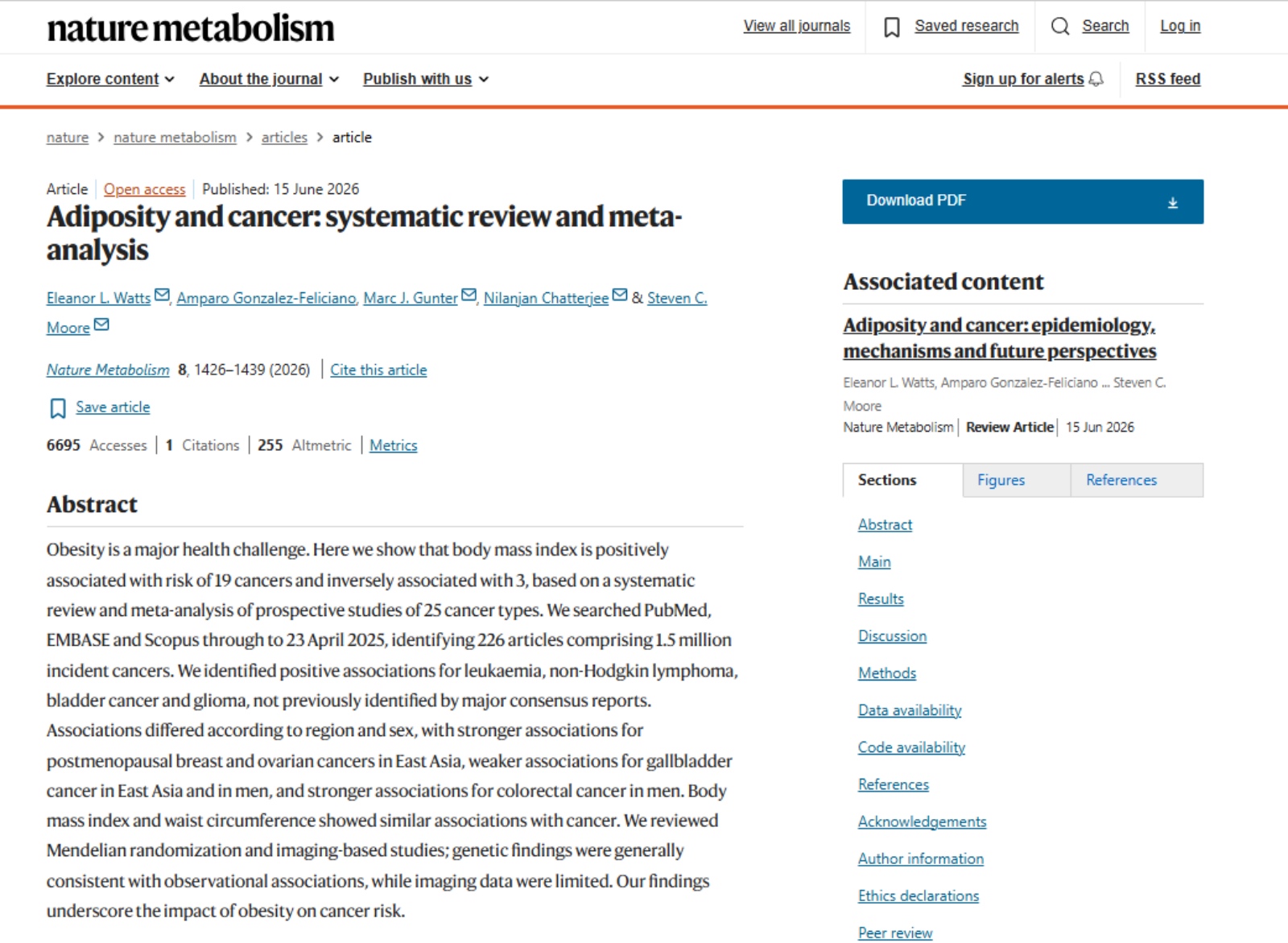 Does obesity cause cancer ? (Photo: Screendrab of the study by Nature Metabolism journal)
Why obesity affects cancer risk differently across populations
One of the key findings of the study was that obesity’s association with cancer differed across regions and between men and women. Stronger links were observed for postmenopausal breast and ovarian cancers in East Asia, while colorectal cancer showed a stronger association in men.
Story continues below this ad
Dr Pandrowala says these differences reflect the complex nature of cancer risk. “Cancer risk is rarely driven by a single factor. Genetics, body fat distribution, diet, physical activity, environmental factors, and access to healthcare all influence how obesity affects a person.”
She notes that hormonal changes after menopause play a significant role. “After menopause, fat tissue becomes a key source of estrogen, which can increase the risk of hormone-sensitive cancers like breast and ovarian cancer.”
Ethnicity also matters, she says. “In many Asian populations, people tend to develop metabolic issues at lower BMI levels than those in Western populations. Men and women also differ in where they store body fat and how hormones interact with excess weight. These differences help explain why the obesity–cancer relationship is not the same across populations.”
Is maintaining a healthy weight enough?
While maintaining a healthy body weight is crucial, Dr Pandrowala emphasises that cancer prevention goes beyond the number on the weighing scale.
Story continues below this ad
“Maintaining a healthy weight is important, but it is just one part of cancer prevention. The quality of the weight matters as much as the number on the scale.”
She recommends adopting a comprehensive approach to lowering cancer risk. “A balanced diet rich in fruits, vegetables, whole grains, and lean proteins, along with regular physical activity, limiting ultra-processed foods and sugary drinks, avoiding tobacco, and reducing alcohol all contribute to lowering cancer risk.”
She also highlights the importance of monitoring abdominal fat. “Waist circumference is a valuable indicator because abdominal fat is closely linked with metabolic problems that can promote cancer.”
Even modest lifestyle improvements, she says, can have meaningful long-term health benefits. “Even a modest reduction in body weight, combined with healthier lifestyle habits, can improve metabolic health and lower long-term cancer risk. Prevention should start early in adulthood instead of waiting until obesity becomes severe.”
Story continues below this ad
DISCLAIMER: This article is based on information from the public domain and/or the experts we spoke to. Always consult your health practitioner before starting any routine.
