
Adidas, in recent years, may have sat out of the “super-trainer” wars that have been waging where brands like Asics and On have been stacking foam and chasing bounce. Adidas, in all these years, has stuck to what Boost always did best: reliable and cushioning galore, even if slightly unexciting. But only OGs would know that the Adidas Boost completely transformed performance running back in 2013. But as super-foams advanced, classic TPU-based pelletised midsoles gradually transitioned into lifestyle territory. With the Hyperboost Edge, Adidas is finally showing up to the party. On paper it’s a serious swing, a 45mm rear stack, a brand-new Hyperboost Pro foam which the company says is “engineered into a new formulation optimised for every type of run,” and a Primeweave upper built for lockdown rather than looks.
It took me a couple of running sessions to fully get what they were going for, though. My first outing in these Hyperboost Edge was underwhelming, where the foam felt stiff, almost stubborn, like it needed convincing. By run two, something clicked. This shoe doesn’t want you to shuffle along; it wants you actually to run, and once you oblige it, that midsole starts giving back in a way I genuinely didn’t expect from Adidas. But and there’s always a but with a debut shoe, for the upper I had opinions, and not all of them were good ones. Here’s everything I found after putting real kilometres on the Hyperboost Edge.
Adidas Hyperboost Edge Design
Talking about the design, the first time I pulled the Hyperboost Edge out of the box, my first reaction wasn’t about performance at all, as it was just how much shoe there is. Notably, Adidas didn’t try to hide the stack height or make it look sleeker than it is; they leaned into it. At 255 grams (measured for men’s 8.5) and sitting on a 45mm rear stack with a 6mm drop, that thick slab of Hyperboost Pro foam sits right there under a 3-Stripes badge running across the midfoot, and it reads more like a fashion sneaker silhouette than a typical racing-inspired trainer. I’ve had people stop me during my morning runs to ask what I’m wearing, which almost never happens with running shoes anymore. Whether you love that or find it a bit much is genuinely going to be a personal thing, as this isn’t a shoe that tries to blend in.
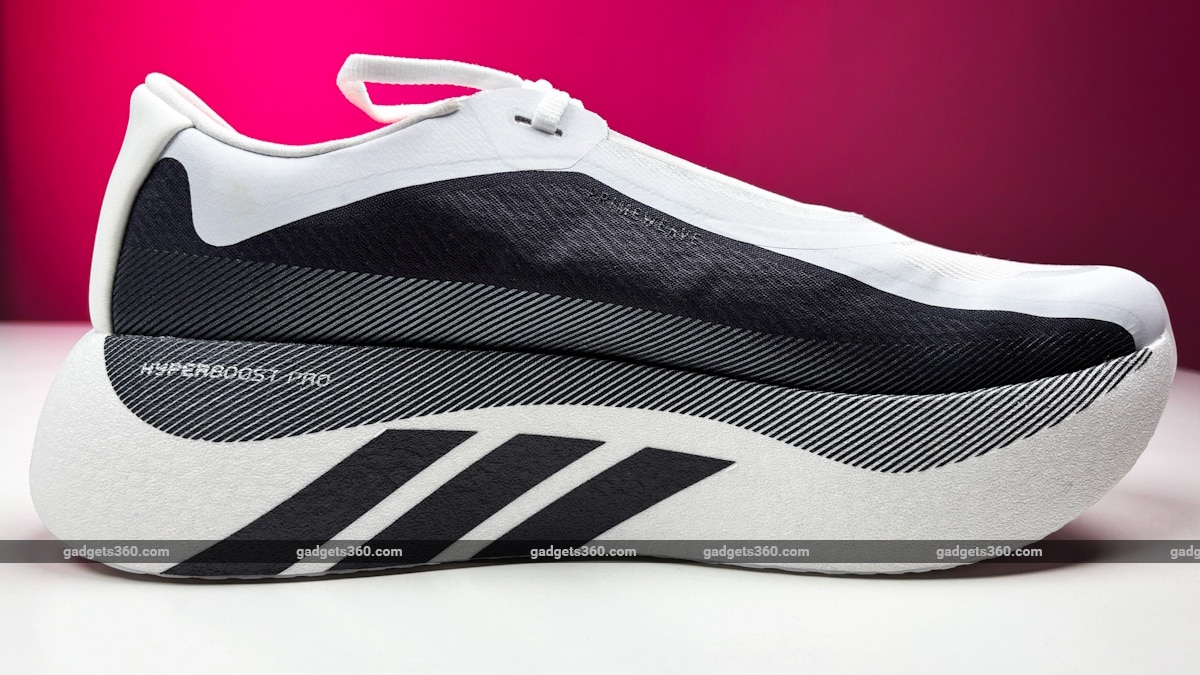
The Primeweave upper on the Hyperboost Edge looks incredible
As Adidas stresses, the Hyperboost Edge combines three breakthrough technologies: the new Hyperboost Pro midsole, a Primeweave upper, and a Lighttraxion outsole to balance comfort and responsiveness in every stride. The biggest highlight is that the Hyperboost Edge has been designed as the first Adidas lightweight non-plated super-trainer.
What that means is it has been crafted with no plates or stiffening elements; a new foam works naturally through the gait cycle, creating a lightweight and propulsive ride. The shoe is lightweight but promises supreme comfort and high energy return. The shoe also offers excellent shock absorption, better than recently tested Asics and Nike shoes.
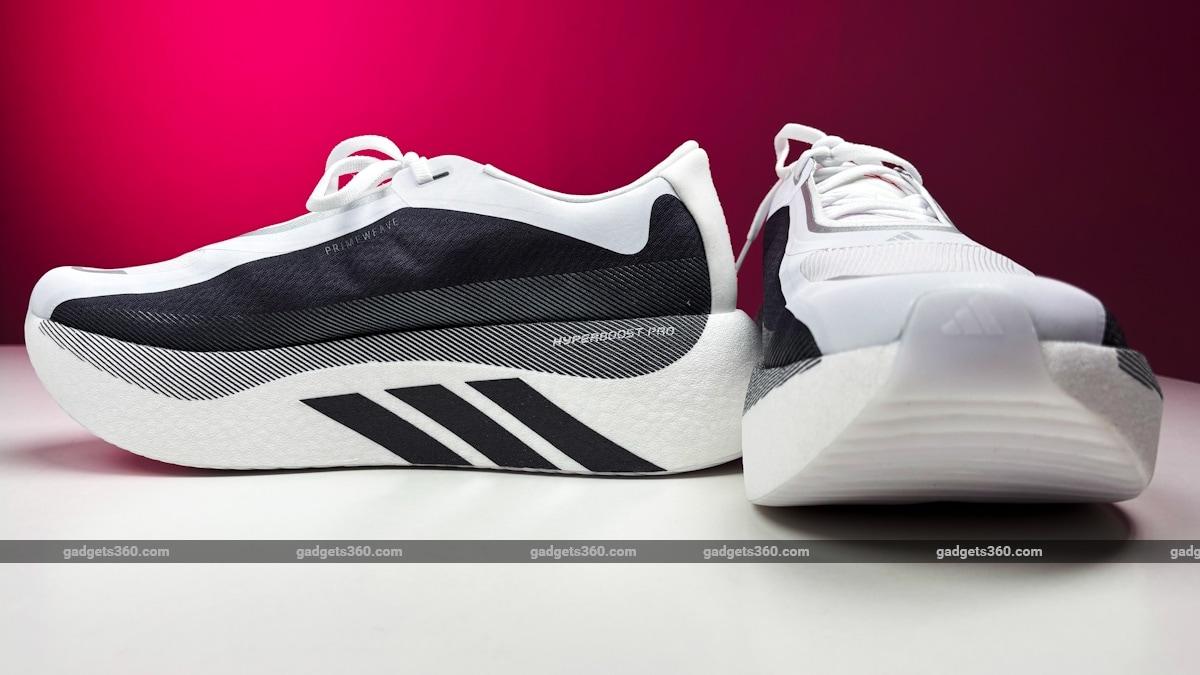
At 255 grams (approx for 8.5 Men’s size), it shows genuinely light for how much shoe this is
The upper is where things get more complicated, and where I spent the most time going back and forth in my head. Adidas describes the Primeweave as a “super-soft, hyper-light woven material” built for “effortless comfort and reliable lockdown.” I’ll give them this much, as the midfoot wrap really is secure without feeling like it’s clamping down, and there’s decent room up in the toe box for your foot to do what it needs to do on longer efforts. But it’s a bigger but: it’s also dense, with the tightly woven material having barely any visible ventilation, and you feel that the moment you’re a few kilometres into a warm-weather run. Especially for me, when I was testing these in Delhi in July’s humid weather, things got uneasy at times. In London, where I went for some runs on cooler mornings, I didn’t think twice about it. On a humid evening, my feet were noticeably warmer than in pretty much anything else in my rotation right now.
Then comes the heel, which is honestly the part of this shoe I have the most mixed feelings about. Adidas calls this its “Comfort Pods”, where integrated heel pods are designed to add targeted cushioning and stability and “enhance step-in comfort without distraction.” On paper, it’s a smart idea, and I could feel what they were going for the moment I stepped in. In practice, however, the collar around those pods is thin and rigid enough that I felt some rubbing on my left ankle during the first few runs, and I know I’m not the only one.
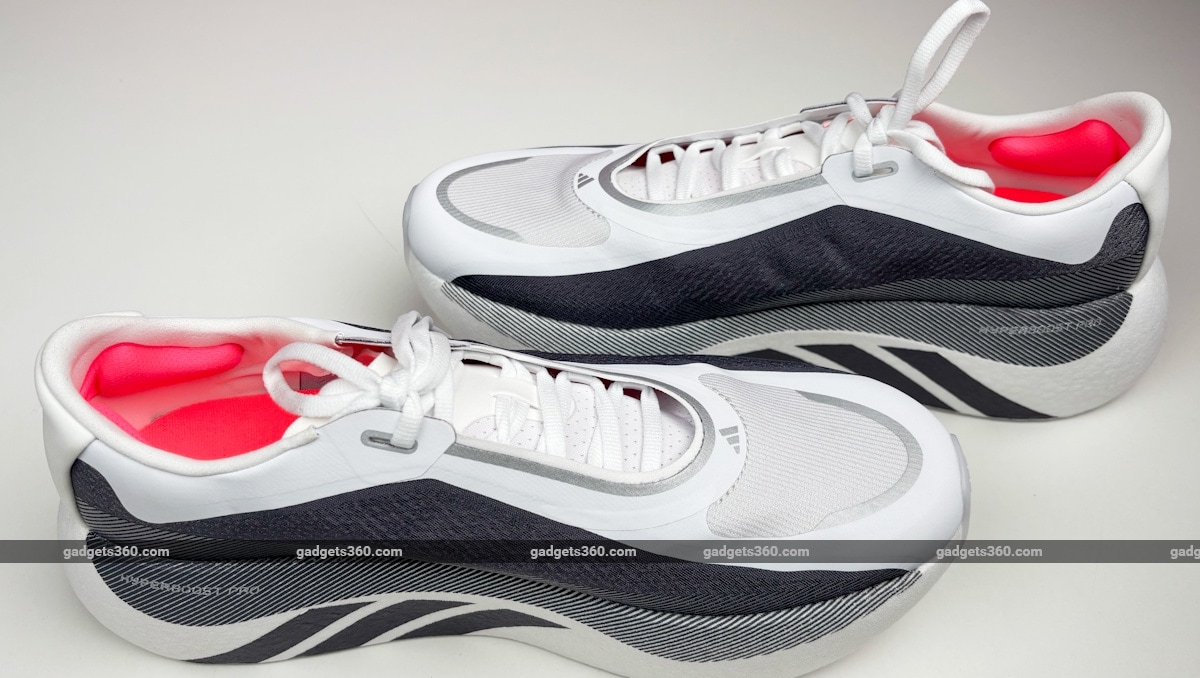
At Rs. 19,999, it is pricey, but right in line with the ASICS Megablast or Superblast trainers for sure
The outsole rounds things out nicely. It’s a full-length Lighttraxion outsole, which is the same compound Adidas typically reserves for the Adizero racing line, rather than the exposed-foam patches you see on a lot of super-trainers trying to save weight. It looks unglamorous compared to the wild midsole, but it’s doing real work; more on that in the performance section. Overall, this is a shoe that clearly had a design brief of “make a statement,” and it mostly succeeds, with a couple of initial issues you face when you start, but soon you kind of like it more.
Adidas Hyperboost Edge Specifications
- Category – Running Shoes
- Colour Options – 2 (Cloud White/Aurora Onix/Solar Turbo, Cloud White/Petrol Met. F17/Lucid Red)
- Weight – 255 grams (approx., can differ based on size)
- Heel-to-toe drop: 6mm, 45mm (heel) and 39mm (forefoot)
- Other Features – Hyperboost Pro foam midsole aimed for daily runs and high-mileage training, Primeweave upper, and a full-length LIGHTTRAXION outsole which has been borrowed from the Adizero racing line for high traction and grip from heel to toe
- Price – Rs. 19,999 (Available now)
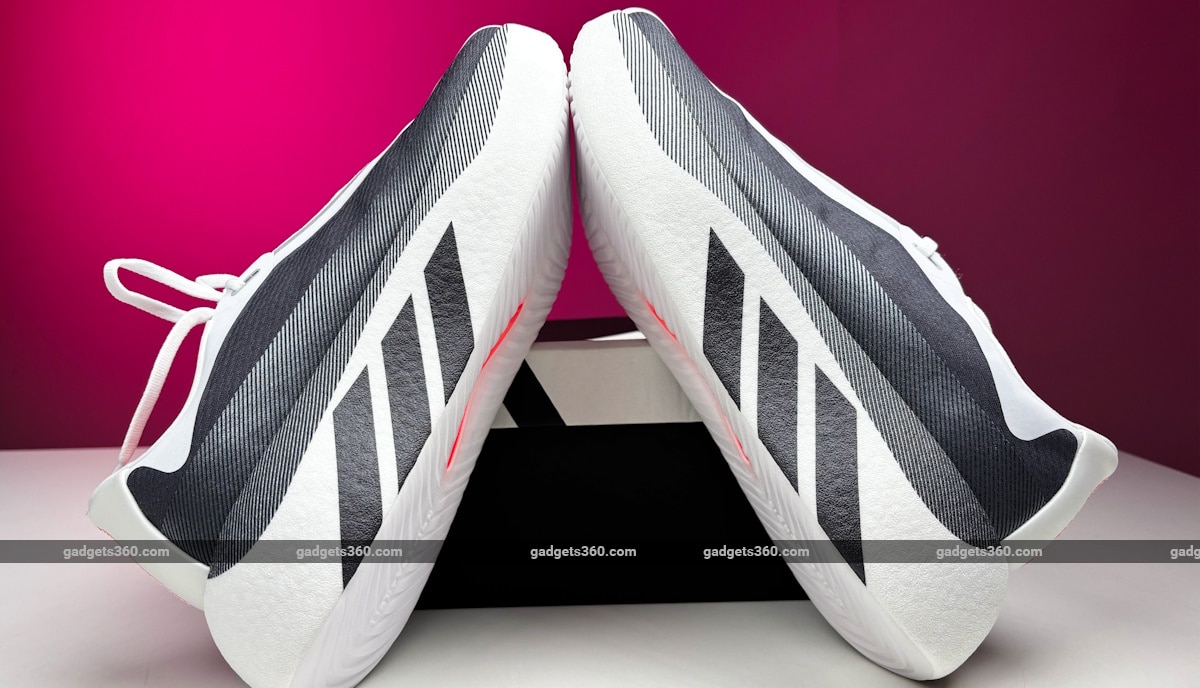
Hyperboost Pro foam = Boost’s bounce
Adidas Hyperboost Edge Performance
The Hyperboost Edge, after living with it for a few weeks, actually earns its “super-trainer” label, and where my opinion of it shifted the most over the course of testing. From my very first run in these, they were a bit confusing. The foam felt firm, almost unyieldingly so, and I remember thinking I’d been sold a marketing story that didn’t match what was under my feet. I nearly wrote it off after that first easy jog. But by my second and third runs, once I’d picked the pace up past a shuffle, something genuinely clicked.
What I realised in multiple runs was that this isn’t a foam that wants to be sunk into. It wants to be loaded and released, and once you start running with actual intent, it starts giving back in a way that easy, recovery-pace running just doesn’t unlock, which actually tracks with how Adidas pitches this foam, as something “optimised for every type of run, from daily sessions to high mileage training” rather than one specific pace.
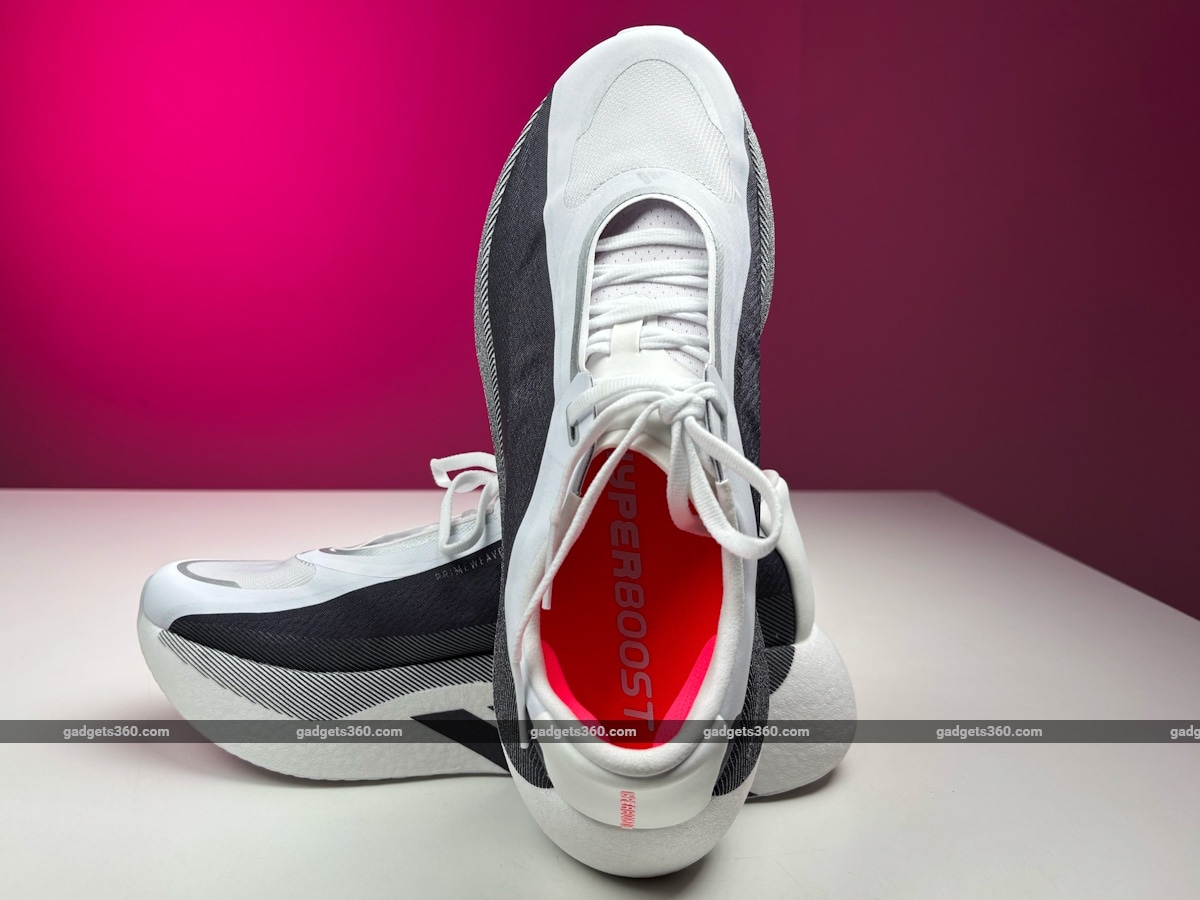
First run: unconvinced. Third run: sold. This foam needs you to actually run
The best thing is that the shoe is genuinely fun at steady and tempo efforts and even when you prefer walking after completing a few kilometres. There’s a springiness to the toe-off that I wasn’t expecting from Adidas, whose recent daily trainers have felt fairly conservative by comparison. The forefoot rocker kicks in late rather than early, so instead of feeling like the shoe is doing the rolling motion for you from heel strike, it feels more like your own push-off is being amplified right at the point you commit to it.
On a mid-length tempo run, that translated into a ride that felt lighter and quicker than a 45mm stack has any business feeling and of course, at 255 grams, this is a genuinely light shoe for how much foam is under your foot.
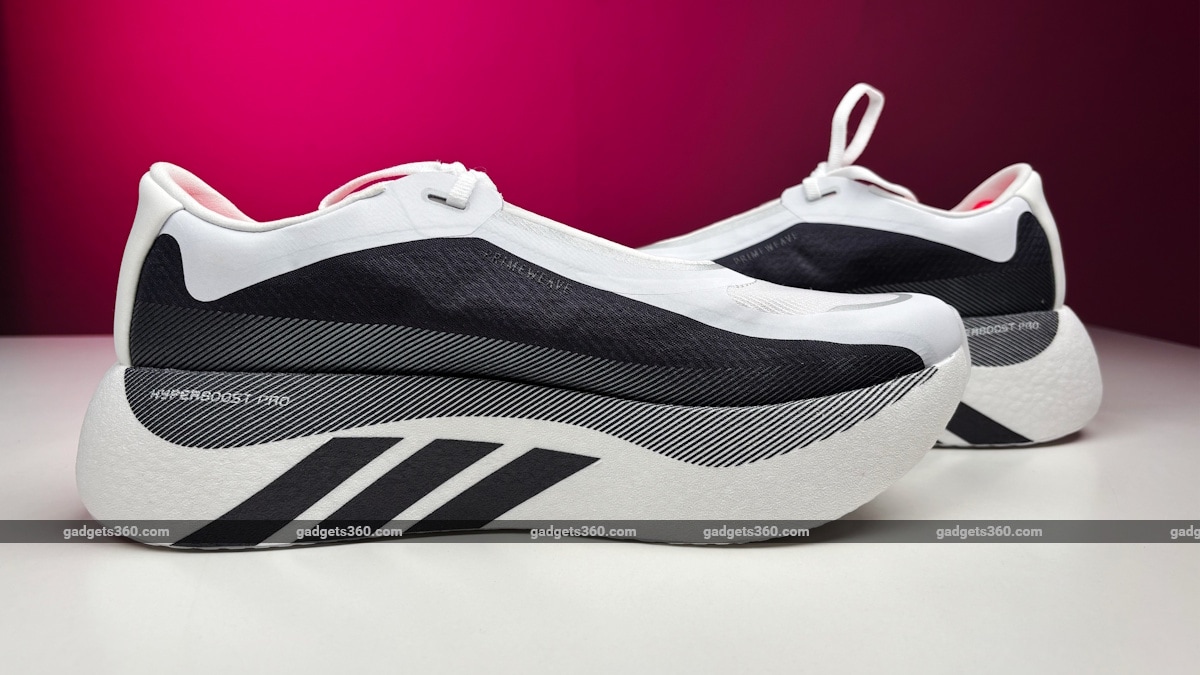
This shoe is best at steady and tempo pace. Not for slow walkers
For daily runners, it may get complicated, as it isn’t a shoe I would recommend for a true recovery jog where the shoe feels almost like it’s working against you. It acts like it’s waiting for you to speed up before it cooperates. On the other hand, pushing into genuinely fast speed, the shoe holds up reasonably well but starts to feel like it’s reaching its limit, and it’s not trying to be a race shoe, and it doesn’t pretend to be one.
The traction is just standout, and the full-length Lighttraxion outsole, which Adidas says has been borrowed from the Adizero playbook, held up through several properly wet mornings in July when I was testing these shoes for everyday runs, and without a moment of doubt underfoot, which isn’t something I say about every shoe. Lastly, durability-wise, after a good number of kilometres, the outsole shows barely any wear and the midsole hasn’t lost any of its bounce. This feels like a shoe built to survive a real training block, not just look good in the first few runs.
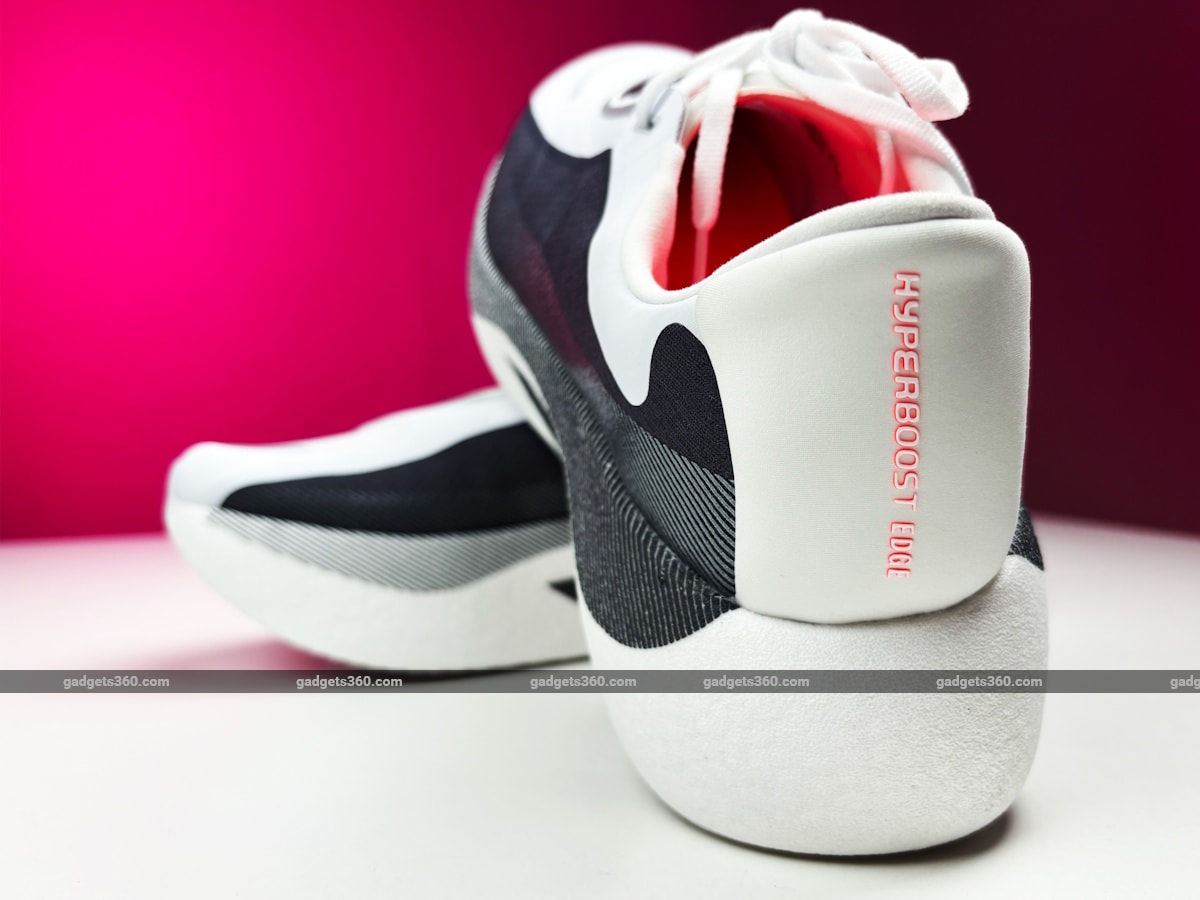
With 45mm of foam, Adidas finally built a real super-trainer
Adidas Hyperboost Edge: Verdict
So, who should buy and who shouldn’t buy the Hyperboost Edge? Honestly, I went back and forth on how to score this one more than most shoes I’ve reviewed recently, because it manages to impress me highly, but one thing genuinely holds me back.
The midsole is the real story here, and it’s not marketing spin. Adidas has built something that seriously competes with the best foams from ASICS and On, and it does it while staying lightweight at 255 grams. I mean, you don’t have an idea how much material is packed under your foot. If you’d told me a year ago that Adidas would be the brand pushing energy-return numbers into genuinely elite territory, I’m not sure I’d have believed you. That part of this shoe nails it absolutely.
But a super-trainer lives or dies on whether you actually want to put it on every day, and that’s where the upper keeps pulling me back to being cautiously positive rather than fully sold.
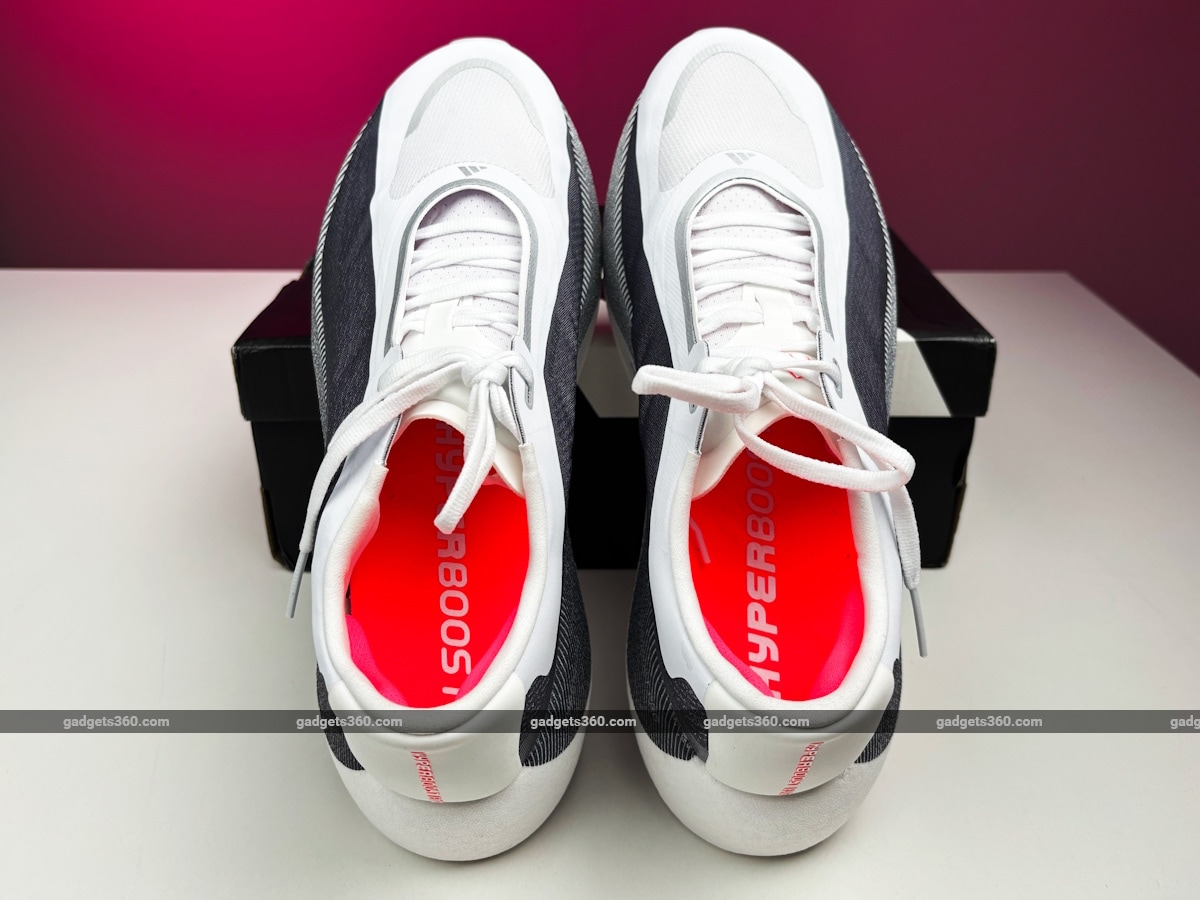
The Adidas Hyperboost Edge comes in Cloud White and Aurora Onix colours, which are bold enough to stop people at traffic lights
The Comfort Pods are a genuinely nice idea undermined a bit by the rigid collar around them, and the breathability issue is real too. At many times, I found myself reaching for thinner socks specifically because of it. One thing I learnt after testing the Hyperboost Edge is that it isn’t a shoe I’d want to wear on a hot, humid long run, and if you live somewhere that doesn’t offer favourable weather, then you should look at your options. Mind you, it’s not a nitpick.
Then there’s who this shoe is actually for, which matters more here than with most shoes I test. If you’re someone who does the bulk of your mileage at a relaxed, conversational pace, or you know you’re a committed heel-striker, I’d actually recommend trying this one on a treadmill before committing, because the clunkiness I felt at slower paces is real. It’s not just me, as you can read other reviews as well.
At Rs. 19,999 in India, it’s priced right in line with where a shoe like this should sit, of course, not cheap, but not out of step with rivals like the ASICS Megablast or Superblast 3, and arguably a bit more accessible than both. The Hyperboost Edge isn’t a shoe I’d call perfect. But it’s the first time in a while that Adidas has made something in this category that actually surprised me, and that counts for a lot.
Adidas Hyperboost Edge Rating & Pros/ Cons
Rating – 9/10
Pros:
- Exceptional energy return
- Protective cushioning
- Lightweight
- Excellent wet traction and durability
- Bold and distinctive design
- Strong overall durability
Cons:
- Stiff, low-breathability
- Design is polarising so may not work for all
- Expensive
