
4 min readNew DelhiUpdated: Aug 18, 2026 09:27 AM IST
A blood sugar reading of 230 mg/dL can be alarming, especially if you are unsure what it means. A similarly panicked internet user took to Quora to ask whether they should be worried.
Turns out, while it is certainly high and shouldn’t be ignored, one reading alone doesn’t tell the whole story.

Dr Rajiv Kovil, Diabetes & Obesity Specialist at Zandra Healthcare, tells indianexpress.com the significance of a 230 mg/dL reading depends on when the test was taken — whether it was fasting, after a meal or at a random time.
“Fasting glucose predominantly reflects how much glucose the liver releases overnight, whereas post-meal glucose represents this background glucose plus the additional glucose load from what we eat.”
DISCLAIMER: This article is based on information from the public domain and/or the experts we spoke to. Always consult your health practitioner before starting any routine.
What does a 230 reading actually mean?
The same blood sugar number can mean different things depending on when it was measured. Fasting glucose gives an indication of the glucose being released by the liver overnight, while post-meal glucose also reflects the additional glucose coming from food.
That is why a single reading should not be used to determine the full picture of a person’s blood sugar control.
Story continues below this ad
HbA1c is essential because it reflects average glucose exposure over the previous 2–3 months. ” It can give doctors a better understanding of whether the elevated reading is an isolated finding or part of a longer-term pattern.
Dr Kovil also notes that diabetes is often discovered incidentally. ” Interestingly, many people with diabetes are diagnosed accidentally during routine blood tests, because high glucose may remain silent for years.”
So, if your blood sugar is 230 mg/dL, repeatedly checking it at home is not enough. The next step should be to seek medical advice and get a proper evaluation.
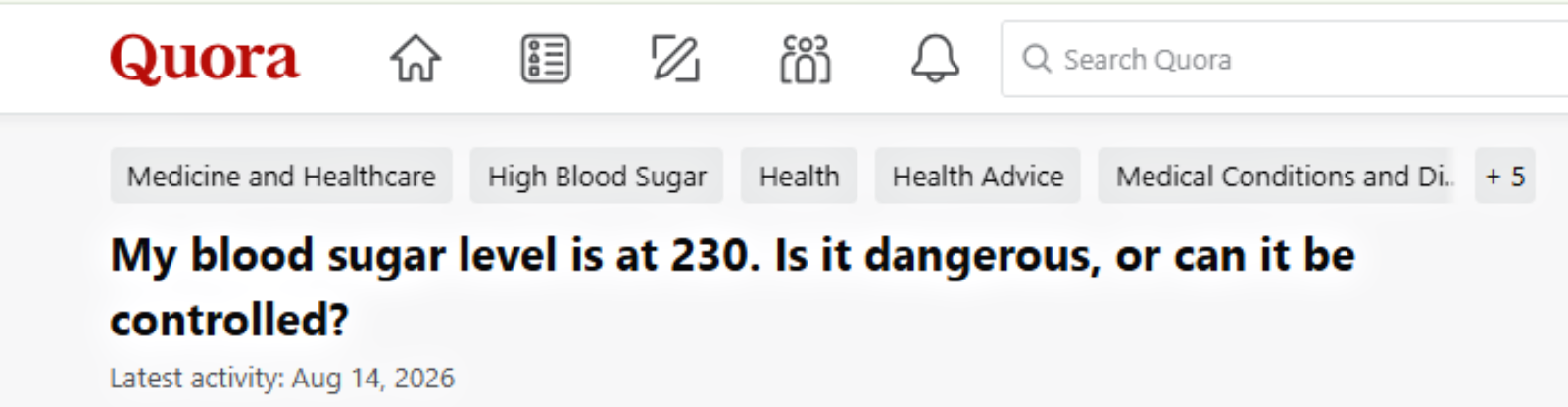 Screenshot of the query posted on Quora
Don’t look at sugar in isolation
“This person should seek expert medical advice rather than simply repeatedly checking sugar at home,” Dr Kovil advises. Diabetes management is not only about bringing down the glucose number.
Story continues below this ad
A high reading should prompt an assessment of the person’s broader metabolic health. This may include checking kidney function and urine albumin-creatinine ratio (UACR), blood pressure and cholesterol, as well as undergoing a fundus/retinal examination.
Doctors should also assess for neuropathy and foot problems, screen for metabolic dysfunction-associated steatotic liver disease (MASLD), or fatty liver, and evaluate overall cardiovascular risk.
The good news is that a blood sugar level of 230 mg/dL can usually be brought under control. Depending on the individual’s health and diabetes status, treatment may include structured nutrition, physical activity, weight management and appropriate medication when required.
The exact approach, however, needs to be decided by a doctor after looking at the person’s overall health rather than one glucose reading.
Story continues below this ad
When should you seek urgent help?
A blood sugar reading of 230 mg/dL does not automatically mean that you need emergency treatment. “Glucose at this level can usually be controlled through structured nutrition, physical activity, weight management and, when required, appropriate medication”
But if high blood sugar is accompanied by certain symptoms, it should not be ignored. Vomiting, dehydration, abdominal pain, rapid breathing, severe weakness, drowsiness or confusion along with high blood sugar require urgent medical attention.
Dr Kovil sums it up clearly:
“230 is not a number to panic about but it is certainly a number to act upon. Treat the person and their overall metabolic risk, not merely the glucose report.”
So, don’t panic over one high reading — but don’t brush it aside either. The important step is to find out why your blood sugar is elevated, check your longer-term glucose control and assess your overall metabolic health.
Story continues below this ad
‘Blood sugar’ has been trending on Google for the past 24 hours.
DISCLAIMER: This article is based on information from the public domain and/or the experts we spoke to. Always consult your health practitioner before starting any routine.
