
What if a couture gown could show what happens beneath the skin during a C-section? The intriguing idea came to life at the Miss World 2026 World Designer Award in Vietnam, where Miss Uganda 2026 left everyone mesmerised.
The gown, named Layers of Life, is inspired by the seven anatomical layers encountered during a Caesarean section. The fashion veterans are calling it a story of childbirth and the physical journey of mothers who undergo the surgery.

Ugandan designer Keesha Abdallah, the mind and hands behind the iconic gown, says the concept was personal, drawn from her experience as a new mother.
Keesha Abdallah explained the concept in a video, “I had this crazy idea to turn the layers of childbirth into a couture gown… I wanted to create something fresh, original and highly inspired. I was inspired by the miracle of childbirth. We started by collecting different ideas of what childbirth means and what it’s like to be a new mom; this was a personal journey for me as well… Choosing the right colours was a real challenge because of the numerous shades on the market. Luckily enough, we found a number of shades I thought would work, but I also knew we were entering the trial-and-error zone of creativity.”.”
DISCLAIMER: This article is based on information from the public domain and/or the experts we spoke to.
But what do doctors make of the unusual design?
Dr Preety Aggarwal, Medical Director of Obstetrics and Gynaecology at Motherhood Hospitals, Gurgaon, calls it a “creative and meaningful” way to explain what happens during a C-section.
“A C-section is not simply an incision on the abdomen; the surgeon carefully works through multiple tissue layers to reach the uterus and deliver the baby,” she tells indiaexpress.com.
Story continues below this ad
For her, the gown succeeds because it turns something that is normally invisible into something people can actually visualise. “The gown beautifully translates these otherwise unseen layers into something people can actually visualise,” she adds, saying it can create greater appreciation for the physical journey involved in childbirth.
Dr Priyanka Sonawane, Consultant Obstetrician and Gynaecologist, Infertility Specialist and Laparoscopic Surgeon at Zynova Shalby Hospital, Ghatkopar West, Mumbai, also sees value in the concept, but adds an important medical qualification.
“From a clinical point of view, a C-section is a major abdominal surgery,” she says while speaking to indianexpress.com.
Describing it as seven layers, the obstetrician explains, is a simplified way of showing the different tissues encountered during the procedure. The exact surgical technique can vary depending on the patient and the surgeon.
In other words, the gown should not be taken to mean that every C-section involves cutting through seven identical layers in exactly the same way. Instead, it offers an accessible visual explanation of the tissues involved in the surgical journey.
Story continues below this ad
So, what are the seven layers?
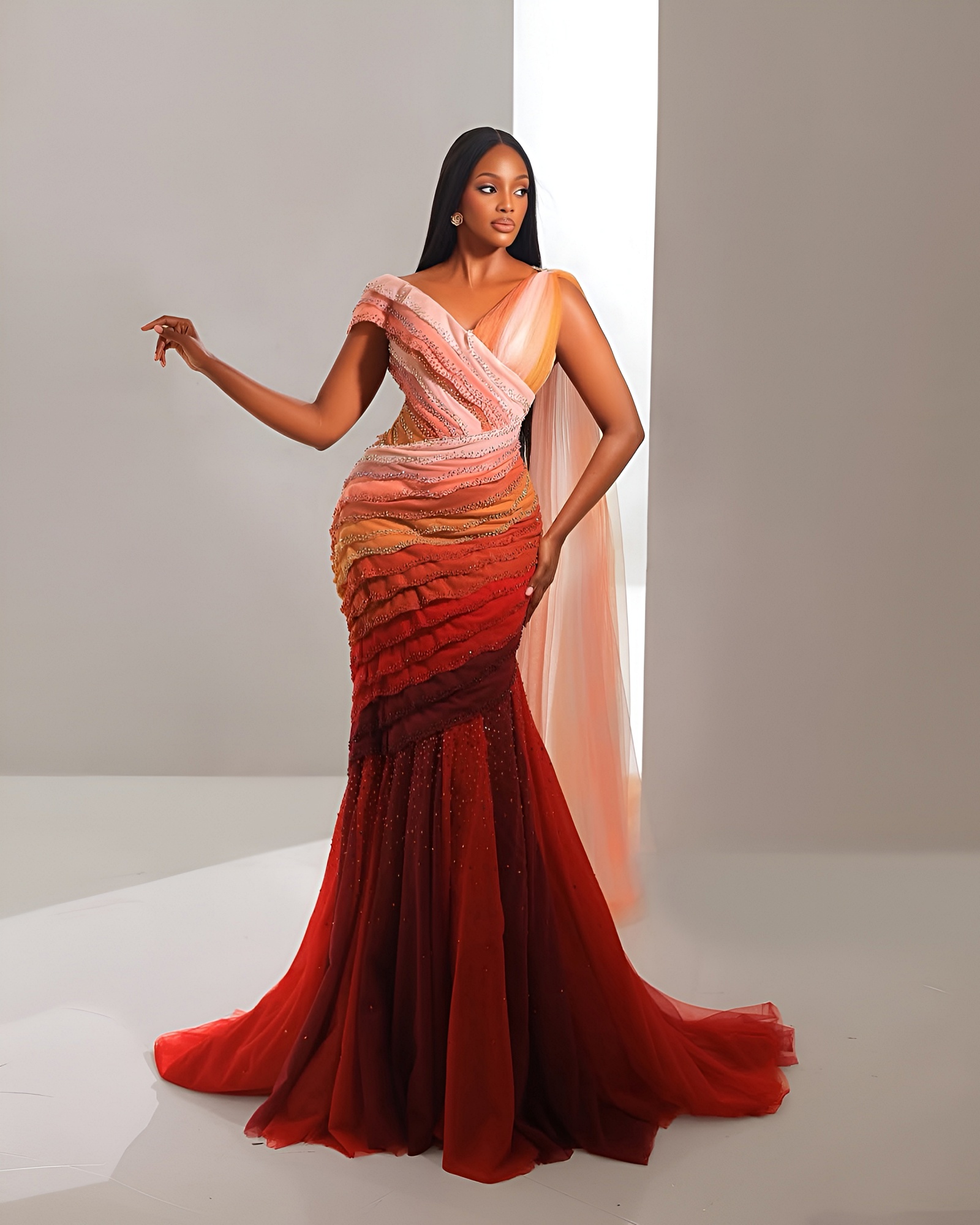 Miss World Uganda wearing the C-section inspired gown (Image: Instagram/missugandaofficial)
According to Dr Aggarwal, the layers are commonly described as skin, subcutaneous fat, fascia, abdominal muscle, peritoneum, uterus and the amniotic sac.
Here is what each one means:
1. Skin: The body’s outer protective barrier and the first layer encountered during the surgical incision.
2. Subcutaneous fat: The fatty tissue beneath the skin, which provides cushioning and stores energy.
3. Fascia: A strong connective tissue layer that surrounds and supports muscles and other structures.
Story continues below this ad
4. Abdominal muscle: Part of the abdominal wall that provides strength and support. Surgical techniques are used to minimise unnecessary muscle injury.
5. Peritoneum: A thin membrane that lines the abdominal cavity and covers many of the organs inside it.
6. Uterus: The organ where the baby develops. A surgical incision is made in the uterus to deliver the baby.
7. Amniotic sac: The fluid-filled sac surrounding and protecting the baby during pregnancy. Once the uterus is opened, the membranes can be opened to allow delivery.
Story continues below this ad
The gown translates these otherwise unseen structures into colour, texture and layers. The designer has described being fascinated by images of the seven layers of a C-section and wanting to turn that idea into couture.
Why the medical message matters
For Dr Aggarwal, the design is also a reminder that there is much more to a C-section than the scar people see afterwards.
“The outfit helps tell that story in a simple and engaging manner while also recognising the physical strength and surgical journey involved in childbirth,” she says. She believes it can serve as a conversation starter around Caesarean delivery and help people understand what happens beneath the surface.
Dr Sonawane agrees that the gown creates an opportunity to talk about the realities of C-section birth beyond the delivery itself. Because it is a major abdominal surgery, complications can include haemorrhage, infection, scarring and injury to nearby organs, she says. These concerns can be particularly relevant when a woman undergoes another C-section.
Story continues below this ad
At the same time, she stresses that having had a previous C-section does not automatically mean that a woman cannot have a healthy future pregnancy. Decisions about a subsequent pregnancy and mode of delivery depend on factors such as the previous uterine incision, number of previous C-sections, placental location and the woman’s overall health.
That makes Layers of Life more than an unusual red-carpet moment. In turning the hidden anatomy of a C-section into couture, the gown offers a visual reminder of just how complex the journey of Caesarean birth can be—and gives viewers a way to understand the layers involved in bringing a baby into the world.
DISCLAIMER: This article is based on information from the public domain and/or the experts we spoke to. Always consult your health practitioner before starting any routine.
