
Microsoft Project’s retirement marks a major shift in Microsoft’s project management portfolio, with Planner taking on many of its project planning capabilities. The platform now combines task management with Gantt charts, resource planning, and AI features. If you’re considering Planner for your organization, this Microsoft Planner review covers its key features, pricing, ease of use, and trade-offs.
| Overall rating | 4.22 out of 5 |
| Best for | Organizations using Microsoft 365 |
| Starting price | $10 per user, per month, billed annually |
| Free plan | Basic Planner capabilities included with eligible Microsoft 365 subscriptions |
| Free trial | One month for Planner Plan 1 |
| Project views | Grid, Board, Schedule, Charts, Timeline, and People |
| Resource management | People view for reviewing task distribution within a plan |
| Portfolio management | Available with higher-tier Planner licenses for premium plans |
| AI capabilities | Planner Agent for project plan creation, task management, and status reporting |
Why you can trust TechRepublic
I’ve spent the past four years testing nearly 20 project management platforms, and some of them have become part of my workflow. Writing dozens of PM software guides for businesses of all sizes taught me what individuals and teams need from these tools beyond the marketing pitch. I also build custom scoring rubrics for each review to ensure fairness and that selected platforms get evaluated on the same criteria.
Marianne Sison
Senior Staff Writer for Project Management
What is Microsoft Planner?
Microsoft Planner offers project management capabilities for organizations that already rely on Microsoft 365. Its integration with Microsoft Teams gives employees a familiar place to manage shared plans, while paid tiers add dependencies, timeline views, workload tools, and portfolios for more complex projects.
Planner also has a growing role in Microsoft’s AI strategy. With a Microsoft 365 Copilot license, teams can use Planner Agent to create or update tasks, generate status reports, and execute assigned tasks.
Microsoft Planner is a good fit for:
- Organizations invested in Microsoft 365: Planner works with Microsoft Teams and uses Microsoft 365 Groups for shared access, which simplifies adoption for existing Microsoft users.
- Teams that need straightforward project scheduling: The basic plan adds Gantt-style timelines and task dependencies, along with milestones and custom fields.
- Enterprises adopting Microsoft Copilot: Planner Agent can handle task updates and status reporting. It can also complete text- or image-based assignments.
- Project managers overseeing several premium plans: Higher-tier licenses support portfolios and roadmap views for tracking status across multiple projects.
Microsoft Planner is less suited for:
- Organizations outside the Microsoft ecosystem: Much of Planner’s appeal comes from its connection with Microsoft 365 services, particularly Teams and Microsoft 365 Groups.
- Teams that want advanced capabilities under one entry-level license: Timeline, People, and Goals require Planner Plan 1, while portfolio creation and the Assignments view require higher Planner licenses.
- Companies seeking AI features within the standard Planner subscription: Access to Planner Agent requires a separate Microsoft 365 Copilot license.
Microsoft Planner pros & cons
| Integrates with Microsoft 365 services | Gantt timelines, critical path, and workload management require premium plans |
| Supports four dependency types with automatic schedule updates | Portfolio creation requires a higher-tier Planner license |
| Offers workload balancing through People view | Basic plans have strict limits such as 20 checklist items per task and 20 assignees per task |
| Planner Agent adds AI-assisted task and plan management | Falls short as a full Microsoft Project replacement for enterprise portfolios |
Pricing
Microsoft Planner has a clear pricing advantage for organizations already using Microsoft 365. Basic Planner features come with eligible Microsoft 365 subscriptions, so teams can manage tasks through boards, schedules, and charts without purchasing a separate project tool.
| Plan | (billed annually) | ||
|---|---|---|---|
| Planner in Microsoft 365 | Teams that need basic task management | Grid, Board, Schedule, and Charts views; checklists; labels; file attachments | |
| Planner Plan 1 | Teams managing more complex projects | Timeline view, dependencies, milestones, custom fields, People view, goals, backlogs, and sprints | |
| Planner and Project Plan 3 | Project managers who need advanced scheduling | Baselines, critical path, lead and lag dependencies, task history, portfolios, and Project desktop | |
| Microsoft 365 Copilot | Organizations that want AI capabilities in Planner | Planner Agent, AI-assisted plan creation, task generation, status reporting, and task execution |
At $10 per user per month, Planner Plan 1 offers the best value for most project teams. The plan introduces Timeline view, dependencies, goals, and workload visibility through People view. These additions address many of the limitations of basic Planner and provide enough scheduling functionality for standard project work.
Planner and Project Plan 3 cost $30 per user per month, a considerable increase from Plan 1. The higher price adds baselines, portfolio management, critical path analysis, along with more detailed dependency options. These capabilities are more relevant to PMOs and enterprises that manage complex project schedules, which makes Plan 3 harder to justify for teams with simpler requirements.
AI access also carries an additional cost. Planner Agent requires a separate Microsoft 365 Copilot license, so organizations interested in AI-assisted planning and status reporting need to account for another subscription rather than treating AI as part of the standard Planner pricing.
Key features
Microsoft Planner has grown beyond lightweight task boards, especially since Microsoft folded more project capabilities into the platform. It now supports more complex scheduling, along with Microsoft 365 integrations and AI-assisted project work.
|
|
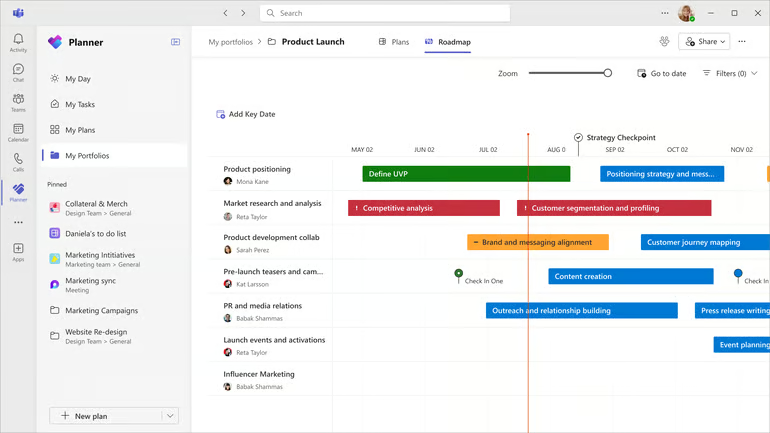
Beyond task management, Microsoft Planner includes tools for planning task sequences and reviewing workload distribution. Premium plans add Gantt scheduling and dependency options such as lead and lag times, while Planner Agent uses AI to help create plans and manage project work.
Timeline (Gantt) view
Planner’s Timeline view displays project tasks on a Gantt chart, so you can review task durations and dependencies across the schedule. When dates change, you can adjust the schedule from the timeline to see how the changes affect the sequence of dependent tasks.
People view
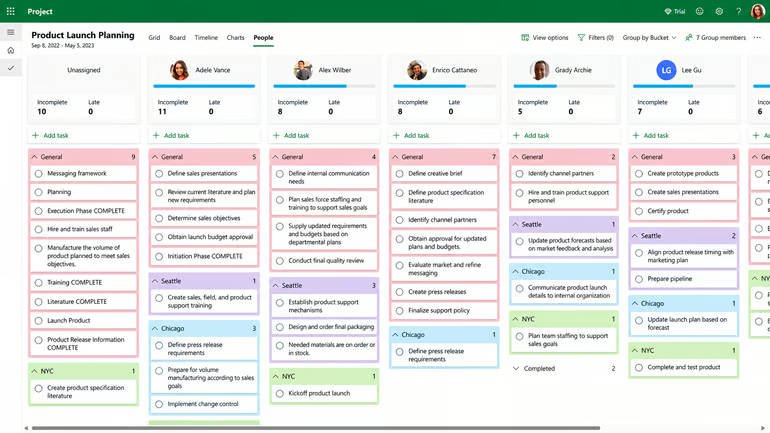
The People view shows how tasks are distributed across members of a project plan. Project managers can see who has more or fewer assigned tasks and reassign work from the same view. One limitation is that People view focuses on an individual plan rather than providing organization-wide capacity across multiple projects.
Advanced dependencies
Planner supports Finish-to-Start, Start-to-Start, Finish-to-Finish, and Start-to-Finish dependencies, which gives project managers more options for defining when related tasks can begin or end. Higher-tier plans also support lead and lag time, so schedules can account for overlaps or required gaps between dependent tasks.
Planner Agent
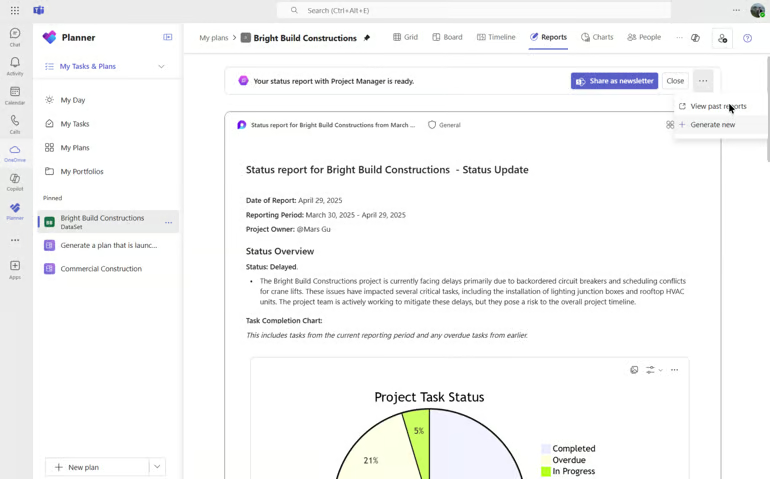
Planner Agent brings Microsoft’s AI capabilities into project planning through Microsoft 365 Copilot. It can generate a plan from a goal, create and update tasks, and produce status reports based on project data. As a project assistant, Planner Agent can also complete certain assigned tasks, such as drafting a product brief or researching market trends.
Ease of use
Microsoft Planner is straightforward to learn, especially for Microsoft users. Since it uses familiar conventions, users can usually start with Board and Grid views without much onboarding.
Initial setup is straightforward, as teams can create a plan, assign tasks, set due dates, and group work into buckets with minimal configuration. Premium features require additional setup for projects that use dependencies, goals, custom fields, or portfolios.
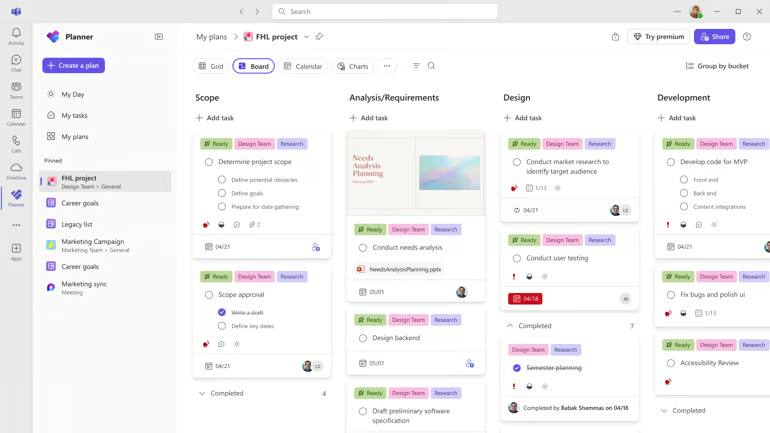
Planner keeps task management relatively simple through its Board and Grid views, while Timeline and People views provide additional visibility into project schedules and team workloads. However, features such as baselines, critical path analysis, and lead or lag dependencies require more familiarity with advanced scheduling, which may take additional time for beginners.
Customer support
Microsoft Planner uses Microsoft’s wider customer support network rather than a dedicated support team. Users can access product documentation and troubleshooting resources through Microsoft Support, while community forums provide another option for common questions.
Organizations that need technical assistance can submit support requests through the Microsoft 365 admin center. However, available support channels and response options depend on the organization’s Microsoft subscription and support plan.
Planner also has extensive documentation covering both basic and premium features. Since these resources span Microsoft Support and Microsoft Learn, users may need to search across several Microsoft sites to find guidance for a specific Planner issue.
Microsoft Planner alternatives
While Microsoft Planner is a practical choice for Microsoft 365 users, other platforms like monday.com, ClickUp, and Wrike offer more options for workflow customization and project management outside the Microsoft environment.
| monday.com | Workflow automation | Offers more flexibility for customizing boards, automations, and dashboards | monday.com Review | |
| ClickUp | Workspace customization | Combines AI project management with docs, chat, dashboards, and multi-level task hierarchies | ClickUp pros & cons | |
| Wrike | Complex project planning | Suitable for organizations that need dynamic Gantt scheduling or extensive resource planning features. | What is Wrike? |
Microsoft Planner review: My verdict
Microsoft Planner is worth considering if your organization already operates within Microsoft 365. Planner Plan 1 provides many standard task management features for $10 per user per month, but portfolio management and critical path analysis require Planner and Project Plan 3. AI access also adds to the monthly subscription.
Planner is most compelling for enterprises that can take advantage of its integrations across Microsoft apps. If your organization needs extensive workflow customization or does not depend heavily on Microsoft products, monday.com, ClickUp, and Wrike are worth comparing before you choose Planner.
FAQs
Is Microsoft Planner free?
No, Planner is included with Microsoft 365 business and enterprise subscriptions. More advanced project management features require paid Planner plans, which start at $10 per user, per month, billed annually.
What is Microsoft Planner best used for?
Microsoft Planner is best for task and project management within Microsoft 365. Teams can manage assignments, deadlines, dependencies, schedules, and workloads while keeping project work connected to Microsoft services.
Does Microsoft Planner have a Gantt chart?
Yes. Planner includes a Timeline view on paid plans that displays tasks across a Gantt-style schedule. Project managers can use it to review task durations, milestones, and dependencies across the project timeline.
Does Microsoft Planner include AI features?
Planner supports AI through Planner Agent, which requires Microsoft 365 Copilot. It can help create plans, generate or update tasks, and produce status reports based on the project plan.
