
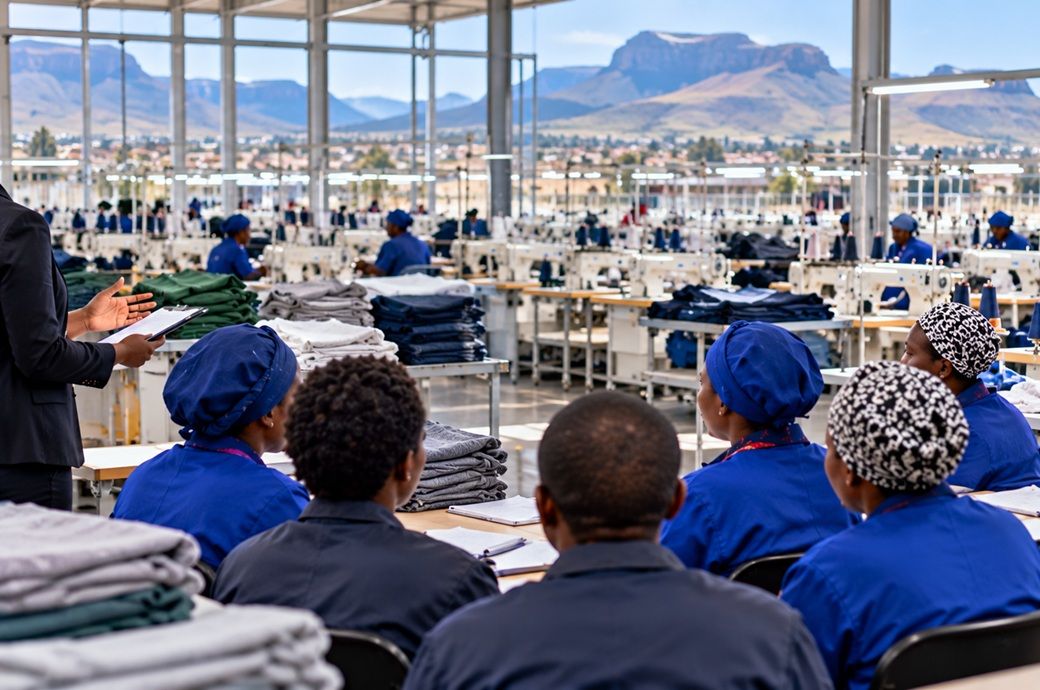
Organised by the ILO with the Ministry of Labour and Employment and supported by the ILO Living Wage Programme, the training brought together nine board members drawn equally from government, trade unions and employers, and two independent members from the Central Bank of Lesotho and the national statistics institution. The Ministry’s Principal Secretary was among the government representatives, the ILO said in a press release.
The central message was that effective minimum wage determination needs both sound evidence and genuine social dialogue. Reliable data helps parties assess wage adequacy and economic conditions, while inclusive consultation supports recommendations that balance worker protection with sustainable enterprises.
Lesotho’s Wages and Conditions of Employment Board has completed ILO induction training on evidence-based minimum wage determination and tripartite social dialogue.
The training brought together nine board members from government, trade unions and employers, plus two independent members.
Ghana shared its tripartite minimum wage negotiation experience.
At the opening, the Commissioner of Labour underlined the importance of the training for wage determination in Lesotho. The Ministry then outlined the Board’s composition, legal mandate and responsibilities, setting the institutional context for the technical sessions.
An ILO regional specialist presented the foundations of minimum wage setting, including relevant international labour standards and the distinctions between minimum wages, adequate wages and living wages. The session stressed that wage setting should consider the needs of workers and their families as well as economic factors such as productivity, employment and enterprise sustainability, and that clear rules, balanced representation, compliance and monitoring are important.
A second ILO session focused on social dialogue and consensus building. Drawing on experience from African countries, it highlighted four conditions: meaningful consultation before decisions are taken, equal participation of employers and workers, access to relevant information, and mutual trust.
Ghana’s Fair Wages and Salaries Commission shared its experience in a session titled Ghana’s Minimum Wage Journey: Process, Lessons, and Insights for Lesotho. It explained how Ghana’s National Tripartite Committee uses technical analysis and secretariat support to negotiate the national daily minimum wage, and discussed challenges with data quality, purchasing power and enforcement, particularly in the informal economy.
The exchange prompted Lesotho board members to compare Ghana’s arrangements with their own and identify ways to strengthen the technical preparation and institutional support behind their negotiations. The ILO said the induction gives board members a shared understanding of their mandate, the standards guiding minimum wage setting and practices that have worked elsewhere on the continent, while also providing a basis for identifying further capacity-building needs.
For Lesotho and Ghana, the exchange showed how wage-setting institutions in Africa can learn from one another to shape informed wage policies and advance decent work and social justice, according to the ILO.
Fibre2Fashion News Desk (CG)
