
The issues were taken up at the 16th meeting of the Bangladesh-India Joint Working Group on Trade, which began in New Delhi on October 8 for two days of discussions on bilateral trade barriers, border infrastructure and regional connectivity, the ministry said.
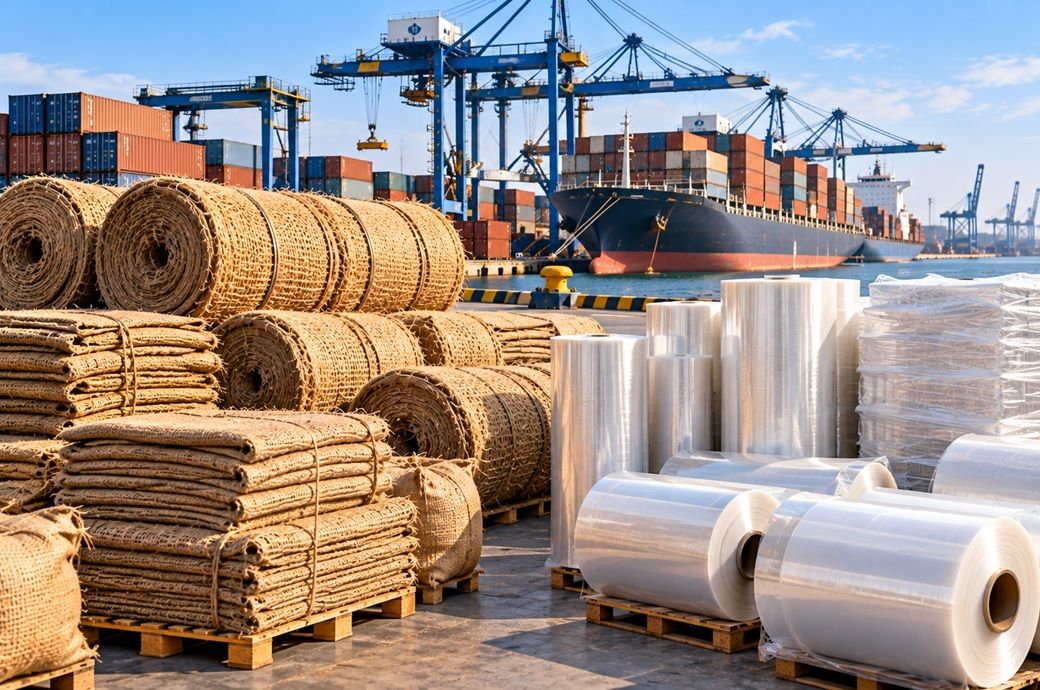
Bangladesh has urged India to remove land port export restrictions and anti-dumping duties on Bangladeshi jute products and PET film at the 16th Joint Working Group on Trade meeting in New Delhi.
Dhaka also sought continued tariff preferences after LDC graduation, improved border infrastructure, faster cargo clearance and stronger regional connectivity to boost bilateral trade.
Dhaka also asked New Delhi to consider extending existing tariff preferences for Bangladeshi exports after Bangladesh graduates from the least developed country (LDC) category, including benefits under the South Asian Free Trade Area (SAFTA) agreement, Bangladesh’s media reported, citing the ministry statement.
The Bangladeshi delegation called for a review and removal of curbs affecting exports through Indian land ports, saying the changes were needed to improve market access and protect domestic exporters. The two sides are also discussing ways to reduce tariff and non-tariff barriers, harmonise product standards and simplify procedures for obtaining Bureau of Indian Standards (BIS) certification.
Maintaining preferential access to the Indian market after LDC graduation remains a concern for Bangladesh, as the loss of existing benefits could make its products less competitive in India, as per Bangladesh’s media reports.
Bangladesh also sought wider cargo truck movement through Indian territory to Nepal and Bhutan to create additional export opportunities. It further stressed the need to make the CEOs’ Forum more effective to improve direct engagement and co-operation between businesses in the two countries.
The delegation highlighted infrastructure gaps at India’s land customs stations, including access roads, parking yards, warehouses, sheds, goods inspection facilities and quarantine services. It also called for higher border port capacity and faster cargo clearance to reduce delays and trading costs.
India, in turn, raised the issue of restrictions on its exports of cotton yarn and other goods to Bangladesh through certain land ports. New Delhi also sought action on obstacles affecting exports from India’s northeastern states to Bangladesh.
Regional connectivity and multimodal transport are also on the agenda, including the effectiveness of the Akhaura-Agartala link and other trade routes. The two sides are discussing improvements in bilateral rail connectivity and issues related to border haats to make cross-border trade more efficient.
Businesses in both countries continue to face market access barriers and limitations in border infrastructure and cargo movement, despite their geographical proximity and potential for regional economic integration. Addressing these challenges could boost bilateral trade, lower transport costs and enhance export competitiveness, as per the statement from Bangladesh’s Ministry of Commerce.
A 10-member Bangladeshi delegation, led by Ayesha Akter, additional secretary to the Ministry of Commerce, attended the meeting.
Fibre2Fashion News Desk (CG)