
For most buyers, ViewSonic is a name they associate with monitors or projectors. However, that picture is getting old as the brand looks beyond its traditional monitor and projector business for its next phase of growth in India. ViewSonic is expanding its professional audio-visual portfolio across LED displays, digital signage, large interactive panels, and more, with a special focus on government, education, and corporate sectors. Gadgets360 sat down with Muneer Ahmad, Managing Director of ViewSonic India, to learn more about the company’s plan for India, its expansion, after-sales support, and more.
India Growth on Track
At the start of 2026, ViewSonic set a Rs. 500 crore revenue target for India. When asked about the target, Ahmed said the company is on track to achieve it across all product categories. “In terms of growth engines, our LED business is currently one of the key drivers. Year-on-year, we are seeing approximately 2X growth in this segment. This is one of our major growth areas,” he further added.
From Monitors to Large-Format Displays
The Rs. 500 crore revenue target is steep; however, the company has a foolproof plan to achieve it, as it is confident in its wide range of products, from basic monitors to large-format displays. This shift marks a change in how ViewSonic is positioning itself in India.
For those who are not aware, the company initially focused on IT products, including monitors and projectors, before moving into interactive flat panels for education. It has since added digital signage and LED displays, and is now taking a more active approach to the wider Pro AV market.
“Over time, we expanded into interactive flat panels, digital signage, and LED displays. We are now also adding new product categories, including Google TVs and other display solutions. Today, we offer display products ranging from approximately 8 inches to 800 inches, catering to different requirements across the Pro AV segment,” he said.
Ahmad also said the company began strengthening its Pro AV lineup about two to three years ago. The move followed demand for larger screens, signage and interactive displays in sizes including 86, 92, 98, 105 and 110 inches. Ahmad further added that the company’s LED business has grown around 2X year-on-year. Meanwhile, its signage business is performing well, and interactive flat panels measuring 86 inches and above are also seeing strong demand.
“Our objective is to offer a comprehensive display portfolio, along with the service and support customers require. For customers, this includes after-sales support and on-site service within the required timelines. We have established a service network and support infrastructure to meet these needs. For system integrators (SIs), particularly Pro AV system integration partners, we provide the necessary backend support and assistance to help them execute their projects successfully,” he further added.
Why ViewSonic Sees An Opportunity in LED
LED displays are central to this expansion partly because they can be sold into a range of large-format installations, from command centres and corporate spaces to retail environments. “There is a significant market opportunity for LED displays, and we foresee strong growth in the coming years,” Ahmad said.
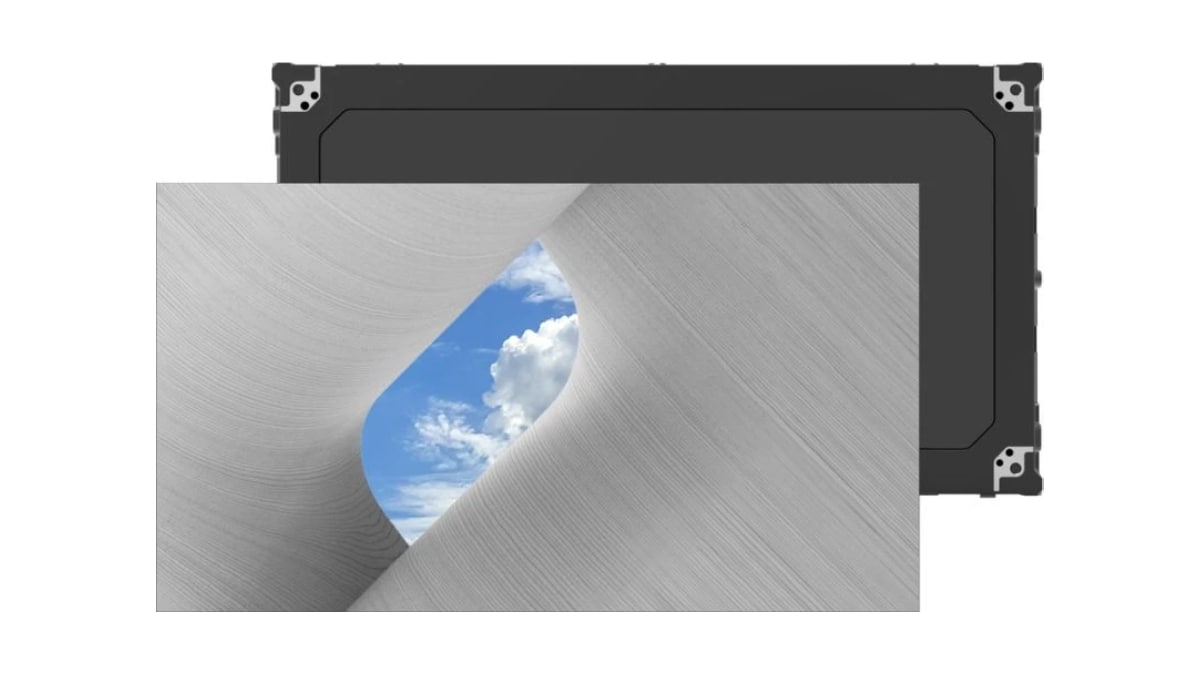
ViewSonic also introduced COB-based LED products at InfoComm India 2026. Ahmad said the segment offers a significant commercial opportunity because its average selling price is higher and demand is growing.
“We have launched products in the COB segment, which is part of our LED portfolio. LED is a significant opportunity for us because the average selling price (ASP) in this category is higher. The market is also growing rapidly,” he further added.
According to Ahmad, ViewSonic is working to make LED displays an alternative to older video walls, which are usually built by placing multiple LCD panels together. He says that those installations can leave visible borders between panels and can become harder to maintain when one screen fails. LED walls, by contrast, use smaller modules that can be replaced individually.
“Earlier, video walls typically consisted of 2×2 or 3×3 configurations using 55-inch or 49-inch panels. These panels were connected to create a larger image. However, a key drawback was the visible lines between the screens. With LED displays, we use smaller modules that are easier to service. If a module becomes faulty, we can remove and replace it individually. This makes maintenance more convenient and improves operational efficiency,” he said
Google TV, But Not for the Living Room
ViewSonic also introduced its Google TV range at InfoComm 2026. Ahmad said the new range of Google TVs will target institutional buyers, including hospitality businesses and government projects, rather than households shopping for a television.
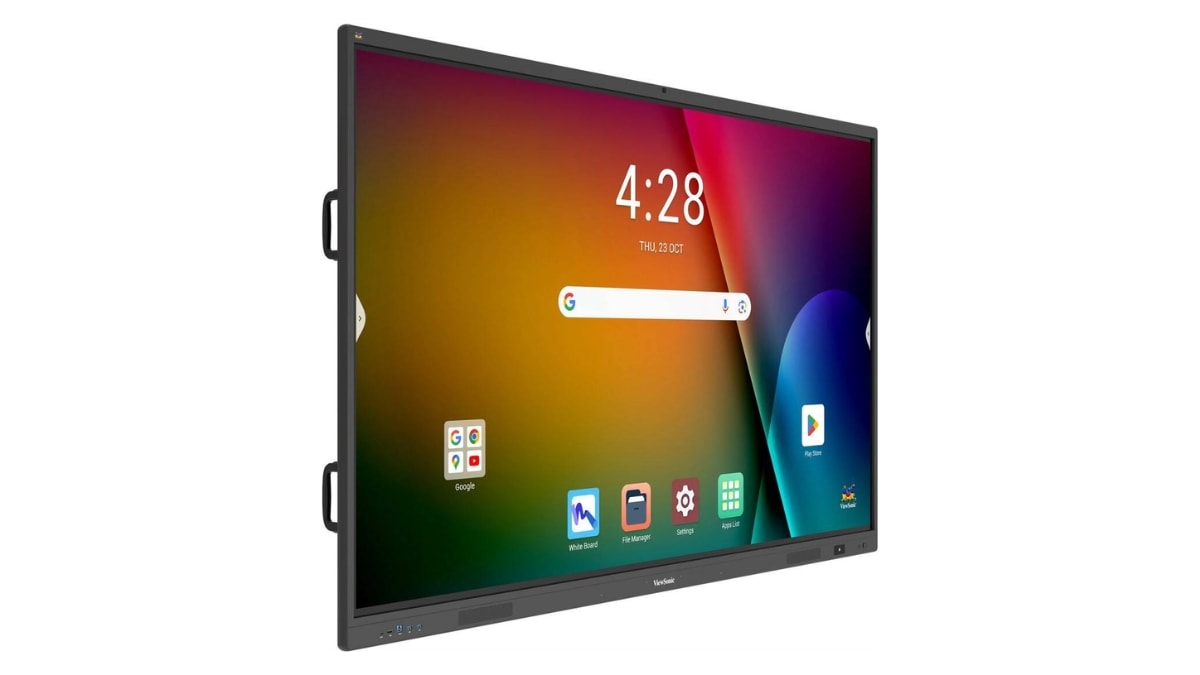
“We are not entering the consumer television segment. Our focus is on institutional sales. The consumer TV market already has several established brands. Instead of competing directly in that segment, we want to use our existing network and strengths in government, education, and corporate sectors,” he said
“For example, the hospitality industry and government projects may require televisions in large volumes. Projects tied to government initiatives, including Panchayati Raj projects, can require substantial deployment. Therefore, our focus will be on institutional customers rather than the consumer segment,” he further added.
AI in Classrooms is Another Area of Focus for ViewSonic
Ahmad revealed that education is also a major focus for the brand in the country. He said the company is committed to providing state-of-the-art products and services to educational institutions. Ahmad said that ViewSonic’s IN05 and IN04V interactive-display series add AI features and, in some variants, a camera and microphone. Ahmad described tools that can help teachers find related information from something written on the display and prepare presentation or document content for lessons.
“AI is entering the education sector rapidly. We have introduced models that incorporate AI capabilities, including our IN05 and IN04V series. The IN05 series, which includes a video camera and microphone, integrates AI-based features. For example, when a teacher is explaining a concept, they can circle or highlight something they have written, and the system can provide related information,” he said
The company also offers ClassSwift for quizzes and other teacher-student activities. “Teachers can also use AI tools to prepare lessons. For instance, a teacher can enter a class topic or heading, and the system can generate relevant presentation or document content to support lesson preparation. We also have interactive features such as ClassSwift, which enables teachers and students to engage with each other,” he further added.
That said, Ahmad reiterated that students should not become too dependent on AI, especially before they develop independent reasoning skills. “In my personal view, AI should be introduced to students in an appropriate and balanced manner. Until a certain age, students need to develop their own thinking and reasoning abilities. If students become overly dependent on AI at an early age, it may affect the development of their independent thinking and learning skills. Therefore, AI should be used responsibly and wherever it is genuinely necessary,” he said
How ViewSonic is Dealing with Price-Sensitive Market Like India
Ahmad says that India is certainly a price-sensitive market, and pricing plays an important role. That is why the company offers products across different price segments to capture a large share of the market. “We offer products across different categories and price segments. Some earlier models have reached end of life, and we will introduce new models to replace them. However, we cannot compete directly with unbranded or low-cost Chinese brands. Every brand has its own positioning,” he said.
After-Sales and Service Network Plays an Important Role
Ahmad says pricing usually doesn’t capture the full cost of owning a large display. The company must account for several factors, including warranty service, replacement logistics, and long-term support, especially for large interactive panels that are expensive to transport and replace.
“As a branded company, we have a responsibility to provide after-sales support and ensure that customers receive reliable products and service. We need to consider the customer’s experience over the long term, whether three or five years after purchase or throughout the warranty period. For example, if an 86-inch or 98-inch interactive flat panel needs replacing, we may have to take back the existing unit and provide a replacement. This involves high operational costs. These factors influence our pricing strategy,” he added further.

Ahmad explained the company uses a mix of third-party service partners, its own centres and authorised service locations. Where its main service partner is not present, it tries to arrange direct support or work with another partner.
“We provide on-site support through our service network. We have tie-ups with third-party service partners and also work with our own service centres and authorised service locations. In areas where our primary service partner does not have a presence, we try to provide direct support or work with other service partners to improve our reach,” he said.
He also said customers can contact the company directly through its toll-free number or email for after-sales support. The company then issues an RMA number, after which an engineer visits the customer and works to resolve the issue.
“For spare parts, we maintain inventory at various offices and service locations. We also keep buffer units for products that may need replacement. We cannot maintain every model at every service centre. However, for our more popular and commonly sold models, we keep spare parts and replacement units available so that service requirements can be addressed as quickly as possible,” he further added.
India’s Display Market Still Has Room to Grow
Ahmad believes India’s adoption of large-format displays is still developing compared with markets where indoor and outdoor displays are more widespread. “I believe India’s display market is yet to reach its full potential. In India, there is still significant scope for the display market to expand, particularly in the large-format display segment,” he explained.
“Earlier, projectors were commonly used in war rooms and boardrooms. Over time, non-touch panels replaced them, followed by touch-enabled displays. Now, larger LED displays are increasingly being adopted, and we foresee strong growth opportunities in the Pro AV segment,” he further added.