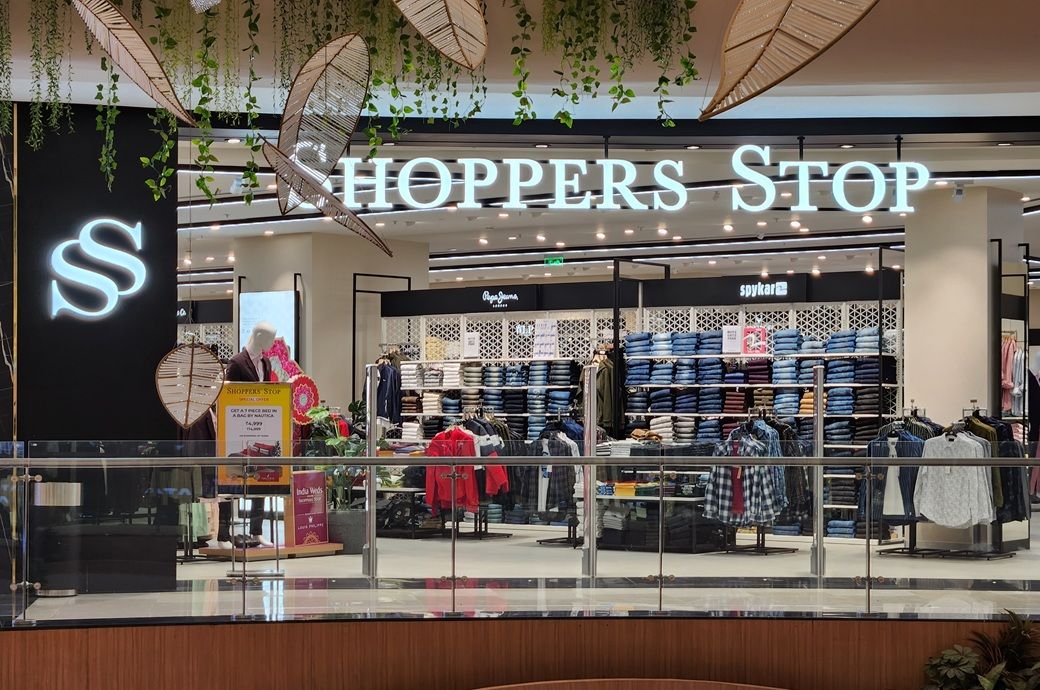
On a consolidated non-generally accepted accounting principles (non-GAAP) basis, sales increased 7 per cent year on year (YoY) to ₹1,618 crore (~$170.14 million, as per conversion rate of $1 = ₹95.1001 as on October 16, 2026) in the quarter ended September 30, 2026, while earnings before interest, tax, depreciation and amortisation (EBITDA) rose 56 per cent to ₹43 crore (~$4.52 million). Profit after tax (PAT) turned positive at ₹6 crore (~$630,914), compared with a ₹7 (~$0.07)-crore (~$0.74 million) loss a year earlier.
Shoppers Stop returned to Q2 FY27 profit as consolidated non-GAAP PAT hit ₹6 crore (~$630,914) against loss a year earlier.
Sales rose 7 per cent to ₹1,618 crore (~$170.14 million) and EBITDA rose 56 per cent.
Premium sales rose 10 per cent; department-store festive-adjusted LFL growth was 7 per cent.
H1 PAT was ₹11 crore (~$1.16 million).
“More importantly, we delivered a meaningful turnaround in profitability, with consolidated PAT turning positive at ₹6 crore compared to a loss of ₹7 crore in the last year and standalone PAT also turning positive from a loss of ₹10 crore in last year, reflecting the strength of our operating leverage and the successful execution of our Shoppers Stop 2.0 strategy,” said Kavindra Mishra, managing director and chief executive officer, Shoppers Stop Ltd.
Q2 sales growth led by premium portfolio
Department-format sales rose 4 per cent to ₹1,302 crore (~$136.91 million), with festive-adjusted like-for-like growth of 7 per cent, the company said in a press release.
The premium portfolio accounted for 73 per cent of sales, increasing by 390 basis points, while its sales grew 10 per cent. The release listed Intune sales at ₹72 crore (~$7.57 million) in its key highlights, although its strategic update cited quarterly sales of ₹22 crore (~$2.31 million) for the value-fashion format. Intune recorded festive-adjusted like-for-like sales growth of 6 per cent, while improved productivity and fresher inventory supported a reduction in losses and margin expansion.
On a consolidated GAAP basis, quarterly sales increased 9 per cent to ₹1,366 crore (~$143.64 million), EBITDA rose 22 per cent to ₹219 crore (~$23.03 million) and PAT turned positive at ₹3 crore (~$315,457), against a ₹20 (~$0.21)-crore (~$2.10 million) loss a year earlier. Standalone non-GAAP sales rose 4 per cent to ₹1,475 crore (~$155.10 million), EBITDA increased 51 per cent to ₹34 crore (~$3.58 million), and PAT reached ₹1 crore (~$105,152), reversing a ₹10 (~$0.11)-crore (~$1.05 million) loss.
First-half earnings also return to profit
For the first half (H1) of FY27, consolidated non-GAAP sales rose 8 per cent YoY to ₹3,154 crore (~$331.65 million), EBITDA increased 48 per cent to ₹86 crore (~$9.04 million), and PAT reached ₹11 crore (~$1.16 million), compared with a ₹11 (~$0.12)-crore (~$1.16 million) loss in the corresponding period of FY26.
Consolidated GAAP sales for the half-year grew 10 per cent to ₹2,658 crore (~$279.49 million), while EBITDA advanced 14 per cent to ₹412 crore (~$43.32 million). The GAAP PAT loss narrowed to ₹11 crore (~$1.16 million) from ₹36 crore (~$3.79 million). Standalone non-GAAP sales increased 5 per cent to ₹2,901 crore (~$305.05 million), EBITDA rose 48 per cent to ₹71 crore (~$7.47 million), and PAT turned positive at ₹3 crore (~$315,457).
Store additions and inventory discipline support strategy
Shoppers Stop opened seven stores during the quarter, comprising four department stores, two beauty boutiques and one MAC shop-in-shop, with capital expenditure of ₹39 crore (~$4.10 million). During the first half, it opened 15 stores and invested ₹83 crore (~$8.73 million). The retailer reduced outright inventory by ₹78 crore (~$8.20 million) YoY and lowered net debt by ₹82 crore (~$8.62 million), added the release.
Its First Citizen loyalty programme contributed 84 per cent of sales, with membership reaching 14 million. The retailer added 40,000 premium Black Card members, up 24 per cent YoY, while the segment contributed 22 per cent of total sales.
The company said it remained focused on premiumisation, experiential retail, inventory discipline and capital allocation, and was on track to become debt-free by the end of Q3 FY27.
Fibre2Fashion News Desk (SG)