
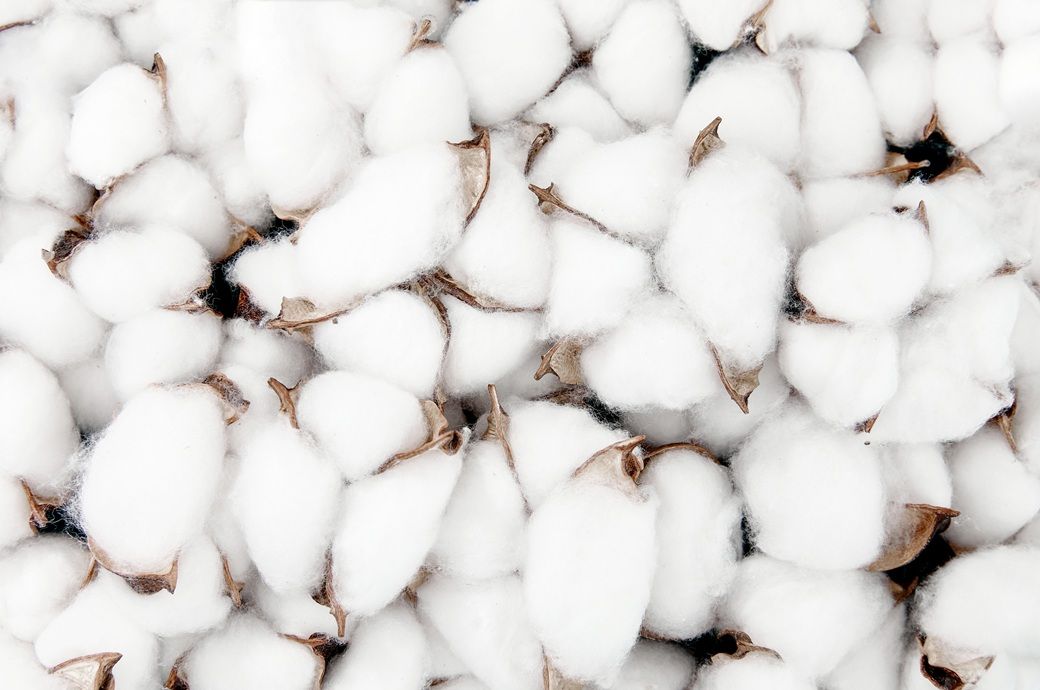
India has extended the exemption from customs duty on cotton imports by two months until December 31, 2026, as the textile industry faces a projected domestic supply shortage.
The Ministry of Finance issued Notification No. 35/2026-Customs on October 30, amending the earlier Notification No. 19/2026-Customs dated May 30. The amendment replaces the previous exemption deadline of October 31 with December 31, 2026. The government said the change was made in the public interest under the Customs Act, 1962, read with the Finance Act, 2021.
India has extended the cotton import duty exemption until December 31, 2026, amid a projected supply shortage.
SIMA welcomed the move, saying it would help textile manufacturers secure raw materials and meet export commitments.
The association urged the government to extend the exemption until 2030 to ensure supply and price stability.
The Southern India Mills’ Association (SIMA) welcomed the decision, saying the extension would help ensure raw material availability, contain costs and support export commitments.
SIMA Chairman Durai Palanisamy said the industry had imported around 72 lakh bales of cotton during the 2025-26 cotton season under temporary duty exemptions, helping mitigate shortages, prevent job losses and meet export commitments.
India’s cotton production is expected to reach around 280 lakh bales in the 2026-27 season, against estimated industry demand of about 360 lakh bales, according to SIMA. The association projected a shortage of around 100 lakh bales, taking into account exports of 12–15 lakh bales of organic and Better Cotton Initiative (BCI) cotton.
The association said the industry would require 475–500 lakh bales annually to support the government’s textile-sector vision of increasing trade from around $172 billion to $350 billion, exports from $36 billion to $100 billion, attracting $100 billion in new investment and creating 20 million jobs. The textile industry currently provides employment to more than 45 million people, with women accounting for around half of the workforce, SIMA added.
Palanisamy said cotton accounted for around 70 per cent of yarn manufacturing costs, 50 per cent of fabric production costs and 30–35 per cent of garment manufacturing costs. Access to adequate quantities of cotton of the required quality at internationally competitive prices was therefore important for the industry to benefit from recently concluded free trade agreements with the UK, EU and US, as well as government initiatives such as the TEEM scheme and PM MITRA parks.
He said India had imported cotton without customs duty between 2008 and 2021, when the country was a net exporter. Import duties were introduced when India exported 30–70 lakh bales, while temporary exemptions had been granted since 2022 to address supply shortages and prevent job losses, he added.
SIMA also highlighted constraints affecting domestic cotton production, including restrictions on advanced seed technologies and defoliants, difficulties in introducing high-performing seed varieties, pest management challenges, soil conditions and weather uncertainty. It said more than six million cotton farmers faced challenges in adopting improved agronomic practices.
Indian cotton productivity stands at around 430–440 kg per hectare, compared with a global average of 815 kg per hectare and more than 1,500 kg per hectare in over 20 countries, according to the association. SIMA said licensing issues were also making it difficult for private seed producers to introduce newer technologies through joint ventures, limiting access to higher-yielding seeds.
The association said it could take seven to 10 years for India to become self-sufficient in medium- and long-staple cotton, while the country would continue to depend on imports for extra-long-staple and other customer-specific varieties.
Against this backdrop, Palanisamy urged the government to extend the cotton import duty exemption to all varieties until 2030 and review it thereafter. He also called for periodic assessments of domestic supply and demand and cotton prices to help ensure price stability and protect the interests of farmers and the textile industry.
Fibre2Fashion News Desk (CG)