
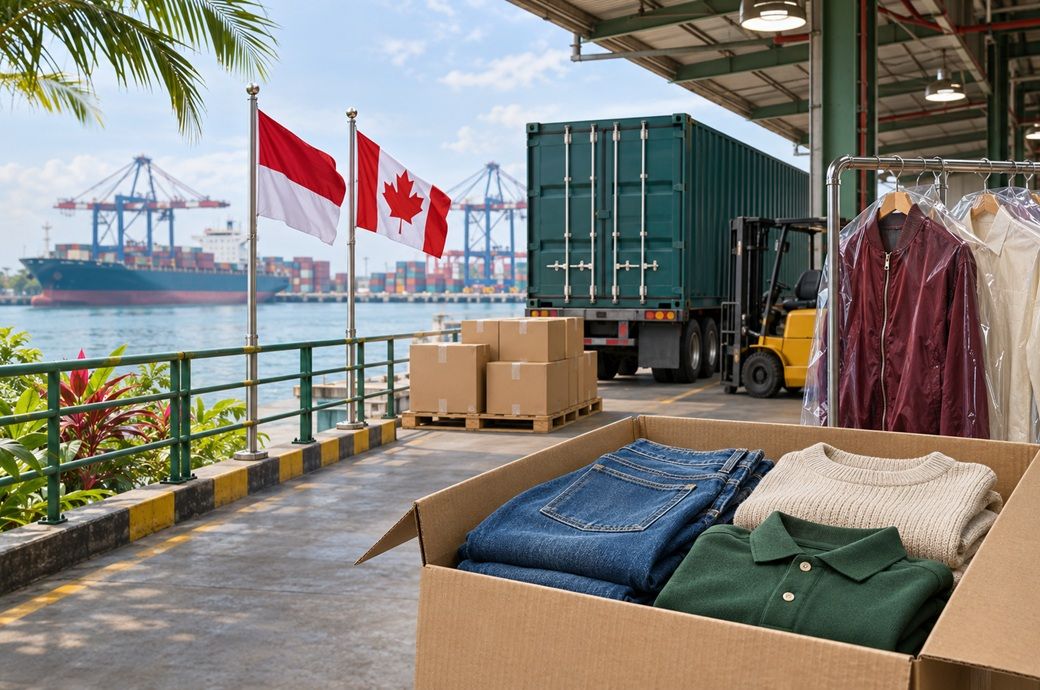
According to reports, the Indonesia–Canada Comprehensive Economic Partnership Agreement (I-CA CEPA) will enter into force on December 1, 2026, pursuant to the exchange of formal notifications by the two countries confirming the fulfilment of their respective ratification requirements.
Under the agreement, Canada will reportedly liberalise 90.55 per cent of its tariff lines for Indonesian products, potentially improving their competitiveness in the Canadian market.
Indonesia’s trade pact with Canada is set to improve access for garment exporters when it takes effect on December 1, 2026.
Canada will liberalise 90.55 per cent of tariff lines, with apparel duties projected to fall from 17.2 per cent to 0.1 per cent.
The assessment estimates C$70.5 million in annual apparel tariff savings and a 38.9 per cent first-year rise in imports from Indonesia.
“We hope that Indonesian businesses will take advantage of the various facilities and opportunities created by this agreement to boost exports, expand market reach, and strengthen the competitiveness of Indonesian products in the international market,” said Budi Santoso, Indonesian Trade Minister, according to reports.
The agreement comes amid growing trade between the two countries. Bilateral trade reportedly reached $4.36 billion in 2025, up from approximately $3.57 billion in 2024. Indonesia’s exports to Canada totalled around $1.69 billion, while imports from Canada amounted to approximately $2.67 billion.
Indonesia’s exports include electrical machinery and equipment, rubber products, footwear, knitted goods and apparel. Its main imports from Canada include wheat, fertilisers, wood pulp, mineral fuels, salt, sulphur and lime.
For garment exporters, the potential tariff savings are particularly significant. According to the Canadian Government’s official economic impact assessment and as underlined in media reports, tariffs on Indonesian wearing apparel currently average 17.2 per cent on a trade-weighted basis. Under the agreement’s negotiated tariff commitments, this average is projected to fall to approximately 0.1 per cent, substantially reducing the duty burden on qualifying shipments.
The assessment also estimates potential annual tariff savings of approximately C$70.5 million (~$50.4 million) on Indonesian wearing apparel, based on historical trade levels. This could provide a significant cost advantage for Indonesian manufacturers seeking to expand their presence in Canada.
Furthermore, the assessment projects that Canadian imports from Indonesia could increase by approximately C$1.3 billion (~$929 million), or 38.9 per cent, in the first year of implementation. Textiles and apparel, along with leather products, are expected to account for a substantial share of this projected growth.
While these figures represent projections, they indicate considerable potential for Indonesian garment manufacturers to expand their market presence and secure a larger share of Canadian apparel imports.
According to industry stakeholders, lower tariffs will help Indonesian suppliers compete more effectively with established sourcing destinations, including China and Vietnam. However, the actual advantage will depend on the tariff treatment of competing suppliers, product categories and the ability of Indonesian manufacturers to offer competitive prices and reliable production capacity.
Exporters will also need to pay attention to the agreement’s tariff schedules and rules of origin to ensure that their products qualify for preferential treatment. This is particularly relevant for garment manufacturers using imported fabrics, yarns and other materials, as sourcing arrangements and production processes may affect eligibility under the applicable product-specific origin requirements.
Meanwhile, Indonesia’s Trade Ministry has urged businesses, including smaller enterprises, to prepare for the opportunities by identifying potential buyers, meeting Canadian market requirements and developing business partnerships.
The agreement creates an opportunity for Indonesian exporters to deepen their presence in a market where they can seek to expand beyond existing business relationships. Whether that opportunity translates into lasting export growth will depend on how quickly companies prepare for the new trading environment and turn preferential access into competitive, reliable supply.
Fibre2Fashion News Desk (DR)