
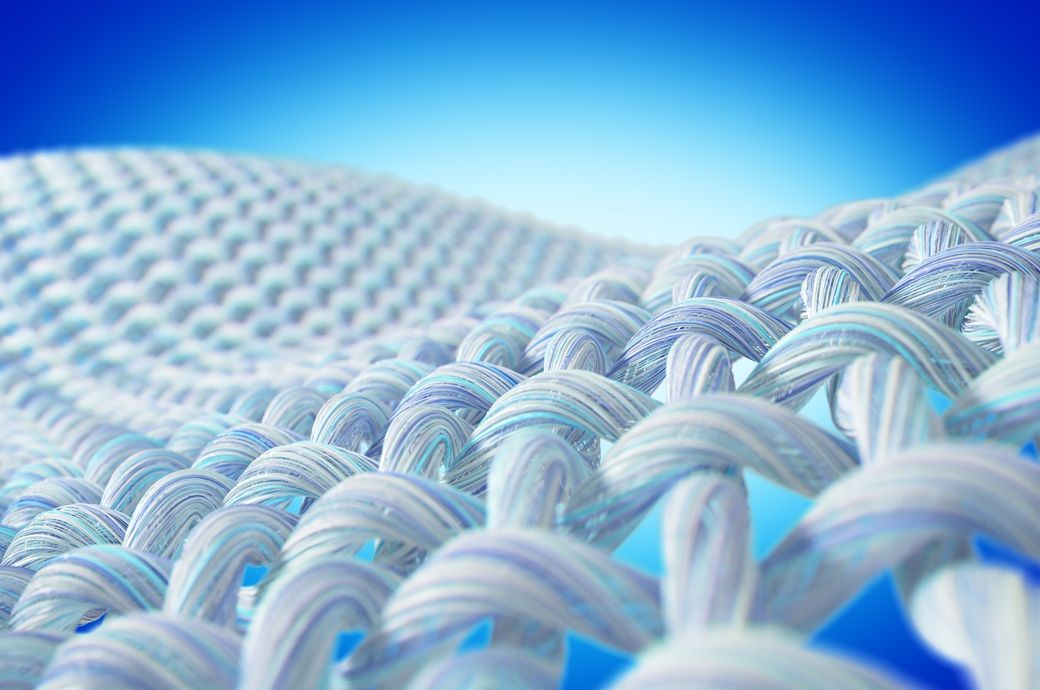
In collaboration with NASA, BRM recently developed the 3D Orthogonally woven 3DMAT Quartz Material for compression pads used in the Orion Multi-Purpose Crew Vehicle (MPCV). The innovation was recognised as the 2023 NASA Government Invention of the Year, demonstrating the impact of collaboration between NASA and specialised American small businesses with advanced technological capabilities.
Bally Ribbon Mills highlighted its advanced 3-D woven fabrics, including joints and thermal protection systems used in aerospace.
Developed with NASA for the Orion Multi-Purpose Crew Vehicle, the 3DMAT Quartz Material won the 2023 NASA Government Invention of the Year.
The technology enables lighter, stronger aerospace components and customised heat-shield solutions.
BRM’s 3-D continuous weaving technology enables the creation of complex joint structures such as ‘Pi – π,’ double ‘T,’ and ‘H’ shapes. These woven joints provide a balance of strength, durability and structural integrity while reducing weight and cost. Because the weave distributes strength across three dimensions, the joints reinforce load paths and can be tailored to match the architecture of specific structural components.
The company also emphasised the role of its 3-D woven composites in aviation heat shield applications such as TPS systems, which are mission-critical in space exploration vehicles. By varying yarn types, density, thickness, width and resin composition, they can produce customised TPS solutions for different missions and applications.
Beyond heat shields, the 3-D woven components are also suitable for aircraft engine parts. Replacing conventional titanium components with 3-D woven carbon fibre composites can reduce weight and lifetime costs while meeting stringent manufacturing and operational performance requirements.
Fibre2Fashion News Desk (JP)
