
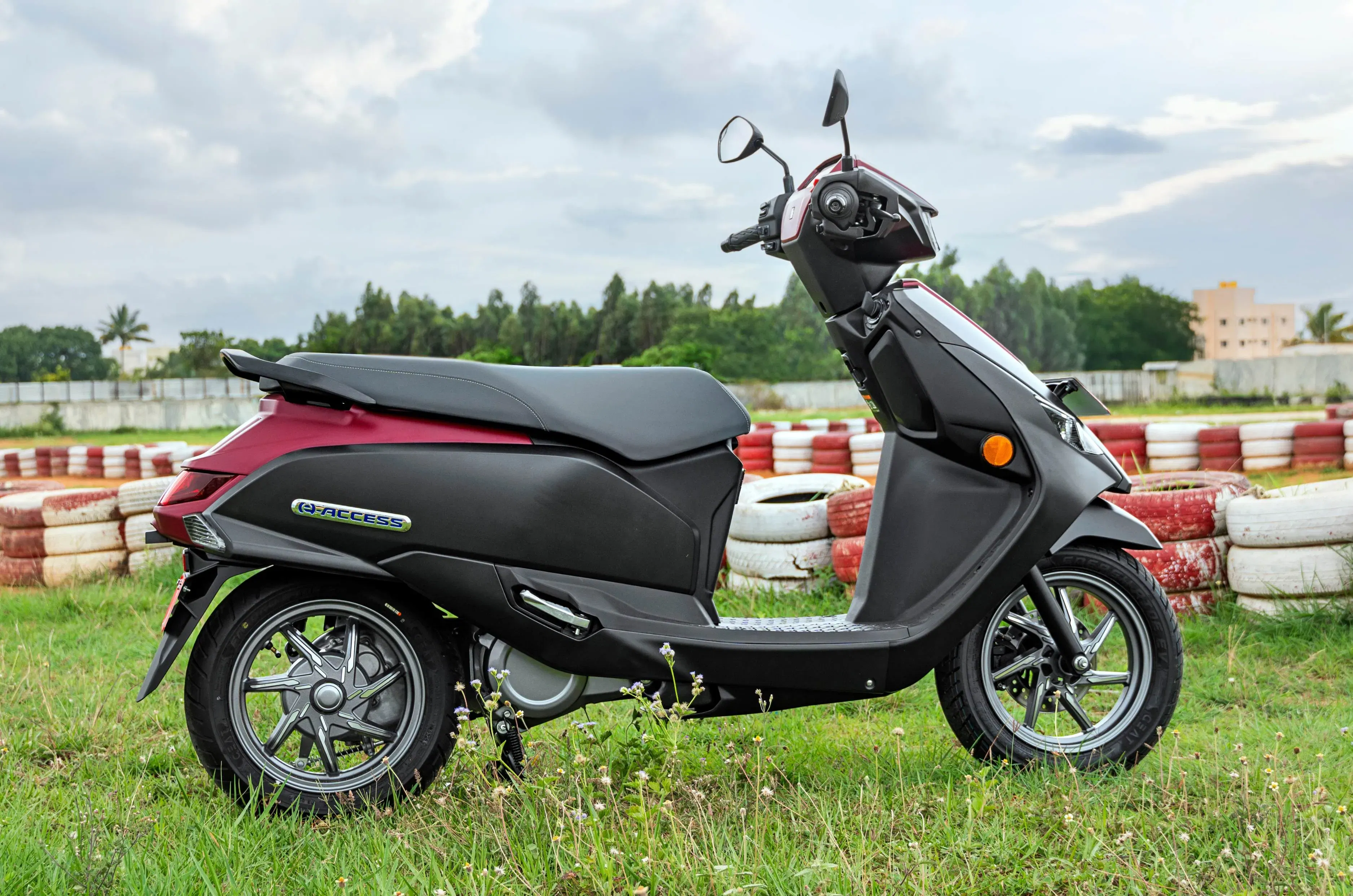
Suzuki entered the Indian electric two-wheeler market with its e-Access in January 2026, seven-and-a-half months after it began production of its first electric scooter on May 23, 2025, and it received a muted response in its first month of sales.
1. Suzuki e-Access uses a 3kWh LFP battery and has a claimed IDC range of 95km
2. Priced at Rs 1.88 lakh, ex-showroom, Delhi, it costs much more than the iQube and Chetak
3. Comes with 7-year/80,000km extended warranty coverage and buyback assurance
Suzuki e-Access is priced at Rs 1.88 lakh
The e-Access comes with an LFP battery
As per SIAM’s (Society of Indian Automobile Manufacturers) wholesale numbers, Suzuki dispatched 703 e-Access scooters in January 2026. Of that, 201 units were delivered to customers in January, according to Vahan retail sales data, giving the company a 0.16 percent share of the 1.23 lakh e-two-wheelers retailed in January 2026. In the first half of February (1-14), as per Vahan, an additional 169 e-Access scooters were delivered to buyers.
One of the reasons for the slower-than-expected offtake of the premium Suzuki e-Access is its high pricing. At Rs 1.88 lakh (ex-showroom Delhi), the e-Access costs substantially more than the top two bestselling e-scooters in India – the TVS iQube and Bajaj Chetak.
Nevertheless, in an effort to reduce the e-Access’s total cost of ownership, Suzuki offers a 7-year/80,000km extended warranty coverage at no extra cost and also a buyback assurance of 60 percent for 3 years.
The e-Access is built around Suzuki’s in-house electric architecture, branded as Suzuki e-Technology. Central to this is a 3kWh Lithium Iron Phosphate (LFP) battery, which the company claims offers a significantly longer service life than conventional NMC batteries.
Suzuki’s e-scooter for India has a claimed IDC range of 95km. The company states that the battery and drivetrain have been subjected to extensive testing, including water submersion, thermal stress, vibration and drop tests, in line with its global validation standards.
