
3 min readNew DelhiUpdated: Mar 19, 2026 03:03 PM IST
A sharp pain on the left side while taking a deep breath can be unsettling, often raising more questions than answers. While it may sometimes be harmless, it’s not something to ignore. So when a user recently asked on Quora: “Why am I feeling pain on my left side when I take a deep breath?”, we sought answers from an expert.
According to Dr Arunesh Kumar, Director & HOD – Pulmonology, Paras Health, Gurugram, “pain on the left side while taking a deep breath is often related to structures involved in breathing, such as the lungs, pleura (lining of the lungs), chest wall muscles, or ribs.” He adds that common causes include muscle strain, pleural inflammation, or minor rib injury, though in some cases it may also be linked to lung infections or reduced lung expansion. Less commonly, more serious conditions, such as a clot in the lungs or cardiac issues, may be responsible.

DISCLAIMER: This article is based on information from the public domain and/or the experts we spoke to. Always consult your health practitioner before starting any routine.
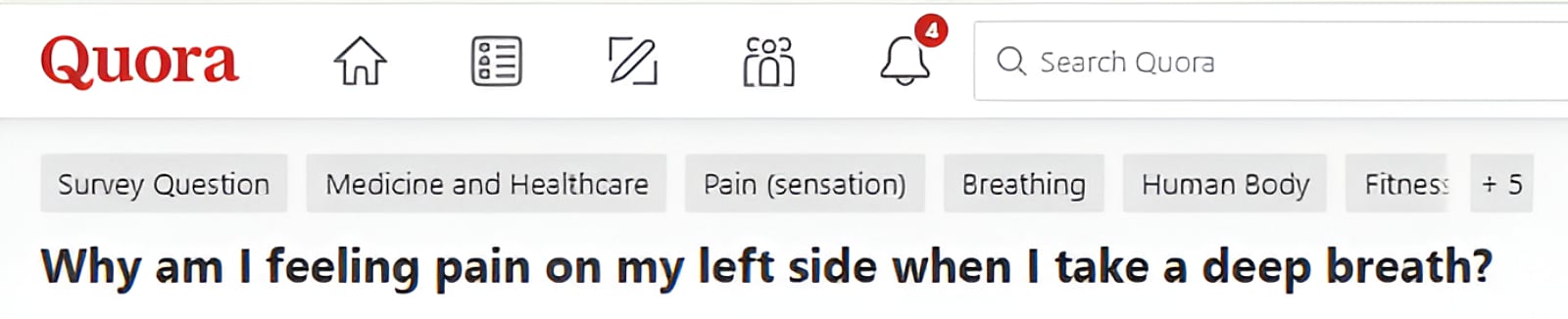 Netizens often turn to online forums like Quora seeking answers to their medical queries (Image: Screenshot from Quora)
Not all chest pain feels the same
Distinguishing between a simple strain and something more concerning is key. Dr Kumar explains, “muscle strain pain is typically localised, worsens with movement or certain positions, and may improve with rest or mild pain relief.” It often follows physical exertion or sudden movements.
In contrast, “pain from underlying lung or pleural conditions is usually sharper, specifically worsens with deep breathing or coughing, and may not improve with rest.” This kind of pain tends to persist and may signal an underlying issue that needs attention.
The intensity and onset of pain can also offer clues. As Dr Kumar notes, serious conditions should be suspected when pain is sudden or worsening, particularly when breathing difficulty is present. “Conditions like pulmonary embolism often present with abrupt chest pain and breathlessness, while pleurisy causes sharp pain with each breath.” Pneumonia, meanwhile, may bring chest discomfort along with fever and cough.
He also highlights warning signs that shouldn’t be overlooked: shortness of breath, persistent cough, fever or chills, rapid heartbeat, fatigue, or in rare cases, coughing up blood. The presence of these symptoms alongside chest pain increases the likelihood of a more serious condition.
Story continues below this ad
Importantly, Dr Kumar advises that “immediate medical help should be sought if the pain is severe, sudden, or associated with breathlessness, dizziness, or fainting.” Any chest pain that feels unusual, does not improve, or worsens quickly should be treated as a medical emergency.
DISCLAIMER: This article is based on information from the public domain and/or the experts we spoke to. Always consult your health practitioner before starting any routine.
