
Whenever dancer and actor Sudhaa Chandran’s name comes up, a vivid image of her in gorgeous attire comes to mind. That is exactly how the talented artiste wants it, too. Chandran recently made a striking statement about her relationship with makeup during an interview with Bollywood Bubble Telly. “Marte dum tak makeup mere chehre pe rahe… Agar bhagwan ne chaha to makeup ke saath main is duniya se uthu… wo maut har kisi ko naseeb nahi hota,” (I want to be wearing makeup till my last breath. Not everyone is fortunate enough for such a [beautiful] death)”
Chandran, who is currently working in the Hindi TV show Noyontara, shares a close emotional bond with her makeup and firmly believes that her leaving the world with her makeup and ghungroos on would be her way of honouring life and the stage that shaped her journey. Intrigued by her sentiments, we wondered why some people feel so strongly about makeup. Let’s find out.

Why some people love their makeup a little extra
Not just Chandran, but many people feel similarly attached to their makeup kits. Ria Talwar, Counselling Psychologist at Samarpan Recovery and Rehabilitation Centre, explains that strong attachment to makeup often develops through cultural exposure, social environment, and personal identity.
“For many, makeup is a powerful form of self-expression. It allows people to shape how they present themselves and gives them a sense of control over their appearance. Over time, it becomes less about looking good and more about who they are,” says Talwar.
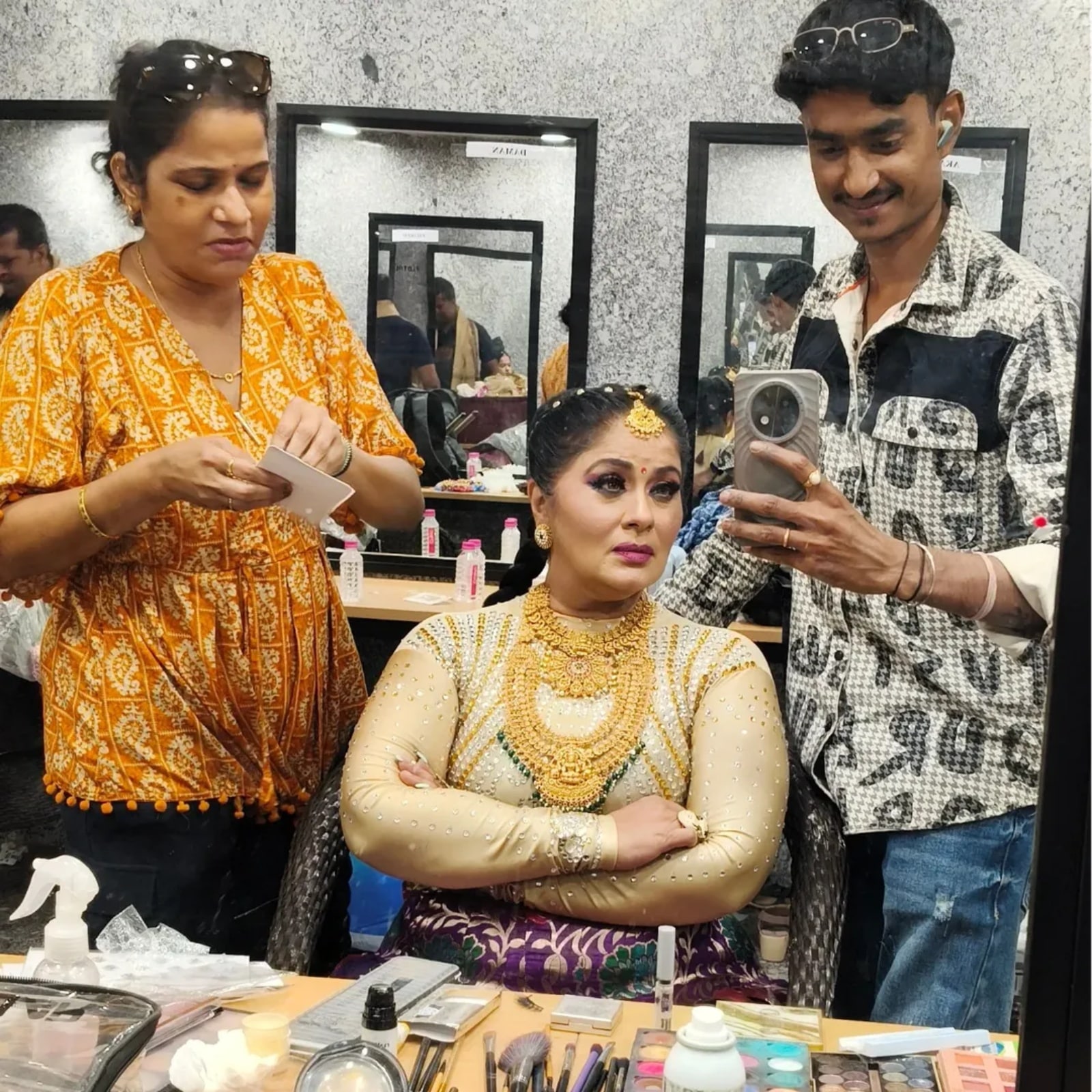 Sudhaa Chandan won the National Film Award – Special Jury Award in 1985 for the Telugu film Mayuri (Images: Instagram/Sudhaa Chandaran)
The psychologist further tells indianexpress.com that people with perfectionist tendencies may enjoy the precision and control makeup provides, while for others it can serve as a form of camouflage —boosting confidence in social settings.
“The act of applying cosmetics, touching the face, choosing colours, shaping features, etc., can stimulate feel-good responses in the brain, making it calming and pleasurable. In this way, makeup becomes more than a cosmetic task; it turns into a self-care ritual that lifts mood and provides comfort,” adds Dr Pragya Rashmi, Consultant Psychologist at Yashoda Hospitals, Hyderabad.
Dr Rashmi notes that makeup can also act as emotional armour or a grounding ritual. Compliments and social approval reinforce confidence, while the act of applying makeup itself can feel calming and meditative, helping people regulate emotions and reduce anxiety.
Story continues below this ad
A wish to die in makeup: an expression of love or something else?
When someone wishes to have perfect makeup even in death, psychologists say this is symbolic rather than superficial. Talwar explains that such a desire reflects dignity, identity, and agency, a way to preserve a sense of self and continuity even at life’s end. Dr Rashmi agrees, while adding that it is also tied to cultural scripts around honour and preparation, and can be seen as a final act of self-expression.
Experts caution that makeup’s psychological power is healthiest when it is a choice. Distress at the thought of being seen without it may indicate over-reliance, anxiety, or internalised social pressure rather than empowerment.
In Sudhaa Chandran’s case, her words reflect not obsession, but identity, strength, and dignity—a final assertion of how she has lived and wishes to be remembered. As psychologists note, for some, makeup is not just beauty; it is confidence, ritual, creativity, and even legacy.
DISCLAIMER: This article is based on information from the public domain and/or the experts we spoke to.
