
A bowl of piping hot chicken stew served with lacy appams or steamed slices of bread is the stuff of nostalgia for the Malayali, that subtle flavour of the light, spice-tinged gravy carries many memories. The coconut milk-based gravy with pieces of chicken and cubed potatoes, carrots, and onions, the mild aroma of cinnamon, cardamom, cloves, pepper, and bay leaves … a well-made stew is a warm hug. The beef variety has more takers, while the vegetable version has its fans.
Kerala stew or ishtew/ishtoo is having its moment. A regular on the menus of city restaurants, alongside breakfast combos appam-egg roast or puttu-kadala, the stew appears as accompaniment to appam. However, today it is a standalone dish with dedicated restaurants, cloud kitchens and even a ‘stew truck’.
A stew truck
Reems Stew and Bread, a food truck, has been serving stew and bread at two locations in Kochi — Kakkanad and Panampilly Nagar since January this year. “The response has been sensational. The bread-stew combination is more than food for the Kochiite. It is part of our celebrations — Christmas and Easter. It is pure nostalgia and a taste of home, which has people coming to us in droves. We get calls almost daily asking about our location,” says Ajoy ET.

Reems Stew and Bread truck parked in Kakkanad
| Photo Credit:
SPECIAL ARRANGEMENT
His wife Reema cooks chicken, beef and vegetable stew. On weekdays — Monday to Thursday — the truck is parked outside Infopark, and on weekends (except Sunday) at Panampilly Nagar. “What sets Reema’s stew apart is we don’t use cornflour to thicken the gravy. It is cashew paste,” says Ajoy. The hack is one that Reema’s grandmother used. Though all days are about stew, there are days when they serve vindaloo also.
Fits every meal
Stewmuch, a stew-based cloud kitchen, was launched after three years of deliberation,says foudner Jishnu KP, who hails from Kozhikode. “In our place, stew is an important dish served during special occasions and celebrations. I have always loved stew and its combinations. I chose stew because its spices and warmth are balanced. It is not a heavy dish; it feels light on the palate and comforting to eat. In many kitchens, and in our own homes, guests are welcomed with good food — and stew has always had a special place in that hospitality. Another thing I love about stew is that it fits every meal — breakfast, lunch, and dinner. Very few foods carry that versatility.” Apart from beef stew, their bestseller, Stewmuch also has chicken perattu, a dry spicy dish, on the menu.
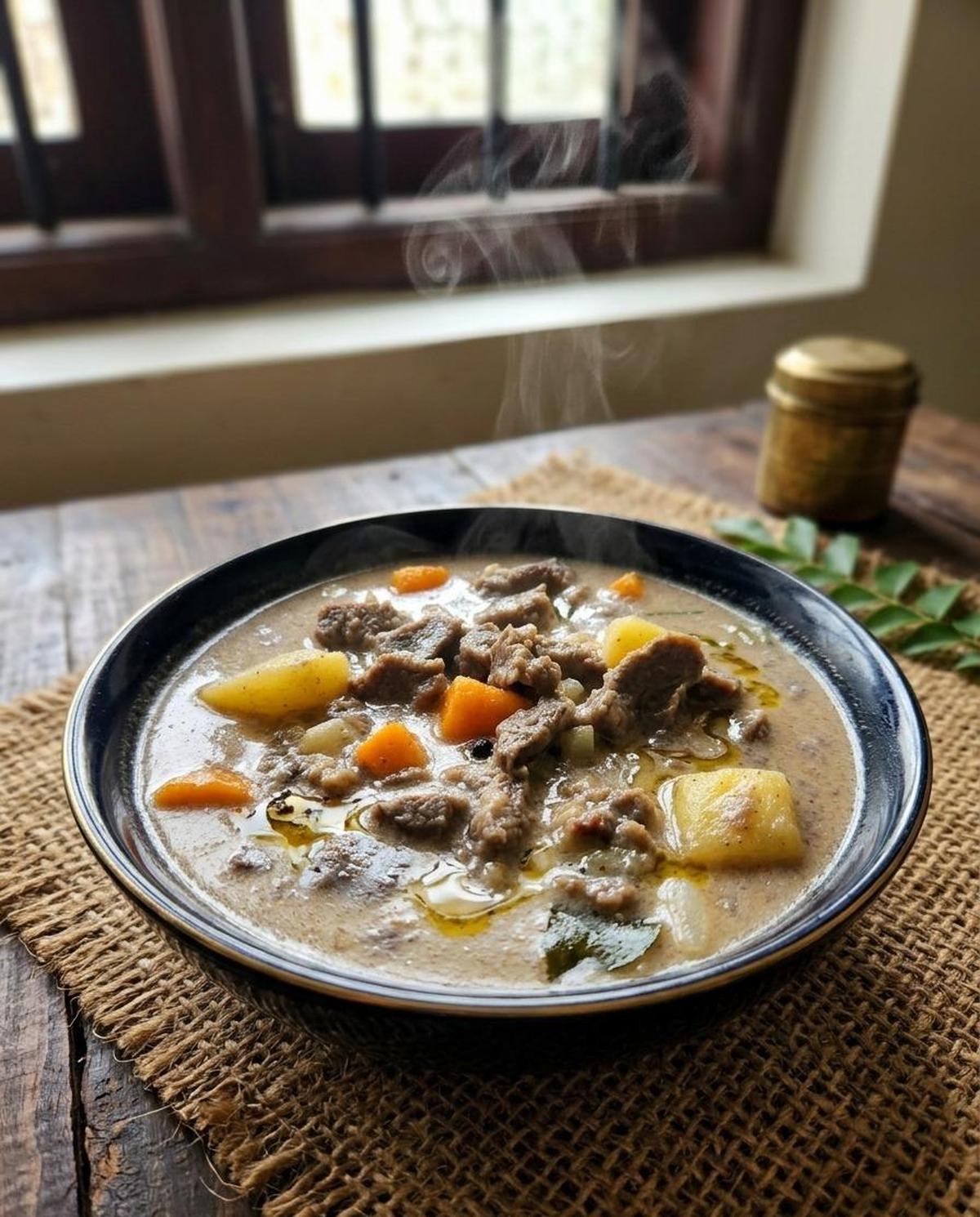
Kerala stew by Stewmuch
| Photo Credit:
SPECIAL ARRANGEMENT
Hamza’s Kitchen on Pipeline Road was one of the first to explode on social media with bread and stew, which others picked up following its popularity. Stew in Kakakand is another dedicated stew spot in Kochi. Besides these, there are several smaller, hole-in-the-wall shops which have hopped onto the trend adding stew to the menu.
The origins of the mild-looking stew, in Kerala, with the kick from the whole spices, bear strong colonial influences — English and Portuguese — fused with the Malayali touch of coconut milk rather than cornstarch which is used in the beef stew made by the English. With its subtle use of spices and aromatics, its flavour elevates the accompanying bread or appam.
Mutton stew was a staple on the celebratory table of Kochi’s Anglo-Indian community, served during weddings with appam or bread. Stew is also an integral part of Syrian Christian cuisine.
Layered history
Says Tanya Abraham, “Stew or ishtew is said to have a layered history. It is said that coconut milk was used to make a mild vegetable curry. The stew is often connected to the Surianis, who, specifically, used pepper and ginger to make it. Potatoes and carrots came with the Portuguese, and the stew took on a variation of their slow-cooked broth-like dish with chunks of these vegetables and, with the addition of meat as a very prominent ingredient.” Tanya has written on the colonial influence on Kerala cuisine, in Eating with History: Ancient Trade Influenced Cuisines of Kerala.
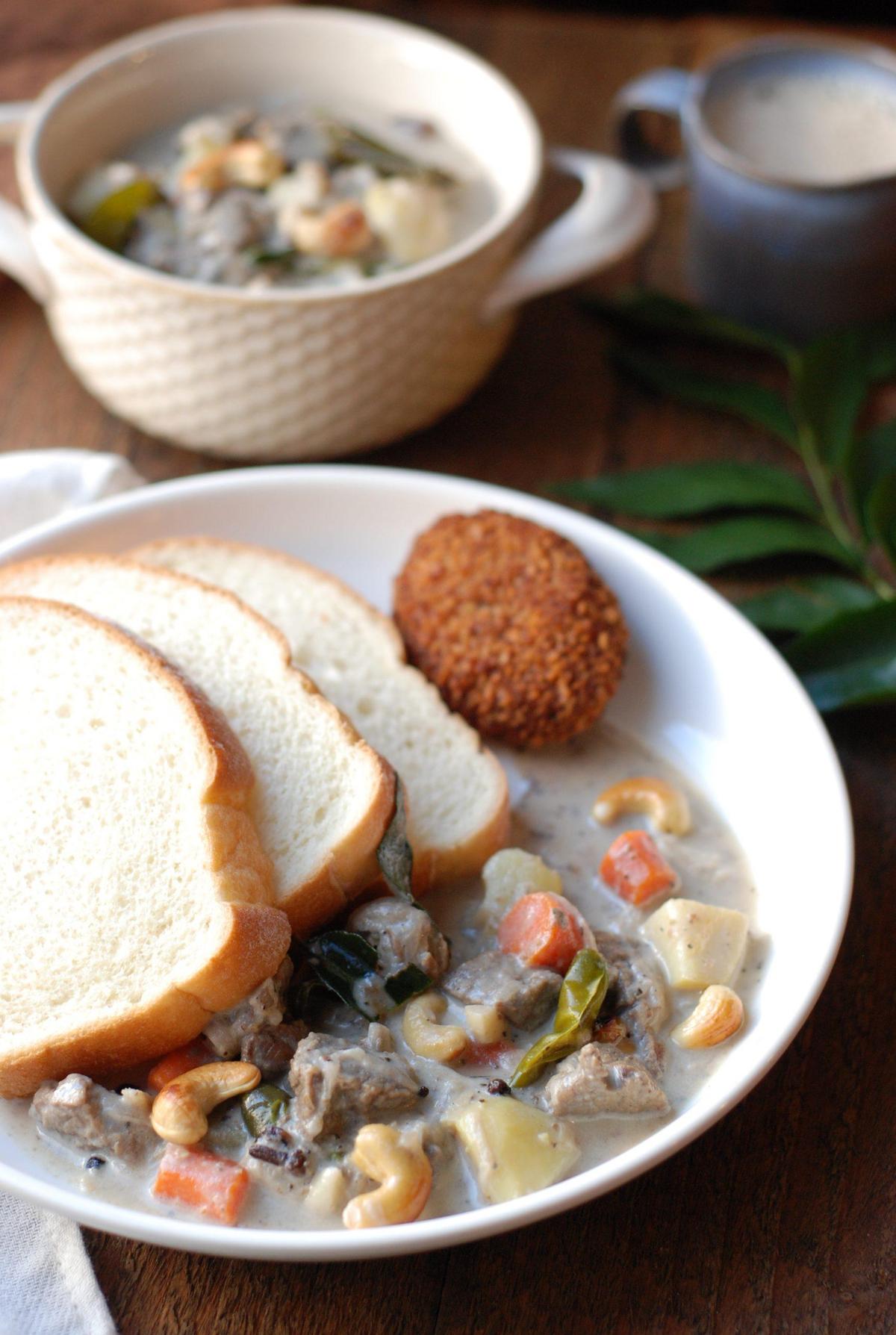
The bread and stew com
| Photo Credit:
Maya Mohan
About how coconut milk might have come to be in the recipe, she says, “Coconut milk was used widely by the West Asians — the Jews — who couldn’t mix milk and meat due to Kosher laws. They widely used coconut milk instead, and Syrian Christians often adapted their techniques and created new recipes. But since coconut was widely available since yore, it is difficult to say when the first version of a stew came into being.”

The Kerala stew is not limited to one part of Kerala, it has a presence across the State.
Jishnu adds, “Malabar stew and Kochi stew each carry their own traditions, and I have a story to tell through both. I am trying to build a recipe inspired by a meeting of those two traditions. The main differences I see between the two stews are in spice level, thickness of the gravy, and the colour. Malabar stew is generally thicker in comparison to the Kochi stew. It has a slightly higher spice level, especially a stronger note of pepper. I find the Kochi stew is milder and is slightly sweeter in profile. The gravy in Malabar stew often carries a mild yellow tone, while Kochi stew is usually whiter and lighter in appearance. Our stew tries to keep a balance between these characteristics, bringing together elements from both traditions.”
Varying recipes
The recipe for the Kerala stew varies, it is almost as if each family has its recipe. For instance, some recipes use only ginger, while others use garlic and ginger which is tempered with the spices and onions. Though made of beef, mutton or chicken, beef stew is the crowd favourite, say Jishnu and Ajoy.
While Reems has stuck to the bread and stew combination, with bread custom-baked, Stewmuch serves the traditional combinations — appam and puttu — it also has the unusual pairing with ghee rice, which is how it is had in Kozhikode. “Stew also has beautiful traditional pairings — appam, puttu, and bread are familiar combinations in Kochi. But I wanted to push that further by pairing stew with ghee rice, which is not a popular stew combination in Kochi, and make it part of our identity,” Jishnu adds.
Have it with bread or with the appam, the Kerala stew is a nuanced dish which is the stuff of nostalgia and memories.
Published – May 15, 2026 03:08 pm IST
