
Many people struggle to let go of the stress of a long day. But Dr Shriram Nene, a cardiovascular surgeon, believes there’s a one-minute ritual that can help you reset your mood before entering the home. He calls it the “doorway decompression technique”.
In a recent post on X, he shared a simple breathing exercise designed to create a mental break between the pressures of the day and the rest of the evening. The idea is straightforward: before stepping into your home after a stressful day, pause at the door and take six slow breaths. Inhale for four counts, exhale for six.

“Before you step into your evening, take one small pause. The way you transition from stress to rest can shape your mood, your sleep, and the energy you bring to the people you love,” he wrote.
DISCLAIMER: This article is based on information from the public domain and/or the experts we spoke to. Always consult your health practitioner before starting any routine.
Can breathing really help?
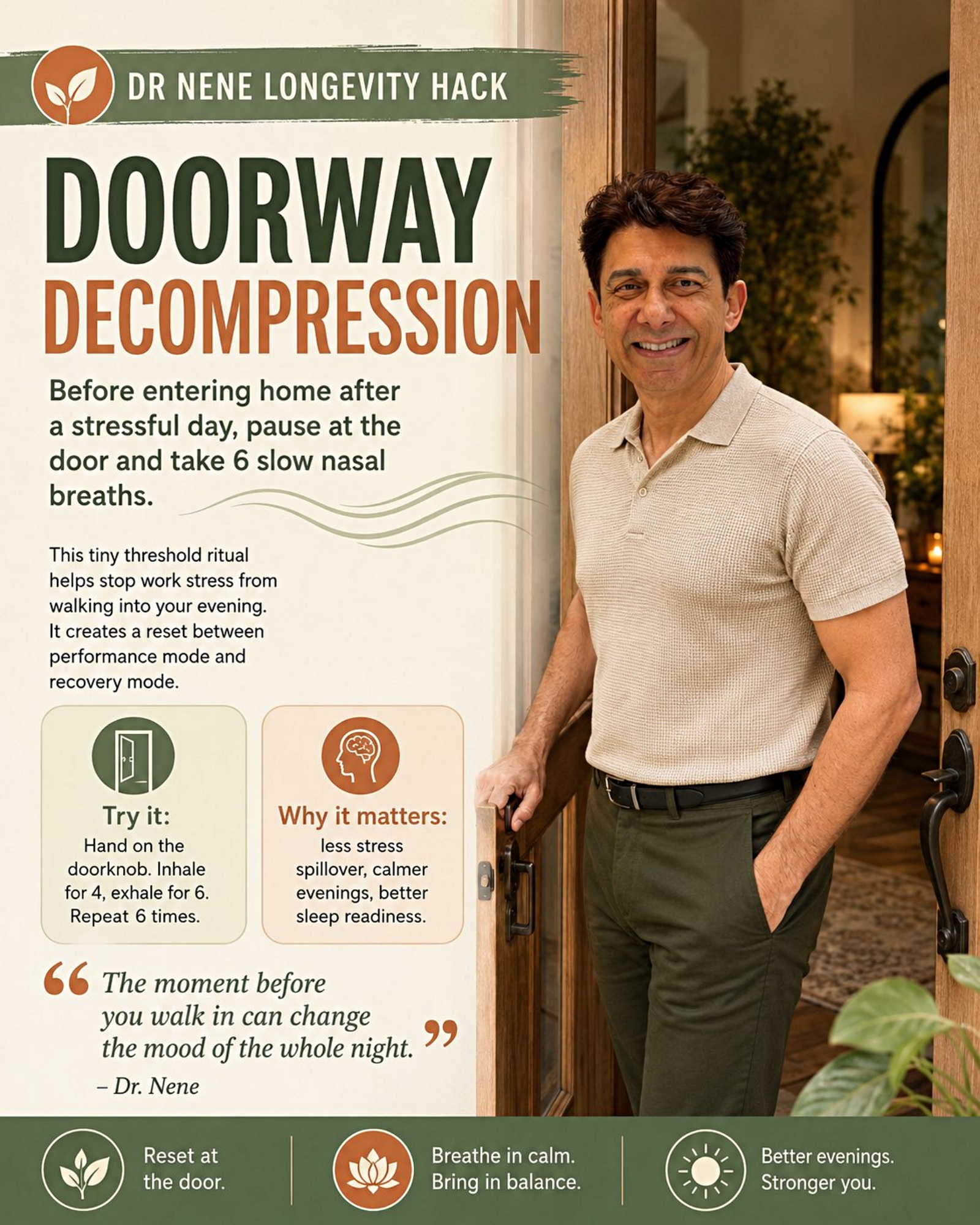 Photo posted by Dr Nene on X
According to experts, a few deep breaths can make a difference.
“The doorway decompression technique can be a simple and effective way to transition from a stressful day to a calmer home environment,” says Dr (Col) Vijay Dutta, Director, Internal Medicine and Respiratory Services, ISIC Multispeciality Hospital.
He explains that taking a brief pause before entering the house indeed creates a mental break between work stress and personal life. “Even a minute of intentional breathing may reduce feelings of tension and help someone enter their home feeling calmer and more present,” he tells indianexpress.com.
Story continues below this ad
Dr Dutta adds that the practice can also help people become more mindful of their emotions and reactions. Rather than carrying workplace frustrations into the evening, the pause gives them a moment to reset before interacting with family members or settling into their home routine.
Why does deep breathing help?
When people are stressed, their breathing often becomes shallow and rapid. Slow, controlled breathing helps reverse this pattern.
“Conscious deep breathing can help calm the body by slowing the breathing rate and reducing the sensation of breathlessness or tension that often accompanies stress,” explains Dr Samir Garde, Director of the Department of Pulmonology and Lung Transplant at Gleneagles Hospital, Parel.
He adds that slow, controlled breathing can help regulate breathing patterns, improve oxygen exchange, and reduce the physical symptoms of stress.
Story continues below this ad
“When a person breathes slowly and deeply, especially with a longer exhale than inhale, it activates the body’s relaxation response. This can slow the heart rate, reduce muscle tension, and create a sense of calm,” Dr Dutta further adds.
 The calming effect of deep breathing is scientifically recognized (Image: Freepik)
Is it backed by science?
Dr Dutta notes that the calming effects of slow, controlled breathing are supported by scientific research and
“are not simply a placebo effect”.
According to him, a longer exhalation helps activate the parasympathetic nervous system, often called the body’s “rest and digest” system. This helps the body shift away from the stress response and move towards a calmer state.
Dr Garde agrees. “Slow, controlled breathing can influence the autonomic nervous system, helping reduce stress-related physical responses such as rapid breathing and increased heart rate,” he says.
Story continues below this ad
The result is not only a greater sense of calm but also an improved sense of overall well-being.
While the doorway decompression technique is not a cure for chronic stress, it can be a useful ritual for creating a boundary between work and home life. And because it takes less than a minute and requires no equipment, it may be one of the easiest stress-management habits to try. As Dr Nene puts it, “Tiny rituals. Big impact.”
Good evening — what are you carrying home today?
Before you step into your evening, take one small pause. The way you transition from stress to rest can shape your mood, your sleep, and the energy you bring to the people you love.
Tiny rituals. Big impact.
Try it tonight. pic.twitter.com/9aRBnpu2LV
— Dr. Shriram Nene (@DoctorNene) June 17, 2026
DISCLAIMER: This article is based on information from the public domain and/or the experts we spoke to. Always consult your health practitioner before starting any routine.
