
4 min readNew DelhiJun 21, 2026 09:00 PM IST
As Indian cities grapple with rising temperatures and increasingly frequent heatwaves, planting trees is often seen as the go-to solution. But what if simply increasing tree numbers isn’t enough?
According to environmentalist Jasmit Singh Arora, popularly known as the ‘Gutliman of India’, cities may achieve far better cooling by combining trees with shrubs and ground cover rather than relying on trees alone.

“Urban vegetation is essentially a city’s green infrastructure,” says Arora. “It includes trees, shrubs, grass, and even plants on roofs and walls. As cities get hotter, this greenery acts like a natural air conditioner, helping reduce dangerous heat stress.”
DISCLAIMER: This article is based on information from the public domain and/or the experts we spoke to.
How urban vegetation cools cities
The cooling effect of urban greenery comes from two natural processes: shading and evapotranspiration. “Shading is the primary cooling mechanism,” explains Arora. “Trees can stop up to 97 per cent of incoming solar radiation, lowering surface temperatures by anywhere from 2 to 12 degrees Celsius.”
The second mechanism is evapotranspiration, a process through which plants release water vapour from their leaves. “It’s similar to how sweating cools the human body,” says Arora. “This can reduce surrounding air temperatures by 0.5 to 5.8 degrees Celsius.”
Combined, these effects can significantly improve comfort levels in urban environments. Arora notes that trees have been observed to reduce the air temperature experienced by pedestrians by as much as 12°C in certain conditions.
Story continues below this ad
Why shrubs and ground cover matter
While trees play the biggest role in cooling, Arora says research increasingly shows that a layered approach delivers superior results.
“Trees alone are not always enough,” he says. “When trees are combined with shrubs and ground cover, the cooling benefits can more than double compared to single-layer planting.”
This happens because different vegetation layers cool cities in different ways. Trees block overhead sunlight, while shrubs and ground cover prevent heat from radiating upward from roads, pavements, and walls. “Think of it as a cascade of shade,” says Arora. “The upper layer protects against direct sunlight, while the lower layers stop heat from building up at ground level.”
Another benefit is reduced heat absorption. “Ground cover and understory plants prevent soil and pavement from absorbing heat during the day and releasing it later at night,” Arora explains. “This helps lower nighttime temperatures as well.”
Story continues below this ad
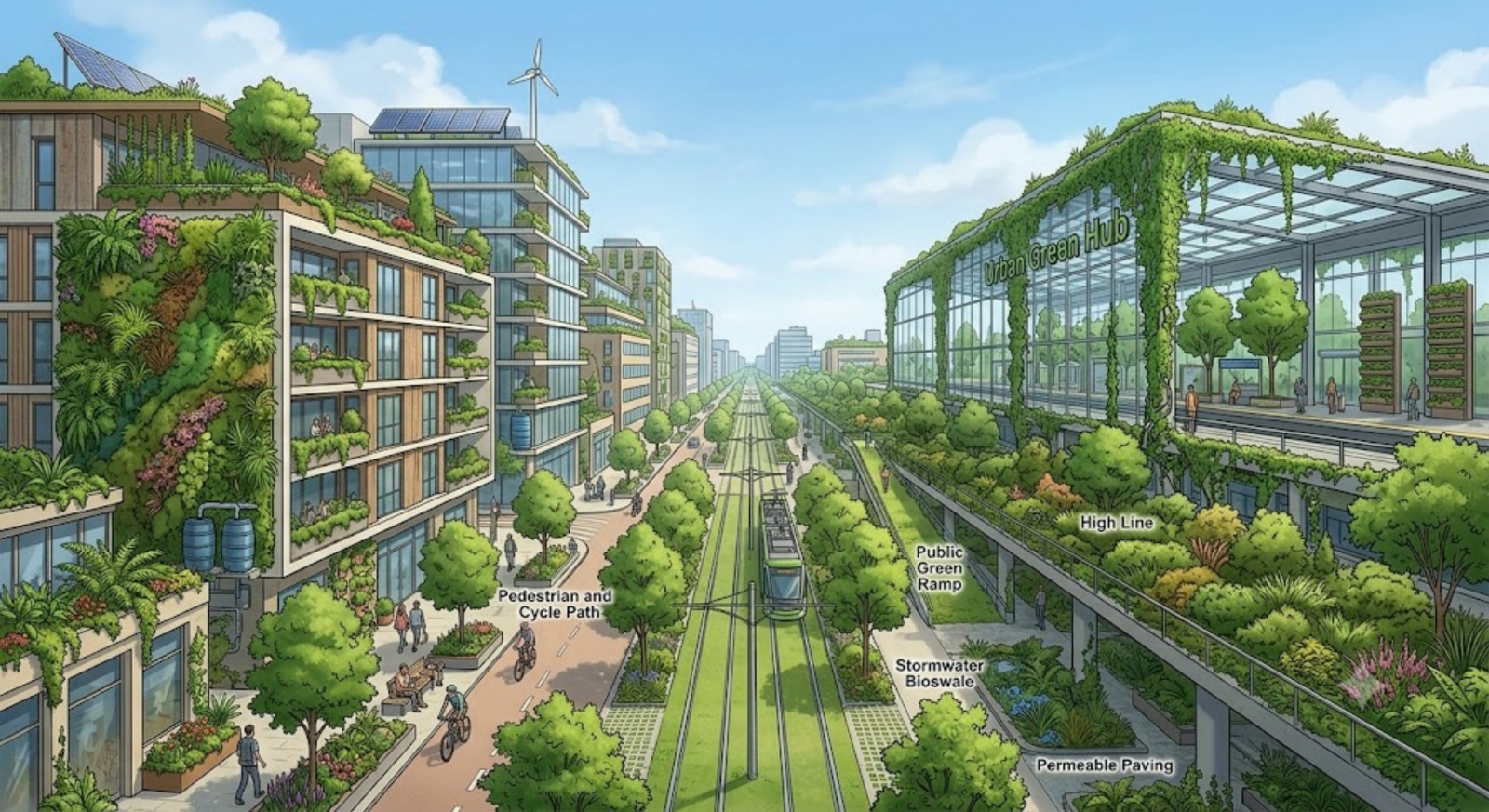 What is urban vegetation (Photo: AI)
Benefits of urban vegetation
“In Delhi, shaded parks can be five to seven degrees cooler than nearby concrete-dominated areas,” says Arora. “Tree cover alone has been shown to reduce surface temperatures by between 3.8°C and 8.4°C.”
Ahmedabad, one of India’s hottest major cities, has also begun incorporating vegetation into urban planning. “The city is replacing heat-trapping pavement with plants at more than 100 junctions to combat rising temperatures,” Arora notes.
Elsewhere, urban parks in Kolkata remain around one to two degrees cooler than surrounding neighbourhoods, while vegetated areas in Guwahati can be up to five degrees cooler than nearby built-up zones, says Arora.
While large-scale tree plantation drives often grab headlines, Arora cautions against focusing solely on tree counts.
Story continues below this ad
“Cities should move beyond measuring success through tree numbers alone,” he says. “The arrangement, density, and type of vegetation matter just as much as canopy cover.” “Layered vegetation can reduce afternoon heat stress by up to eight degrees Celsius compared to open spaces,” says Arora.
DISCLAIMER: This article is based on information from the public domain and/or the experts we spoke to.
