
4 min readNew DelhiJun 22, 2026 10:00 PM IST
As temperatures soar during the summer months, many people spend long hours in air-conditioned offices, homes, cars, and shopping centres to escape the heat. While air conditioning offers comfort and helps prevent heat-related illnesses, some people report experiencing increased joint stiffness, aches, or discomfort after prolonged exposure to cold indoor environments. This has led to a common belief that sitting in an air-conditioned room for extended periods can directly cause joint pain.
At the same time, joint pain and stiffness can be influenced by a wide range of factors, including age, underlying arthritis, previous injuries, muscle tension, poor posture, physical inactivity, and circulation-related changes. Because many people remain seated for long periods while working in air-conditioned settings, it can be difficult to determine whether the discomfort stems from the cold temperature itself or from associated lifestyle habits.

DISCLAIMER: This article is based on information from the public domain and/or the experts we spoke to. Always consult your health practitioner before starting any routine.
With more people working indoors and spending significant portions of their day in climate-controlled environments, it is important to understand what science actually says about the relationship between air conditioning and musculoskeletal health.
To understand this, we speak with an expert.
Can air conditioning cause joint pain or only worsen existing problems?
Dr Raju Vaishya, senior consultant orthopaedic and joint replacement surgeon at Indraprastha Apollo Hospitals, New Delhi, tells indianexpress.com, “Air conditioning does not directly cause arthritis or bone degeneration. However, prolonged sedentary indoor habits associated with excessive AC exposure worsen stiffness and muscle discomfort, particularly in people who already have conditions like arthritis or previous joint injuries.”
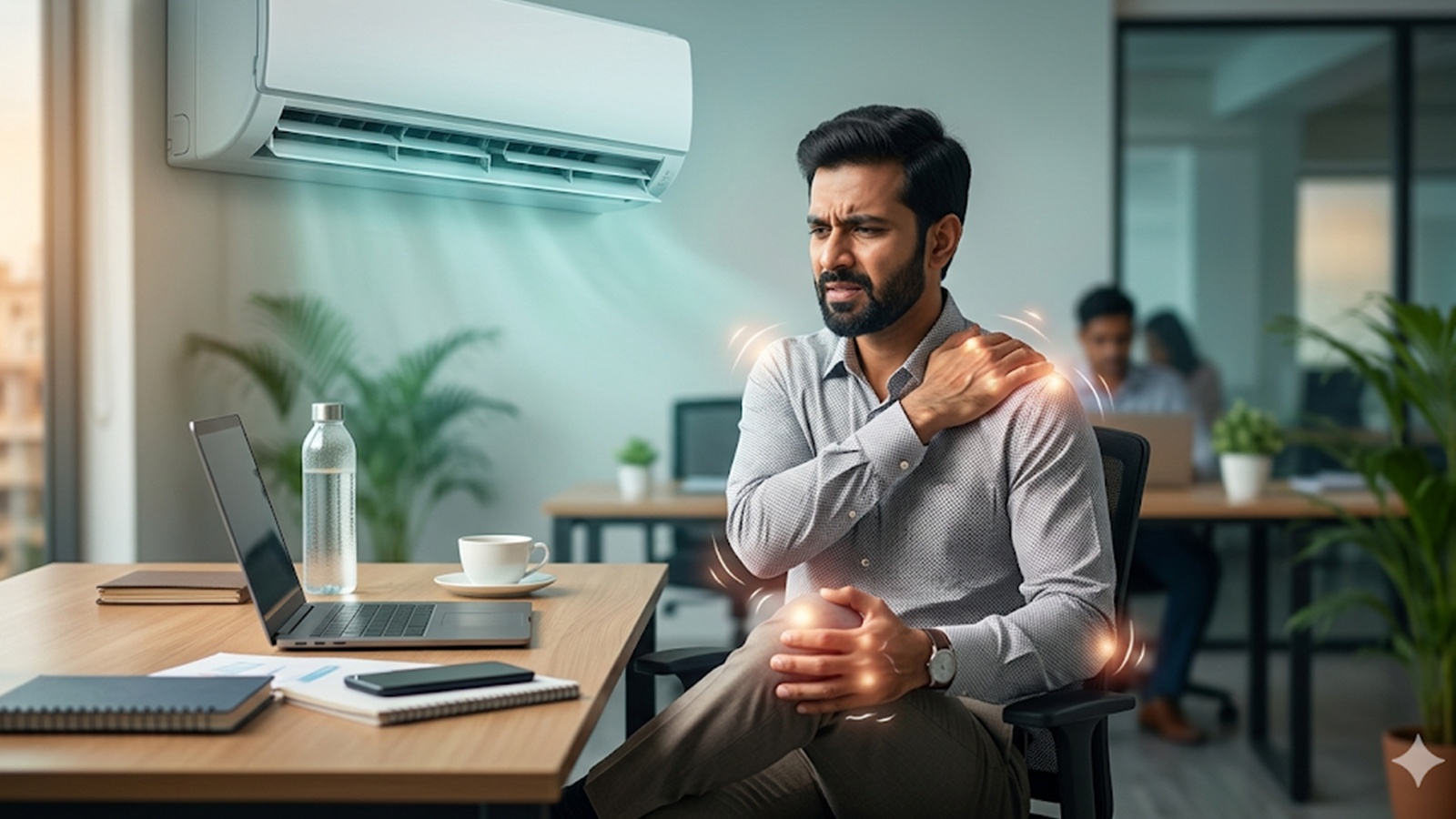 Long hours indoors may contribute to stiffness | Source: AI Generated
The key issue is not the cold air itself but the sedentary behaviour that comes with staying indoors in AC environments. Dr Vaishya notes that people with pre-existing joint conditions experience increased discomfort because cold air decreases blood flow to muscles and joints.
Why cold indoor temperatures can make the body feel stiff
When spending long hours in cold AC environments, Dr Vaishya says, several physiological changes occur in the body. “Blood flow decreases to muscles and joints, leading to increased stiffness and discomfort. Muscles and joints become stiff, reducing mobility, especially for people who cannot easily accommodate temperature changes. This muscle and joint stiffening causes reduced mobility and tightness. Sleeping or sitting in cold rooms for extended periods directly causes muscle stiffness and joint pain.”
Story continues below this ad
The reduced circulation means less oxygen and glucose delivery to tissues, he states, which affects overall muscle and joint function. These changes create feelings of stiffness, reduced mobility, and muscle tightness without causing actual tissue damage.
How office workers can prevent AC-related joint discomfort
Several practical measures can help office workers prevent joint discomfort, according to Dr Vaishya:
- Keep the AC temperature between 25°C and 27°C, making sure it does not go below 20°C.
- Maintain the indoor-outdoor temperature difference within 9 degrees Fahrenheit.
- For an 8-hour work shift, go outside at least twice to refresh your air and warm up your body.
- Avoid sitting still for long periods in strong air-conditioning and take regular movement breaks.
- Stretch gently when moving between warm and cold spaces.
- Keep a light layer or shawl at your desk to cover exposed joints.
- When entering significantly colder areas, cover yourself with a stole to avoid direct cold air contact.
- Maintain proper seating posture and try to work in cross-ventilated areas where air is constantly being refreshed.
- Stay hydrated to support good circulation.
- Ensure office air-conditioner filters and ducts are cleaned regularly.
“The orthopaedic consensus is that while AC does not cause joint disease, the combination of cold exposure and sedentary behaviour creates discomfort that can be prevented through these practical measures,” concludes Dr Vaishya.
DISCLAIMER: This article is based on information from the public domain and/or the experts we spoke to. Always consult your health practitioner before starting any routine.
