
Active Noise Cancellation (ANC) was a luxury feature reserved for premium headphones and earbuds costing well over Rs. 10,000 just a few years ago. Most such earphones have historically been prohibitively expensive, but over time, the technology has trickled down to even budget offerings. Nowadays, you can buy true wireless stereo (TWS) earbuds with ANC for less than Rs. 3,000. Almost every brand, from Boat and Noise to OnePlus, Oppo, and CMF by Nothing, advertises ANC as a key selling point.
This, however, raises a question, does ANC on affordable TWS earbuds actually work, or is it just a marketing gimmick designed to grab attention?
What Is Active Noise Cancellation (ANC) and How It Works
Active Noise Cancellation (ANC) is an audio technology designed to reduce unwanted ambient sounds before they reach your ears. While its first concept was invented by German physicist Paul Lueg in 1936, the technology was successfully commercialised in the form of noise-cancelling headphones for both aviation professionals and everyday consumers by Dr Amar Bose, the founder of the Bose Corporation.
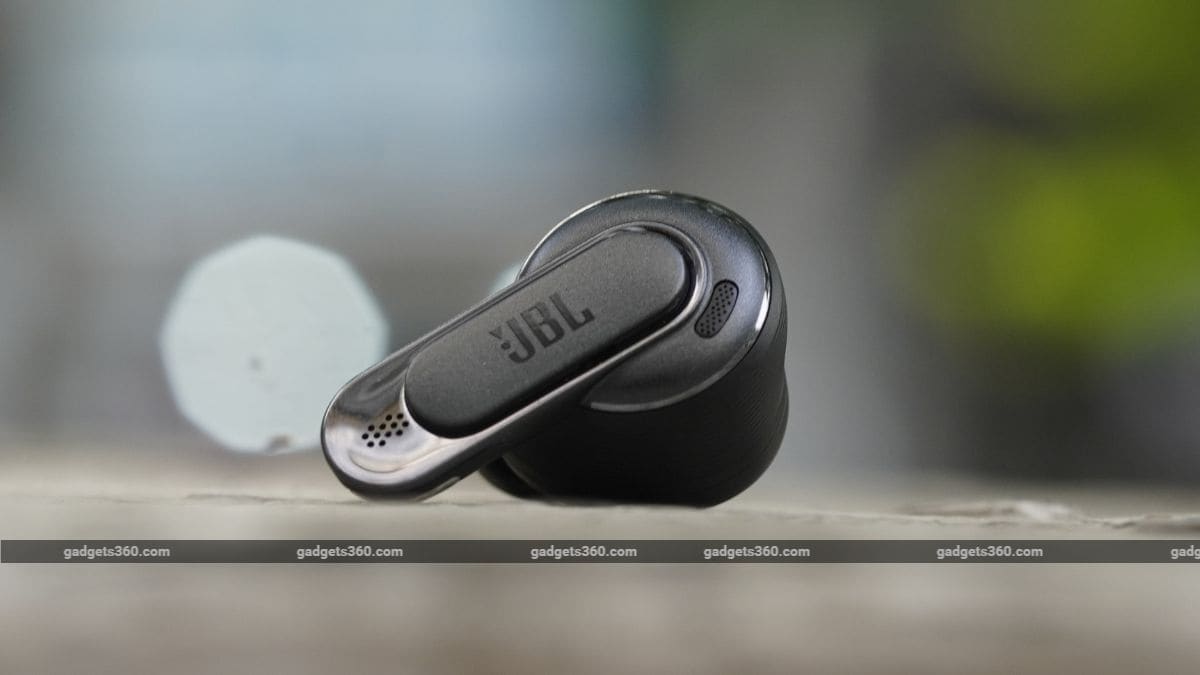
Unlike passive noise isolation that solely relies on the silicone ear tips for a physical seal inside your ear canal, ANC analyses surrounding noise and attempts to cancel it using anti-phase waves and microphones.
There are three different implementations of ANC that are commonly used — Fastforward, Feedback, and Hybrid. The latter is the one that can be found on budget TWS options from most brands.
Hybrid ANC, as the name suggests, uses microphones positioned both inside and outside the earbuds. It analyses environmental noise before it enters your ears, while correcting any remaining sounds that leak through the seal at the same time. This method delivers better noise cancellation across a wider range of frequencies.
Generally, ANC is measured in decibels (dB). The volume of a sound played through test speakers with ANC off (unoccluded ear) is compared to ANC on. The created insertion loss curve reveals how much sound energy the earphones can block at different frequencies.
Why Does ANC Matter?
The biggest benefit of having a pair of TWS earphones equipped with ANC is that it helps you focus. It tends to be useful when you’re commuting on a metro, working inside a crowded café, sitting in an office with a noisy ventilation system, or are on a flight across the country. By cutting out the ambient noise, it makes listening to music, podcasts, or audiobooks far more enjoyable.
Another benefit is that it eliminates the need to constantly raise volume to drown out your surroundings, which is better for your hearing in the long run.
ANC is considered to be most effective against predictable, low-frequency noises such as aeroplane engines, metro trains, buses, air conditioners, and ACs. These sounds are usually constant, which makes it easier for earphones to cancel them out. However, situations involving people talking nearby, babies crying, barking dogs, or construction work are much harder to eliminate.
Does ANC Actually Work on Budget Earbuds?
The answer is yes, provided you have realistic expectations. Affordable earbuds, in the Rs. 2,000 to Rs. 3,000 segment, do offer ANC that can reduce background noise. It works best for simple low-frequency sounds, such as when you are sitting inside an office with the AC running, travelling on the Delhi Metro, working in a coffee shop, or relaxing at home with a ceiling fan switched on.
In such cases, you will almost certainly notice a difference once ANC is enabled. In recent years, even affordable earphones come with entry-level audio chips that, when combined with microphones and software algorithms, offer respectable noise cancellation.
However, there’s a reason premium earbuds like the JBL Tour Pro 3 (Review) and the Sony WF-1000XM6 still command a much higher price. Budget TWS earbuds generally struggle when it comes to unpredictable sounds. These may include human voices, windy weather conditions, and other sudden environmental sounds. The inconstant audio frequencies can often interfere with the microphones and reduce overall effectiveness.
Another thing to note is that the advertised ANC figures have a bit of context to them. You might have seen brands claim figures of “up to 42dB,” “46dB,” or even “50dB” noise cancellation on even budget TWS earbuds. These numbers are usually measured under controlled laboratory conditions using specific frequencies. As such, they do not necessarily reflect everyday usage and should not be interpreted as the amount of ambient noise that can be suppressed in every situation.
On most budget TWS earbuds, toggling ANC can also affect the audio quality. Since inexpensive earbuds use adequately powered processors and average-sized drivers, it can alter the audio tuning, suppress bass, and in some situations, make your regularly listened-to tracks sound slightly flatter than before. Another sacrifice that you will notice is in terms of battery life, which takes a considerable hit compared to the standard listening mode. When ANC is enabled, microphones and the audio processor are constantly working in the background to cut out the ambient noise, resulting in reduced battery life.
So, should you buy budget TWS earbuds that have ANC? We think it should be viewed as a spectrum rather than a binary feature. If your goal is to simply reduce background distractions while working or listening to music every day, affordable ANC earbuds can be considered. Brands such as CMF by Nothing, OnePlus, Oppo, Realme, Noise, and Boat offer a wide range of options below Rs. 3,000.
Even though these products are unlikely to deliver a near-silent experience offered by flagships from Sony or JBL earbuds costing six or seven times as much, the gap has narrowed considerably over the past few years. For most, especially those buying their first pair of ANC earbuds, the difference will be noticeable enough to improve daily listening.
