
Spain’s journey to lifting the 2026 FIFA World Cup trophy wasn’t just about beating the defending champions, Argentina, but a strategic masterclass in collective football. Operating quietly in the shadows of flashier, star-driven squads until it mattered most, Spain continued to fly under the radar for the majority of the tournament. While much of the pre-tournament media focus leaned heavily toward Lionel Messi‘s title defence with Argentina or Kylian Mbappe‘s star-studded France, Luis de la Fuente’s men executed a flawless tactical plan built on structure, relentless off-the-ball pressing, and complete mechanical synchronisation that quietly saw them peak at the right time and leave the tournament with the World Cup trophy in their hands.
Leading up to the tournament, global attention was fixed on whether teenage sensation Lamine Yamal could repeat his Euro 2024 heroics. However, with Yamal quietly managing an injury that limited his usual explosive output, Spain shifted seamlessly to a setup where the collective ecosystem was the ultimate superpower.
Rather than leaning on a single focal point, unheralded squad players like Mikel Oyarzabal, who emerged as the team’s silent engine with five crucial goals, and Dani Olmo filled their roles with absolute tactical discipline.
Spain spent a large portion of their post-Euro 2024 cycle learning to function without midfield anchor Rodri due to a lengthy injury layoff. While their steady results in his absence kept them relevant, his full return for the World Cup transformed them into an unshakeable unit.
Spain Had Opponents In Chokehold
Rodri acted as the pivotal figure of the team, leading the entire tournament in touches, attempted passes, and successful ball recoveries in the middle third. His ability to stop counter-attacks before they ever reached the defensive third meant opponents simply could not establish a strategy to counter Spain. No matter which team came up against Spain, the result was an absolute midfield ‘choke’.
Spain’s campaign was defined by a choking defensive structure that allowed just one single goal throughout the entire tournament.
Their defensive masterclass peaked when they came up against the biggest teams in the World Cup. In the semi-final against heavily favoured France, Spain emerged victorious 2-0, suffocating Mbappe, Ousmane Dembele, and Michael Olise – the trio that had arguably been the most threatening throughout the entire World Cup.
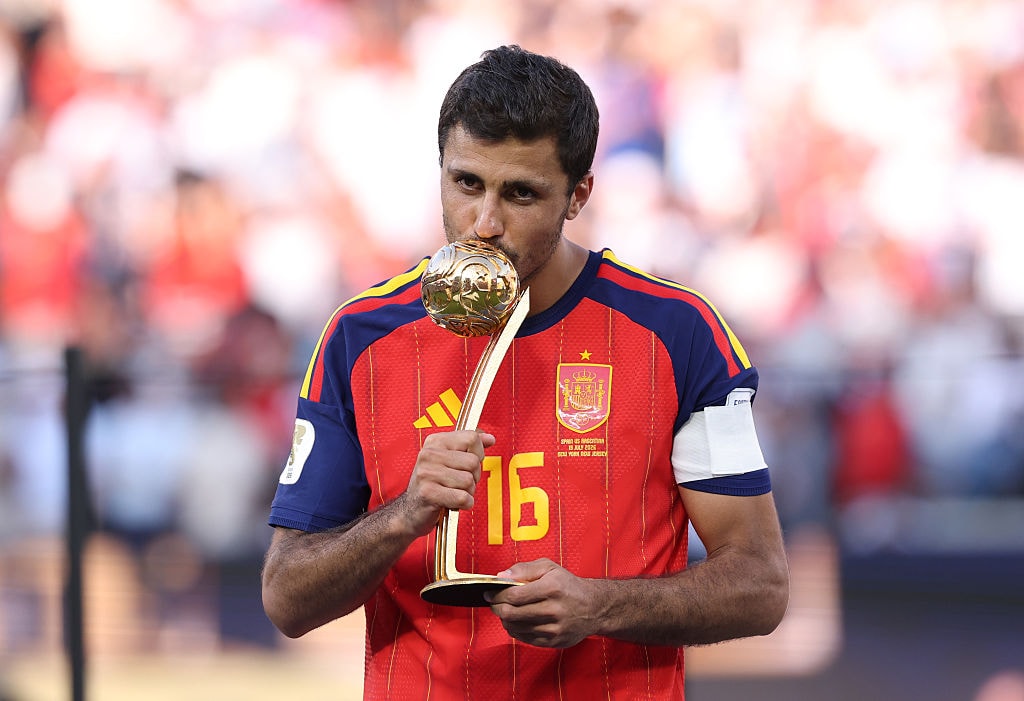
They frustrated holders Argentina for over 120 minutes, limiting them to zero shots on target across the entire match, and got themselves ahead through a goal from substitute Ferran Torres in the 106th minute of extra time.
Unlike teams like Argentina, France, Brazil, and perhaps Portugal, who relied on absolute superstars in their World Cup journey, Spain’s progression through the earlier phases relied on sheer control and patience.
They did not look to blow teams away by going ultra-aggressive. Rather, they put trust in their telepathic passing sequences and aggressive counter-pressing ability to wear down opponents.
From being overlooked at the start of the tournament to peaking to the extent that inhibiting their growth became nearly impossible for teams, Spain showed the world exactly why ‘teams’ win the World Cup and not ‘stars’.
Featured Video Of The Day
FIFA World Cup 2026 | ‘I Don’t See A World Cup Trophy…’: Mbappe Says France’s Job Isn’t Done
Topics mentioned in this article
