
The Budget for fiscal 2026-27 allocates ₹1,678 crore (~$176.35 million) exclusively for the handlooms and textiles sector. In addition, ₹2,022 crore (~$212.51 million) has been earmarked for labour welfare and skill development, while ₹4,414 crore (~$463.90 million) has been allocated to the Industries Department to support industrial growth and attract investments. The state aims to transform Tamil Nadu into a $1.5 trillion economy by 2035-36, with the textile industry expected to play a key role.
Tamil Nadu’s first Budget under CM C Joseph Vijay allocates ₹1,678 crore for the handlooms and textiles sector, alongside investments in infrastructure, skills, and power.
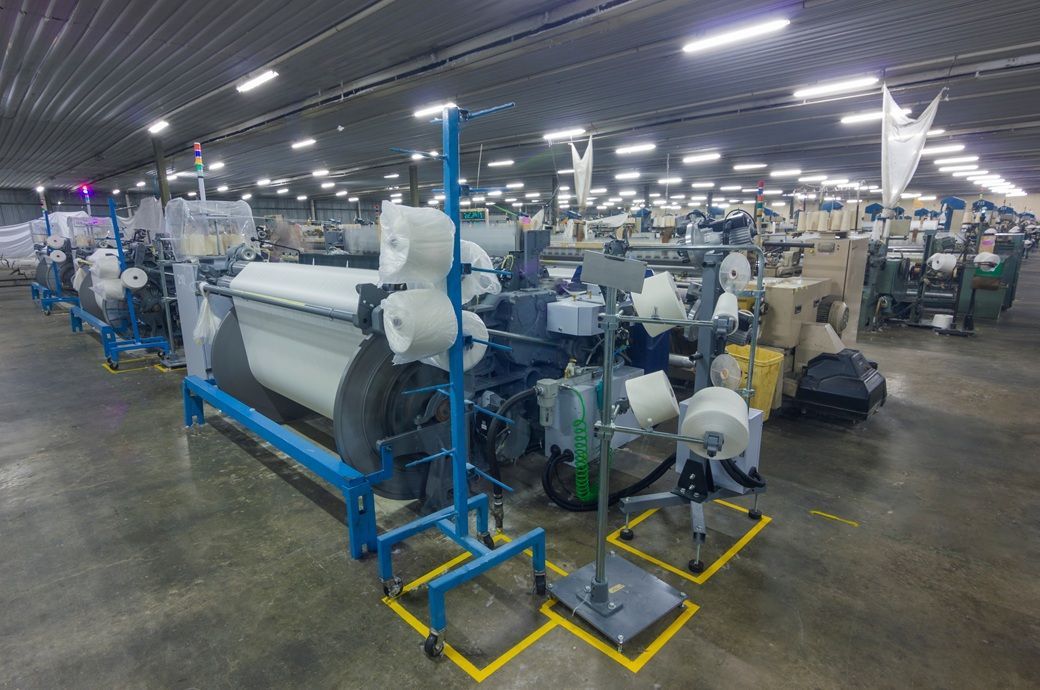
Key initiatives include a Textile Technology Centre in Tiruppur, a Technical Textiles Transformation Scheme and a Loom Modernisation Scheme.
SIMA said the measures would boost the industry’s competitiveness and sustainability.
Among the key announcements is the establishment of the Tiruppur Textile Technology Centre, backed by a ₹2,022 crore (~$212.51 million) outlay to create world-class infrastructure for environmentally sustainable apparel manufacturing. The Budget also introduces a Technical Textiles Transformation Scheme, a Tamil Nadu Institute of Designs, and a Loom Modernisation Scheme to enhance innovation, product development, and manufacturing competitiveness.
The Budget places significant emphasis on strengthening industrial infrastructure. It provides ₹6,080 crore (~$639.00 million) for Green Energy Corridor III, which will facilitate the evacuation of 11,000 MW of renewable energy, alongside support for battery energy storage systems to improve grid stability. It also allocates ₹1,390 crore (~$146.09 million) for setting up 178 new substations and modernising around 40,000 transformers, while ₹8,000 crore (~$840.78 million) will be invested through the public-private partnership (PPP) model to expand the Ennore power station.
Skill development also received attention through a ₹150 crore (~$15.76 million) allocation under the Vetrithiran Training Scheme, which aims to train 100,000 people in phases through collaboration between the government and the private sector, while providing trainees with a monthly stipend.
The Budget further proposes new SIPCOT industrial parks, a Women Entrepreneurs Empowerment Scheme, a new industrial policy, and TN Single Window 3.0, designed to accelerate investment approvals. Support for emerging technologies and artificial intelligence (AI) also forms part of the state’s industrial development strategy.
Welcoming the Budget, Durai Palanisamy, Chairman of the Southern India Mills Association (SIMA), said the allocations and policy initiatives would strengthen the global competitiveness of Tamil Nadu’s textile industry.
“The establishment of the Tiruppur Textile Technology Centre, the Technical Textiles Transformation Scheme, the Tamil Nadu Institute of Designs, and the Loom Modernisation Scheme will significantly enhance the industry’s technological capabilities and sustainability,” he said.
He also appreciated the government’s focus on power infrastructure, stating that investments in renewable energy corridors, substations, battery storage, and industrial infrastructure would improve the reliability of power supply, a critical requirement for textile manufacturing.
Palanisamy added that initiatives such as new industrial parks, faster approvals through TN Single Window 3.0, skill development, and support for AI and emerging technologies would help attract fresh investment and address the industry’s growing need for skilled manpower, while reinforcing Tamil Nadu’s position as India’s leading textile manufacturing hub.
Fibre2Fashion News Desk (KUL)
