
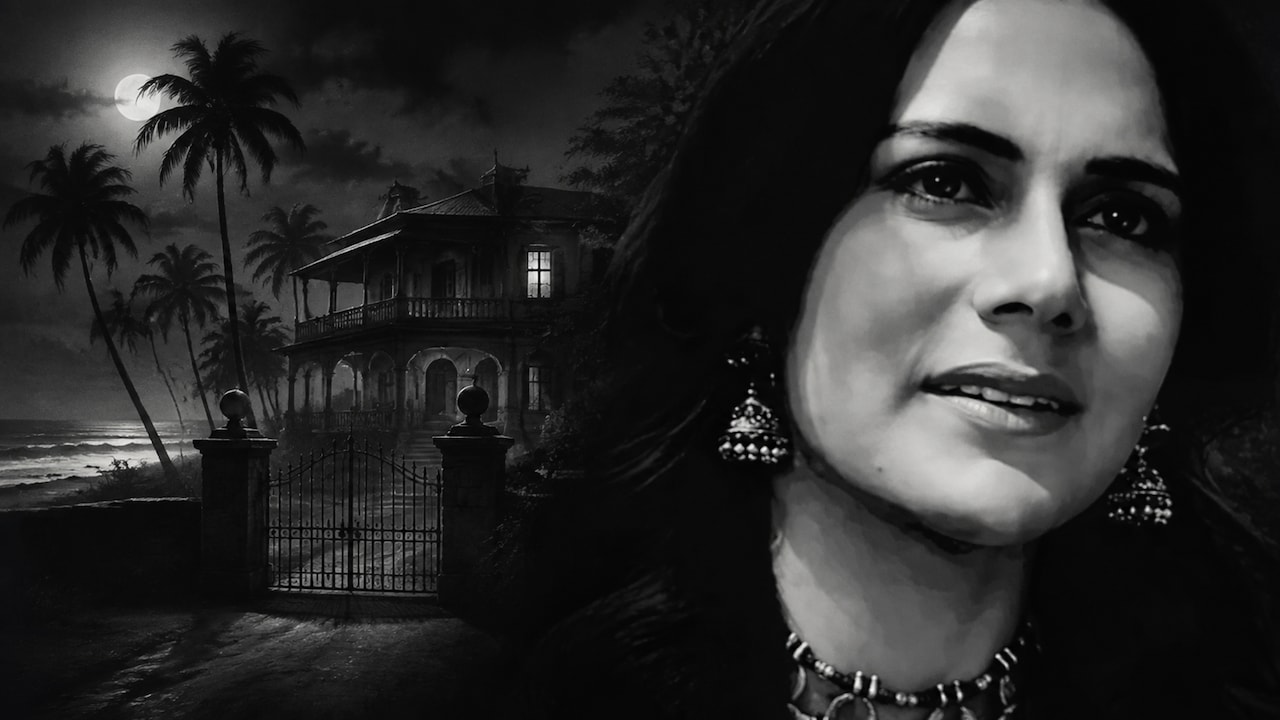
The glass of hot milk never reached Priya Rajvansh.
On the night of March 27, 2000, Rajvansh was inside the sprawling Juhu bungalow she had once shared with filmmaker Chetan Anand, the man around whom she had built much of her life.
She reportedly asked a maid to warm some milk.
The maid stepped away.
When she returned minutes later, Priya was dead.
The actress had suffered injuries to her head and had been strangled. There was no immediate clarity about how the killer had entered or escaped. More disturbingly, the killing had taken place inside a house where almost every corner was familiar to her.
Priya had once immortalised Heer, one of Indian folklore’s most tragic heroines. At 63, she met a brutal end of her own in the home that had symbolised her decades-long love story.
As police began examining the final minutes of her life, suspicion did not travel far beyond the bungalow.
The Photograph That Brought Her To Bombay
Priya Rajvansh was born Vera Sunder Singh in Shimla on December 30, 1936. She belonged to a prominent family and was related to actor Kamaljeet Singh, Waheeda Rehman’s husband.
After graduating, she moved to London and trained at the Royal Academy of Dramatic Art. While she was there, a photograph of her reportedly reached Chetan Anand, the filmmaker and elder brother of Dev Anand and Vijay Anand.
Chetan Anand was looking for a new face for Heer Raanjha. Priya appeared to be the woman he had imagined for the part.
The project was delayed. Priya instead made her Hindi film debut in Chetan’s 1964 war drama Haqiqat. The film became a success and would later be remembered as one of Hindi cinema’s most notable war films.
It also marked the beginning of a personal and professional partnership that would define Priya’s life.
A Love Story Without Marriage
Chetan Anand was married to Uma Anand and had two sons, Ketan and Vivek. Though his relationship with Priya became public knowledge, Chetan and Priya never married.
By the time Heer Raanjha was completed, the filmmaker and his leading lady had fallen deeply in love.
Their relationship existed outside convention but endured for decades. Priya was more than Chetan’s partner or his leading lady. She was closely involved in his creative world, and reports have said that she contributed to aspects of his filmmaking beyond acting.
Chetan, in turn, kept casting Priya at the centre of his films.
Seven Films And One Immortal Role
Priya’s acting career remained unusually selective. Between 1964 and 1986, she appeared in only seven films, all directed by Chetan Anand.
Her defining role came in Heer Raanjha in 1970. Cast opposite Raaj Kumar, Priya became widely identified with Heer, the tragic heroine of Punjab’s most enduring love story.
She followed it with Hanste Zakhm and Hindustan Ki Kasam in 1973. She later appeared opposite Dev Anand in Saheb Bahadur and shared the screen with Rajesh Khanna and Hema Malini in Kudrat.
Her final film, Haathon Ki Lakeeren, was released in 1986. She subsequently withdrew almost entirely from the industry.
Priya never became a conventional Bollywood star. Her Western appearance and anglicised accent were considered unusual for mainstream Hindi cinema at the time. Her decision to work exclusively with Chetan Anand also restricted the size of her filmography.
Yet Heer Raanjha ensured she would not be forgotten.
Chetan Anand’s Death Changed The Equation
For years, Priya’s life revolved around Chetan. Then, in 1997, he died.
His death did more than leave her emotionally isolated. It altered the equation surrounding the family and its property.
Reports said that Priya, Ketan and Vivek Anand shared interests in Chetan Anand’s Juhu bungalow at Ruia Park, where Priya continued to live. Disagreements over the property, including reports that Priya wanted to sell it, later became a major part of the prosecution’s case.
Three years after Chetan’s death, Priya was found murdered inside that very property.
The bungalow would soon become central to the investigation.
A Murder Committed Within Minutes
On the night she died, Priya was reportedly drinking and appeared distressed. At around 9.30 pm, she asked a maid to bring her hot milk.
The maid left briefly to warm it.
By the time she returned, Priya had been attacked. Contemporary reports said that she had suffered injuries to the head and had died after being strangled.
The narrow window troubled investigators.
Could an outsider have entered the large bungalow, located Priya, attacked her and escaped during the few minutes the maid was away?
Police initially examined that possibility. Their attention later shifted towards people who knew the house and its occupants.
Two Accounts Of Priya’s Final Hours
Ketan Anand offered a different account of the evening.
He reportedly said that he had been at the bungalow, waiting for Priya to get ready for a party. According to this account, the hosts later telephoned to ask why she had not arrived. A maid was then sent upstairs and discovered Priya’s body.
Police officials disputed aspects of the account as they reconstructed the sequence of events.
Ketan rejected speculation surrounding the family and argued that conclusions should not be drawn before the investigation and medical evidence were complete.
The bungalow, meanwhile, was already associated with an earlier family tragedy. Reports said that Ketan’s German wife had died by suicide there two years before Priya’s murder.
The Will, The Bungalow And Priya’s Fears
As the investigation progressed, the property dispute emerged as a possible motive.
Chetan Anand had left Priya a share in his estate despite the fact that they had never married. His sons also retained interests in the property. Prosecutors later alleged that the dispute over the bungalow and its ownership lay behind the killing.
The prosecution also referred to Priya’s handwritten notes and a letter addressed to Vijay Anand, arguing that they revealed her fears and anxiety in the period before her murder.
The investigation eventually led to the arrest of Ketan Anand and Vivek Anand, along with two household employees, Mala Choudhary and Ashok Chinnaswamy.
The prosecution alleged that the killing had been driven by the inheritance dispute.
Four Convictions, Then An Appeal
On July 31, 2002, a Mumbai sessions court sentenced all four accused to life imprisonment.
Mala Choudhary and Ashok Chinnaswamy were convicted of murder and criminal conspiracy. Ketan Anand and Vivek Anand were convicted for abetment and conspiracy in connection with Priya’s killing, rather than for physically carrying out the murder.
The verdict, however, did not close the case.
Later that year, Ketan and Vivek Anand were granted bail. In 2011, the Bombay High Court agreed to hear appeals filed by the brothers against their convictions.
The legal battle left Priya’s death suspended between a trial court verdict and questions that had surrounded the case from its earliest hours.
What precisely happened during those few minutes when the maid went to warm the milk? Who attacked Priya first? How was she overpowered inside her own home?
The trial court supplied a verdict. But the case continued to carry an air of unease.
Heer’s Final Tragedy
Priya Rajvansh had chosen a life unlike that of most actresses of her generation.
She came to Hindi cinema after training in London, worked with some of its biggest stars and delivered memorable performances in Haqiqat, Heer Raanjha, Hanste Zakhm and Kudrat. Yet she stayed away from the usual pursuit of stardom.
Instead, she devoted much of her life to Chetan Anand, his films and the home they created together.
After Chetan died, that home became entangled in a property dispute. Three years later, Priya was killed inside it.
