
Goyal said exports generally strengthened in the second half of the year and indicated that October export figures, to be shared by the Commerce Secretary on November 15, would be encouraging. He called on industry to move beyond incremental growth and aim for larger expansion.
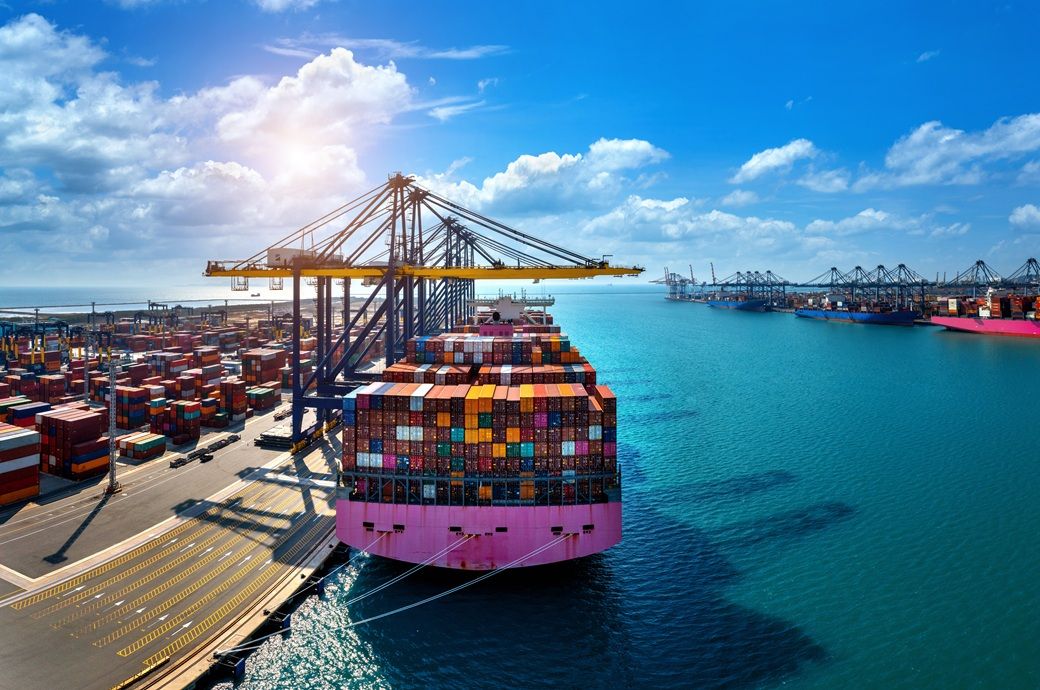
India is well on track to meet its $1 trillion export target this year, Piyush Goyal said, citing about $480 billion in exports, or 48 per cent of the annual goal, in the first six months.
Engineering sector growth was around 22 per cent, and October data due on November 15 was described as encouraging.
Goyal also flagged zero-duty EU access by March or April.
The remarks were made at the curtain raiser for the third edition of Bharat Mobility Global Expo in New Delhi, where Goyal also linked export-led growth with India’s manufacturing ambitions and global partnerships, the Ministry of Commerce and Industry said in a press release.
Addressing mobility-sector stakeholders, Goyal urged businesses across the value chain to look beyond the domestic market and tap global markets and export opportunities. Combining India’s large domestic market with international demand would help businesses gain economies of scale and become globally competitive in pricing, he said.
He expressed confidence in Indian manufacturers’ capabilities, saying companies already supplying Japanese and European automobile manufacturers, as well as the aerospace and defence sectors, had the potential to meet world-class quality standards.
The engineering sector had recorded growth of around 22 per cent, Goyal said, urging industry to sustain that pace and treat it as a benchmark for the future rather than a one-time performance.
On trade access, He said the European Union’s 27-nation bloc was expected to open up for Indian businesses at zero duty by March or April, creating further opportunities for exporters in the coming year. India was also negotiating with another seven to eight countries, he noted.
Referring to free trade agreement negotiations, he said market access in India would initially allow European automobile manufacturers to test demand by introducing a limited number of models. Once demand was identified, manufacturers could set up production in India to serve both the domestic market and export destinations.
Manufacturing in India would help companies use economies of scale, access the domestic market and produce vehicles at competitive prices for global markets, Goyal said. He added that this would create opportunities for Indian component manufacturers, startups, steel and rubber industries, and other participants in the mobility ecosystem.
The minister also referred to his recent visit to Japan, saying Japanese industry’s response had been encouraging, with several companies showing interest in partnerships with Indian manufacturers to serve global markets. He said the interest included billion-dollar investments in India to manufacture products for the world.
India’s domestic market remained a major draw for global manufacturing investments, he said. During the festive season, one million cars were sold during Navratri alone, while about 70,000 cars were sold over the two days of Dhanteras.
On Bharat Mobility, Goyal said the initiative had brought together parts of the mobility ecosystem that had earlier organised separate exhibitions at different times and locations. He said this had been enabled by Bharat Mandapam and Yashobhoomi, developed with the vision of Prime Minister Narendra Modi to make India an international exhibition destination.
The event demonstrated a whole-of-government approach by breaking silos between departments, ministries and states while bringing together industries linked to mobility, including steel, chemicals, electronics, two-wheelers, three-wheelers, four-wheelers, commercial and passenger vehicles, construction equipment and tyres, added Goyal.
He expressed confidence that the third edition would be bigger and more advanced, and could potentially become the world’s largest mobility exhibition in terms of size and visitors, depending on demand for exhibition space and facility expansion.
Goyal urged organisers and industry to market the event globally and aim to attract at least 25,000 international visitors out of an expected 1 million visitors. He said outreach should extend beyond original equipment manufacturers to tyre dealers, suppliers, auto component manufacturers and the after-sales market.
He said every segment represented at Bharat Mobility offered opportunities for international engagement and sourcing from India, and urged stakeholders to identify sector- and country-specific opportunities across the global value chain.
The first two days of the exhibition have been reserved for businesses, business launches and new product launches, giving companies a platform to showcase their quality and capabilities, Goyal said.
He also cited Bharat Mobility, Bharat Tex, Startup Mahakumbh and Bharat BuildCon as large-format platforms that bring together entire value chains and enable India to present its capabilities globally. Referring to convergence in telecom and electronics exhibitions as well, he said India was offering the world a scale it had not witnessed before.
Fibre2Fashion News Desk (SG)