
The setback came during a severe natural gas crunch in Bangladesh after a fire and technical failure at Excelerate Energy’s floating storage and regasification unit (FSRU) in Moheshkhali. The large-scale industrial sector accounts for around 11 per cent of the economy, and manufacturers reliant on steady fuel and gas supplies faced pressure, industry executives said.
Bangladesh’s large-scale industrial production fell 0.22 per cent YoY in July, the opening month of FY2026-27, amid gas and electricity shortages and Middle East tensions.
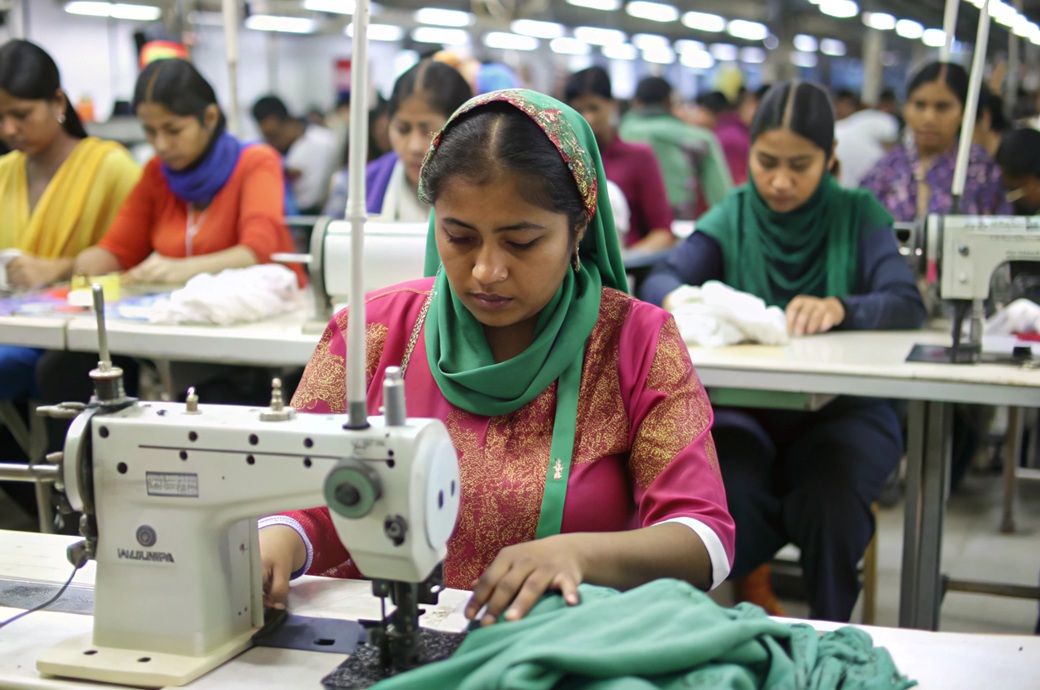
Clothing output declined by more than 2 per cent, weighing on the overall index, while textiles grew by over 5 per cent.
Transport equipment output contracted sharply.
The BBS index was heavily shaped by clothing, textiles and food manufacturing, which together represented more than 76 per cent of large-scale industrial production. Clothing held the largest index weight at around 61 per cent, while textiles accounted for more than 11 per cent, the local media reported, citing the BBS data.
Clothing output declined by more than 2.0 per cent in July and, because of its dominant weight, pulled down the broader index, the data showed. Textile production moved in the opposite direction, increasing by more than 5.0 per cent.
Other manufacturing categories had mixed results. Output of other non-metallic mineral products, covering stone, clay, limestone and glass-related materials, increased by less than 1.0 per cent; the segment also carried a weight of around 4.0 per cent in the index. Transport equipment, including shipbuilding, floating structures, railway locomotives and rolling stock, contracted by more than 9.0 per cent in July.
Fibre2Fashion News Desk (SG)