
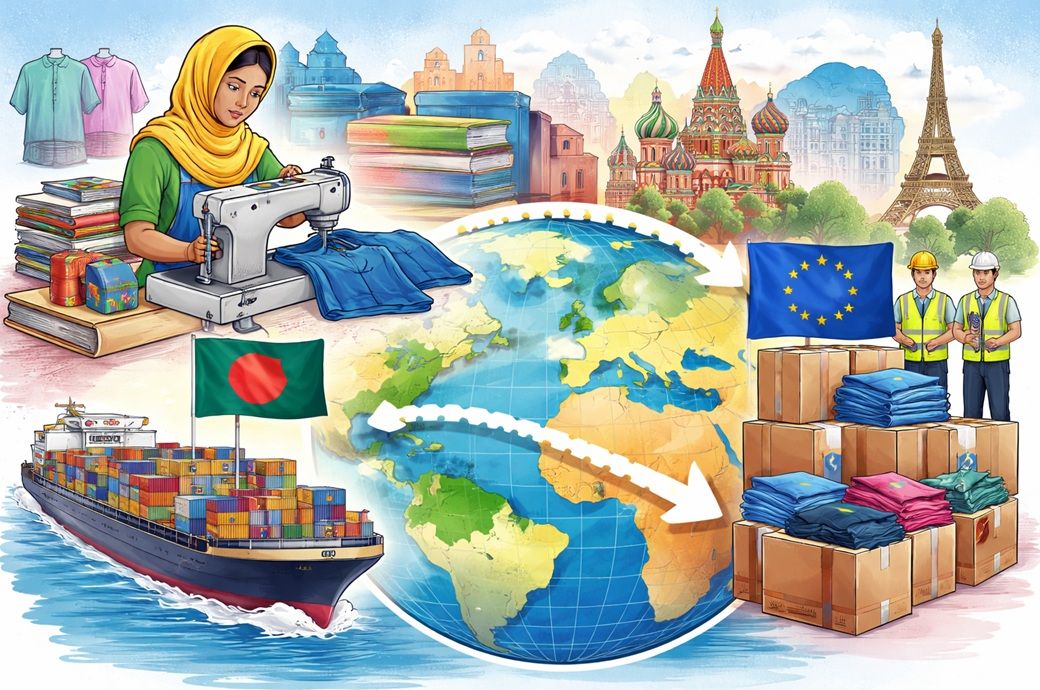
The EU, Bangladesh’s largest export market, has introduced the Carbon Border Adjustment Mechanism (CBAM) to curb emissions across its supply chains. Apparel products could be brought under this mechanism by 2030.
Bangladesh’s apparel exports to the European Union may face a 4.8 per cent carbon tax after 2030 if emissions are not reduced, a study by the Centre for Policy Dialogue said.
The risk comes as the country is set to lose duty-free access post-LDC graduation, underscoring the urgent need to scale up clean energy use and improve sustainability measures.
If current emission levels in Bangladesh’s garment sector continue, an additional 4.8 per cent carbon tax may be imposed on apparel exports after 2030, the study by CPD distinguished fellow Mustafizur Rahman and Mohammad Imraj Kabir, noted.
This tax may be levied at a time when Bangladesh is set to lose its duty-free trade benefits in the EU market due to graduation from the least developed country (LDC) status.
The loss of duty-free access could result in an average tariff of about 12 per cent, and with the added carbon tax of 4.8 per cent, the total tariff burden could rise to nearly 17 per cent, the study remarked.
Rahman noted that green factories in the country do not fully meet all EU requirements.
The report suggests that Bangladesh must raise the use of clean energy in production to avoid potential carbon taxes in the EU market. It recommends a range of policy measures, including incentives for adopting green technologies.
Other suggested steps include fiscal incentives like reduced import duties on energy-efficient technologies, financial support like subsidised loans, institutional measures like enforcing emission-reduction policies and building technical capacity, developing a monitoring mechanism for CBAM, engaging with the World Trade Organization, introducing a domestic carbon pricing system, strengthening renewable energy policies and ensuring that CBAM is not used as a protectionist trade tool.
Fibre2Fashion News Desk (DS)
