
India has long searched for the right formula to develop football at the grassroots and youth levels. While various academies, leagues, foreign partnerships, and pathway programmes have been introduced over the years, consistency remains a significant hurdle. During a recent visit to Germany, NDTV explored the world-renowned academy of the country’s premier football club, Bayern Munich. In an exclusive interview, Bayern Campus Director Jochen Sauer outlined the blueprint for building a successful football system from the ground up.
While acknowledging that he does not possess in-depth knowledge of Indian football, Sauer highlighted that the country already holds a crucial ingredient: a genuine appetite for sport. According to Sauer, the greater challenges lie in establishing a clear development structure, educating high-calibre coaches, and, crucially, giving a long-term strategy sufficient time to bear fruit. He also stressed that India must focus on the fundamentals by ensuring aspiring youngsters receive ample opportunities simply to play the game.
Q. What are the biggest lessons a country like India can learn from the Bayern Campus?
Jochen Sauer: It is difficult for me to answer because I am not too involved in the details of Indian football. But what I believe is that Indian people are very dedicated to sport in general, and that already helps. India is also a country that has grown very quickly over the last decades.
If you are trying to take a sport to the highest level, the most important thing is structure. A country has to think about what the structure of football should be. What is the league system? What is the youth system? How can we get the best talents competing against each other at the highest level? That is most important ingredient is finding a structure.
Q. How important is consistency in that structure?
Jochen Sauer: You have to have a clear plan and follow it for at least 10 years. I have some experience from when we opened or cooperated with two or three academies in China. The ongoing discussion there was always about changing the strategy, having a youth system, then not having a youth system, linking academies to top clubs, then linking them to universities and going back and forth.
I think that is the biggest mistake you can make. You have to have a structure, have a clear plan, and follow the plan for at least 10 years. Youth development always needs time.
Q. Can you give an example from Bayern itself?
Jochen Sauer: Uli Hoeness (Supervisory board member at Bayern Munich) already asked the question after two years of the Campus: “Where are the top talents?” I told him, “Uli, ask me in five years.” We were talking about 11- and 12-year-old kids. If you want to know how good they are, ask me in five years, when they are 17 or 18, and then I can answer the question.
It is similar for a country. If you want to build something, have a strategy, have a plan, and stick to it for at least 10 years. Then you can see whether it works and think about changing things.
Q. If India were starting from a blank slate, what should be the biggest priority?
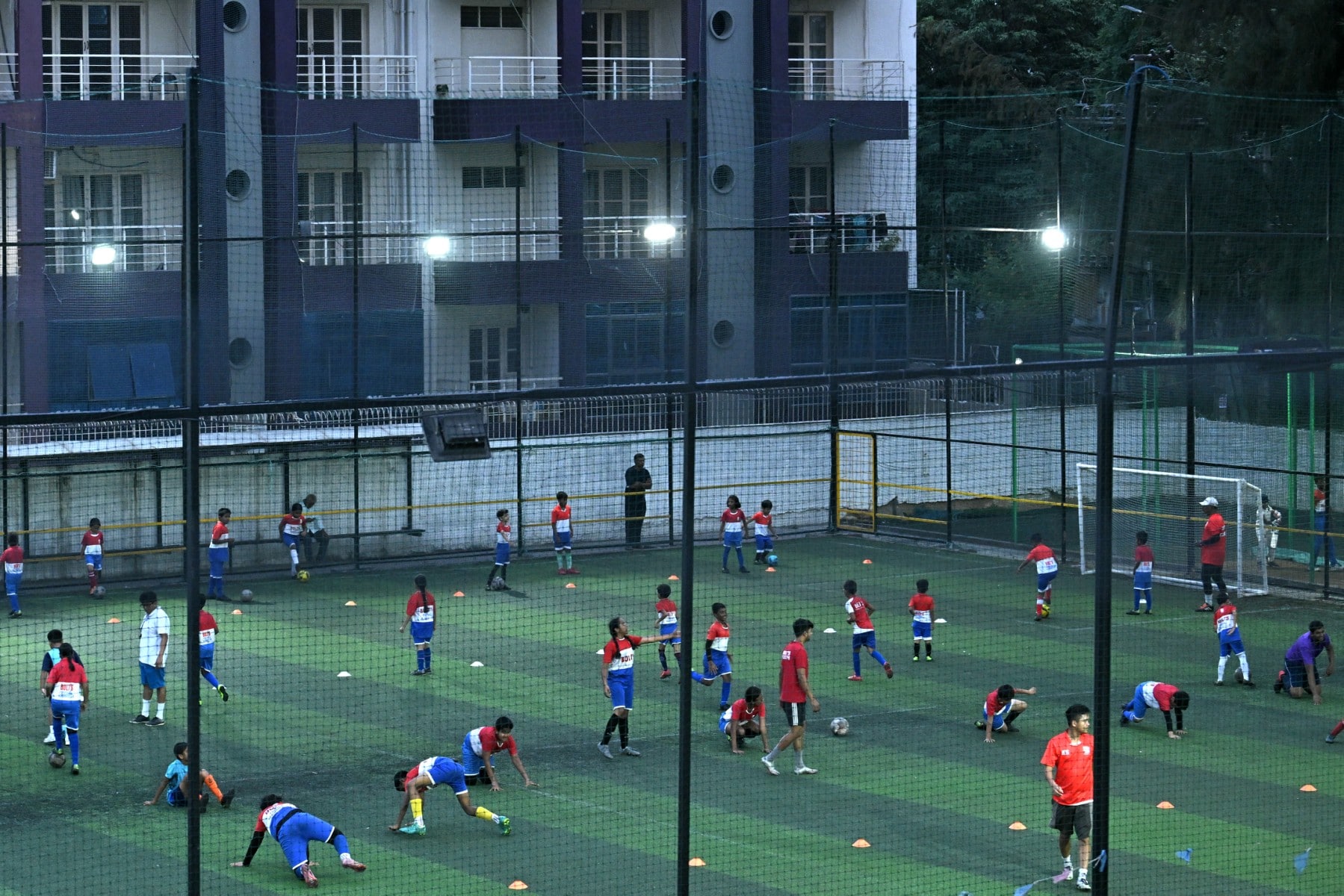
Jochen Sauer: For sure, it is working with the youngest players. Working with the youngest means they need to learn about playing football. You can see it with young players from Africa. They go to school, but as soon as they have a ball at their feet, they play with it. Sometimes the focus is too much on having a structure in an academy, developing players physically, focusing on athletics, and so on. I think that is completely wrong.
The game is a game. The game is played with the ball. You need to give those kids the ball. As soon as they can train with the ball, they are lucky, happy, and having fun. That is the most important thing: trying to play the game.
Q. Do you believe India already has talented young players?
Jochen Sauer: Yes. We have integrated some Indian players into our youth projects, such as the Youth Cup, World Squad and Global Academy. You can see that the quality is already at a higher level than it was 10 or 15 years ago. I think it is about continuing on this path.
Q. How much can India learn from the German academy system?
Jochen Sauer: I still believe that the structure of youth academies in Germany is among the best in Europe. India can learn a lot from it. I would say 80 per cent of what we are doing in youth academies in Germany is at a high level.
But we also have to adjust. We need to focus more on the players and on football, rather than collecting data, focusing only on athletic aspects or focusing only on tactical aspects. It is about individual football quality.
Q. So what would your biggest recommendation be for Indian football?
Jochen Sauer: I would always recommend countries to focus on the pure game and get the best coaches they can have. The quality of coaches is probably the most important thing, and sometimes that is underestimated in European football as well. You need coaches who understand that they have to focus on the game and not on all the aspects around the football player.
For India, I think it is about having a clear structure, developing the best coaches, giving young players the opportunity to play football, and then having the patience to follow that plan for many years.
