
4 min readNew DelhiJul 13, 2026 05:55 PM IST
Orthopaedic surgeon Dr Kiran Shete recently warned against a common sitting habit: tucking one ankle under the opposite thigh. In an Instagram video, he explained that while the position may feel comfortable, it creates uneven pressure on the hips and spine, forcing the body to compensate in ways that can eventually lead to pain, poor posture, and reduced mobility.
The claim resonates with many corporate employees who spend long hours seated at desks, often without realising how their posture may be affecting their musculoskeletal health. But can a seemingly harmless sitting habit really damage the spine? According to Dr Priyank Patel, Orthopaedic – Spine Surgeon, Jupiter Hospital, Thane, “Sitting with one ankle tucked under the opposite thigh places your body in an uneven position. While doing this occasionally is unlikely to cause harm, repeating it for hours every day can create muscle imbalances around the hips and lower back,” he said.

The spine functions best when body weight is distributed evenly. However, when one side of the pelvis remains elevated or rotated for extended periods, the surrounding muscles and joints are forced to compensate. “Over time, this may contribute to discomfort, stiffness, and poor posture,” Dr Patel added.
DISCLAIMER: This article is based on information from the public domain and/or the experts we spoke to. Always consult your health practitioner before starting any routine.
What happens to the hips, pelvis, and spine during asymmetrical sitting?
“When we sit asymmetrically, one hip often bears more load than the other, causing the pelvis to tilt or rotate slightly,” explained Dr Patel. “This altered position can place uneven stress on the lower back, sacroiliac joints, and surrounding muscles.”
Over time, the body adapts to these positions. Certain muscle groups become tight, while others weaken due to underuse. “The body adapts to the posture it spends the most time in, which can reduce flexibility and affect normal movement patterns,” he said.
This is why some people experience persistent discomfort despite having no obvious injury. “Many people are surprised to find that recurring neck, back, or hip pain may be linked to how they sit throughout the day rather than a specific accident or injury,” noted Dr Patel.
Story continues below this ad
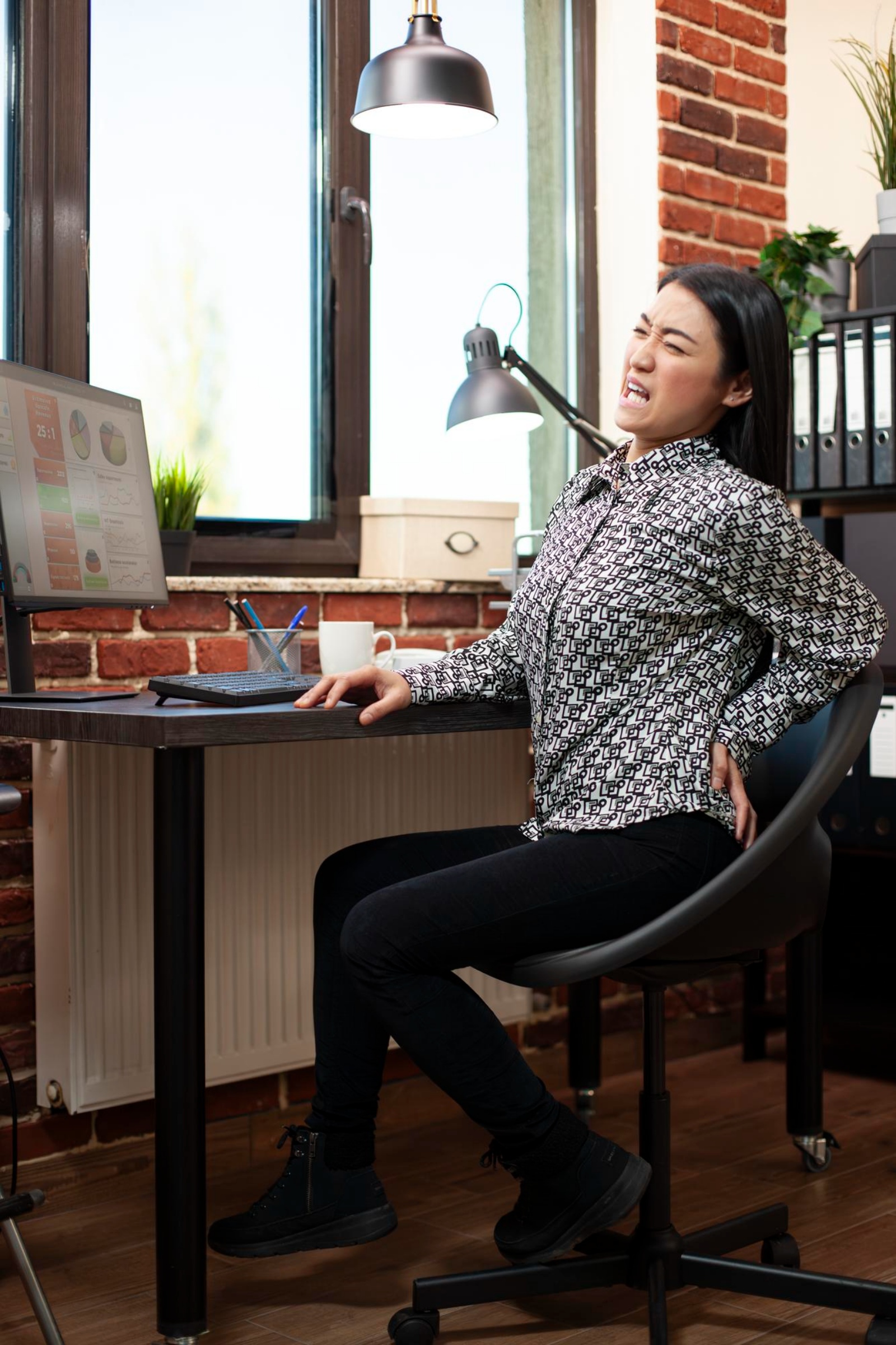 Experts on why sitting with a straightened spine matters (Photo: Magnific)
What are the warning signs that your sitting posture is causing problems?
“Common warning signs include lower back aching after prolonged sitting, stiffness when standing up, frequent shifting in the chair to get comfortable, and a feeling of tightness around the hips,” said Dr Patel.
In some cases, posture-related issues may show up elsewhere in the body. “Some people notice that one shoulder appears higher than the other, while others experience recurring neck tension and headaches,” he explained.
One particularly telling sign is when symptoms improve with movement. “If discomfort repeatedly appears during desk work and eases when walking or changing position, posture, and sitting habits should be evaluated,” Dr Patel advised.
What is the ideal sitting posture for desk workers?
While many people search for the “perfect posture,” Dr Patel believes the focus should be on maintaining a neutral position and moving regularly.
Story continues below this ad
“The ideal posture is one that keeps the spine in a neutral, relaxed position,” he said.
He recommends sitting with:
- Back fully supported by the chair
- Shoulders relaxed
- Hips positioned fully back in the seat
- Both feet resting flat on the floor or a footrest
- Knees roughly level with the hips
- Computer screen positioned at eye level
DISCLAIMER: This article is based on information from the public domain and/or the experts we spoke to. Always consult your health practitioner before starting any routine.
