
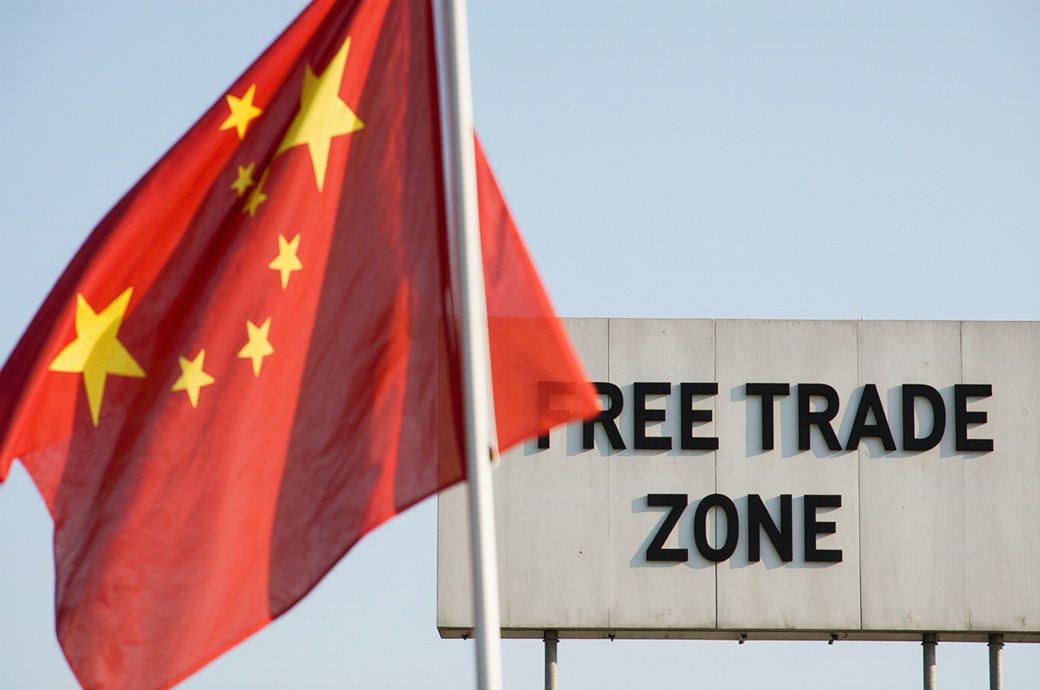
The country’s 23rd pilot FTZ is expected to be turned into a high-level FTZ within three to five years, featuring streamlined investment and trade, a robust innovation ecosystem, competitive industrial clusters and vibrant international exchanges.
Beijing recently launched the China (Inner Mongolia) Pilot Free Trade Zone (FTZ) leverage the region’s role as a key bridgehead for the country’s opening up to the north.
The country’s 23rd pilot FTZ is expected to be turned into a high-level FTZ within three to five years.
The key ports of Manzhouli, Erenhot and Ganqimaodu will be upgraded to provide solid support for the construction of the pilot FTZ.
The pilot FTZ spans 119.74 sq km across three designated zones: 76.28 sq km in the regional capital Hohhot, 25.11 sq km in the inland port of Manzhouli and 18.35 sq km in the inland port of Erenhot.
Among the three, the bonded zone in Hohhot prioritises strategic emerging industries, including new energy, new materials, biomedicine and next-generation information technology, aiming to become an innovation cluster for high-quality development of distinctive industries.
The key ports of Manzhouli, Erenhot and Ganqimaodu will be upgraded to provide solid support for the construction of the pilot FTZ.
As China’s busiest rail port for China-Russian trade and a key gateway on the eastern China-Europe Railway Express route, Manzhouli will focus on specialised industries, including cross-border finance and port services.
The aim is to make it a major gateway to Northeast Asia and Europe, as well as a key platform for trilateral cooperation between China, Russia and Mongolia, according to state-controlled news agency.
Erenhot, China’s largest land port on the Mongolian border, will focus on international trade, logistics, cross-border tourism and medical services as it seeks to nurture itself into a key hub along the China-Mongolia-Russia Economic Corridor.
The port launched a cross-border e-commerce international transport link in 2025. It routes goods through a centralised distribution centre in Erenhot, saving delivery time by over 200 per cent and reducing transportation costs by more than 50 per cent.
The Ganqimaodu port, China’s largest for coal imports from Mongolia, is focused on developing an energy corridor.
The three comprehensive bonded zones in Hohhot, Ordos and Manzhouli are now targeting 12.2 billion yuan in bonded processing and trade value this year—up by 20 per cent year on year. Cross-border e-commerce turnover is set to exceed 5 billion yuan.
The region also aims at adding over 3 million tonnes of new value-added processing of imported resources. The border trade zones at ports like Mandula and Ganqimaodu are expected to start operations by the end of the year.
Fibre2Fashion News Desk (DS)
