
ClickUp and Notion are two well-known project management tools, but they serve different priorities. Having used both extensively, I have found that the better choice depends on whether your team prioritizes task management or managing projects alongside company knowledge. In this ClickUp vs Notion comparison, I’ll examine pricing, AI, collaboration, and ease of use to determine where each platform performs best.
ClickUp vs Notion: At a glance
| My rating | ||
| Best for | ||
| Free plan | ||
| Starting monthly fee | ||
| Docs and wikis | ||
| AI capabilities |
|
|
| Time tracking | ||
| Learning curve |
How I evaluated ClickUp vs Notion
To provide an unbiased comparison of ClickUp and Notion, I evaluated both platforms using a scoring rubric developed from five years of reviewing project management software. My assessment draws from hands-on testing, official product documentation, and verified pricing data.
Pricing (20%): I compared each provider’s free plan, entry-level pricing, and included features per plan. I also reviewed add-on costs and how pricing changes as businesses require more functionality.
General features (25%): I evaluated how each platform handles project work, from task management and project views to team collaboration. Workflow automation also factored into the score, particularly the features for managing routine processes.
Advanced and niche features (20%): I examined the tools available for dependencies, scheduling, and resource management, as well as portfolio reporting and time tracking. For AI, I focused on capabilities that support broader project work rather than content generation.
Ease of use (10%): I assessed each platform’s navigation and configuration process upon setup. User feedback from G2 and Capterra provided additional context on learning curves and user experience.
Support (10%): I reviewed the support channels available to customers and the resources provided for troubleshooting. I also considered each provider’s user community, security controls, and data governance options.
Expert score (15%): I used my experience reviewing PM platforms to assess each platform’s overall value and depth of functionality. I also considered third-party ratings and the quality of available product documentation.
Why you can trust TechRepublic
I’ve spent the past four years testing nearly 20 project management platforms, and some of them have become part of my workflow. Writing dozens of PM software guides for businesses of all sizes taught me what individuals and teams need from these tools beyond the marketing pitch. I also build custom scoring rubrics for each review to ensure fairness and that selected platforms get evaluated on the same criteria.
|
 Marianne Sison
Pricing
Winner: ClickUp
ClickUp offers a clearer pricing advantage because businesses can move from entry-level to higher-tier plans at a lower per-user cost than with Notion. Its $7-per-user Unlimited plan is 30% cheaper than Notion Plus at $10 per member per month, while ClickUp Business at $12 costs 40% less than Notion Business at $20. Note that the price gap grows as more paid users are added.
| Free plan | ||
| Entry paid plan | ||
| Business plan | ||
| Annual billing discount | ||
| Full AI access | ||
| Additional AI usage |
AI pricing differs considerably between ClickUp and Notion. Notion includes its primary AI capabilities with the $20 Business plan, so companies that expect widespread AI use can account for project software and AI under one per-user price. ClickUp’s AI pricing can add another per-user expense on top of the monthly subscription, reducing its initial price advantage depending on the selected AI package.
Project and task management
Winner: ClickUp
As an AI project management software, ClickUp provides more control for projects involving multiple task levels, connected schedules, or competing workloads. Notion covers the core features of task management, but its database structure requires more configuration and has fewer scheduling options for projects with complex dependencies.
Notion has an advantage when project records need documentation. A database item can function as both a task and a Notion page, allowing teams to keep supporting files alongside the task information. ClickUp also connects tasks to Docs, but its task model provides more options for managing projects.
| Task hierarchy | ||
| Multiple assignees | ||
| Dependencies | ||
| Dependency types | ||
| Automatic date shifting | ||
| Schedule baselines | ||
| Critical path | ||
| Milestones | ||
| Workload view | ||
| Time tracking |
Docs and knowledge management
Winner: Notion
Notion stood out for knowledge management because it combines databases and documentation within the same workspace. Users can organize wikis into nested pages, assign an owner to each page, and set dates for content reviews. This enables teams to maintain policies, technical documentation, and internal reference material as their knowledge base expands.
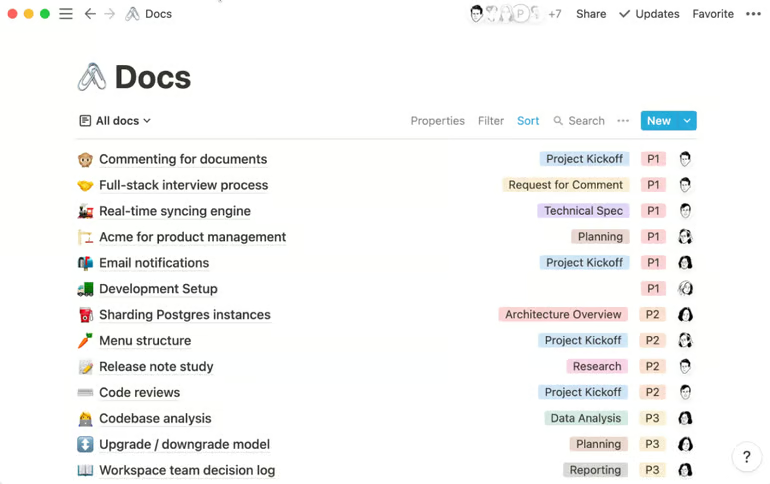
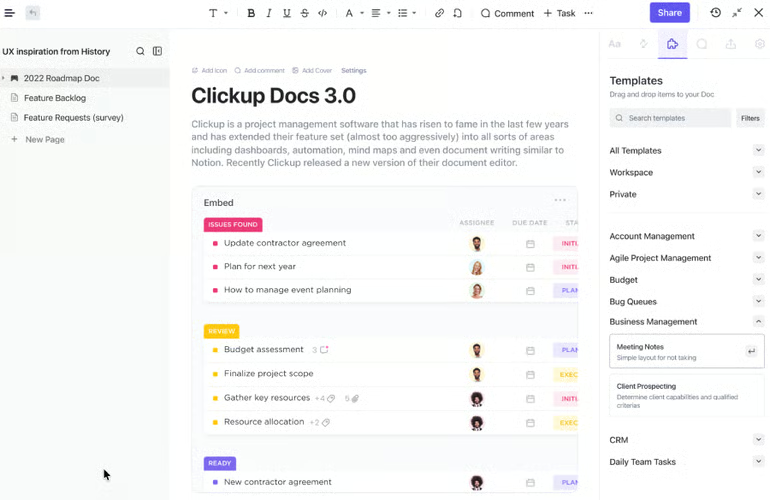
ClickUp also supports nested Docs, wikis, version history, and document permissions, while Docs Hub organizes workspace documentation in one place. Its integration with project management features allows teams to create tasks from text in a Doc and link Docs to related tasks. Notion, however, offers more knowledge management features such as page verification and ownership, while databases can connect related documentation across projects.
AI & automation
Winner: Notion
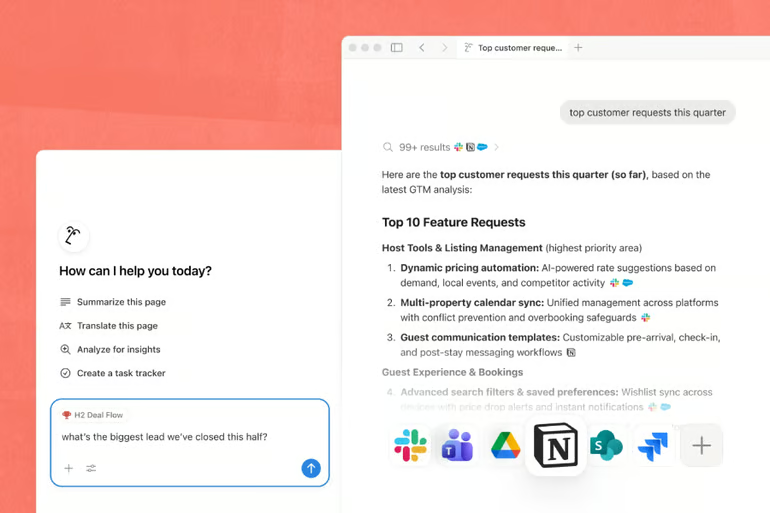
Notion wins for enterprise AI search because employees can search across project data while controlling which sources the AI uses for its answer. Enterprise Search covers the Notion workspace and connected apps such as Slack, Microsoft Teams, Google Drive, Jira, GitHub, SharePoint, and OneDrive,
Filters let users narrow a query to a specific app, page, teamspace, or person. Since AI-generated answers include citations, employees can also return to the source when they need additional context or want to verify a result.
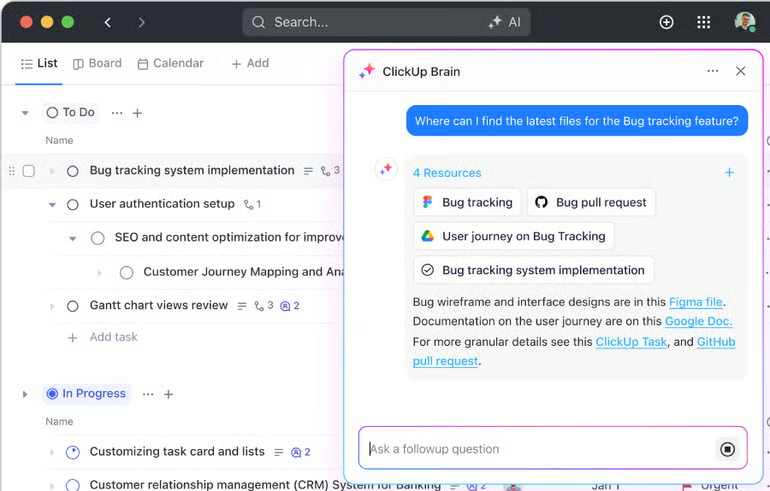
ClickUp Connected Search covers many of the same business applications, but its search capabilities are more closely connected to project execution. For example, Brain can create a task or Doc from retrieved data, while Super Agents can reference connected sources when completing assigned actions.
Notion, however, is better suited to enterprise-wide knowledge retrieval because users have more options for narrowing the search scope and identifying the sources behind AI-generated answers.
Collaboration and communication
Winner: ClickUp
ClickUp wins for collaboration and communication because conversations can lead to project actions without leaving the workspace. ClickUp Chat includes channels, direct messages, threads, and posts, while users can link discussions to tasks or Docs and create tasks from messages.
Notion approaches collaboration primarily through shared content. Teams can edit pages together, leave inline or page comments, use mentions, and receive updates through Inbox, which works well when discussions revolve around documents, project databases, or internal knowledge. However, ClickUp covers a wider range of communication needs within the project workspace, particularly when you need to convert conversations into tasks or meeting follow-ups.
Ease of use and administration
Winner: Notion
Notion is easier to adopt because its navigation centers on a sidebar, pages, and databases, so new users have fewer project-specific concepts to learn before they can start working.
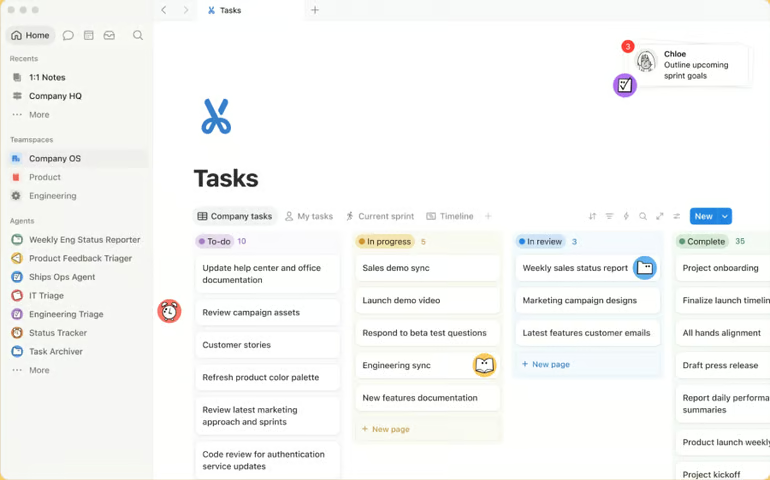
Teamspaces separate content by department or group, while shared and private sections make access boundaries visible from the sidebar. For admins, this reduces the amount of workspace configuration required at the outset, although database design and page organization still require governance as usage expands.
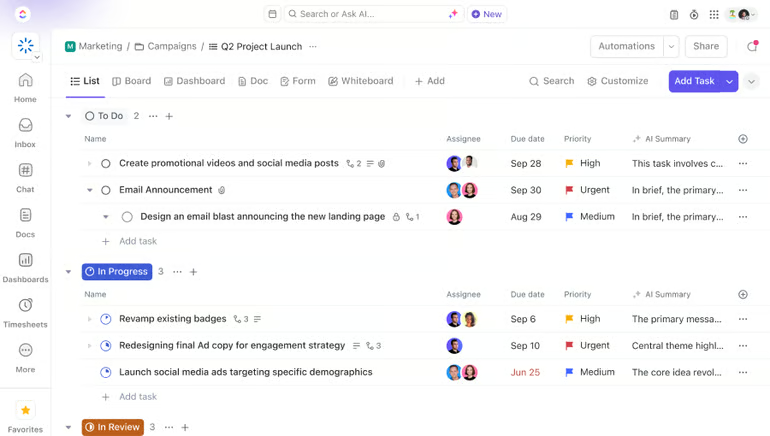
ClickUp requires more initial setup because work is organized across a hierarchy of Workspaces, Spaces, Folders, Subfolders, Lists, and tasks. Administrators also need to decide where views, statuses, custom fields, and permissions should apply, since settings vary across hierarchy levels. This gives companies more control over how departments or project types are configured, but it also increases the complexity of maintaining an organized workspace.
Best Project Management Software
Alternatives to ClickUp & Notion
ClickUp and Notion support many project management needs, but alternatives like monday.com, Wrike, and Smartsheet cater to more specific use cases. These alternatives are worth considering when workflow automation, resource planning, or spreadsheet-based project controls are higher priorities.
| monday.com | Choose monday.com when you want configurable workflows with less setup complexity than ClickUp and more native automation options than Notion. | ||
| Wrike | When capacity planning is a priority, since its resource management tools provide dedicated tools for managing team availability and assignments. | ||
| Smartsheet | If you prefer to plan projects in spreadsheets but need scheduling, reporting, and portfolio capabilities within the same interface. |
ClickUp vs Notion: Which is better overall?
ClickUp is the better overall choice for project management because it provides more native controls for scheduling, resource management, time tracking, and workflow automation. Notion is the better choice when project work depends heavily on documentation and company knowledge, particularly for organizations that want AI search across their workspace and connected business apps.
- Choose ClickUp if: Your projects involve dependencies or detailed task hierarchies, and you need native workload, time tracking, or portfolio tools. It is also better suited to teams that want AI and automation to support project work.
- Choose Notion if: Documentation plays a central role in your projects or company information is spread across multiple applications. Its database model also gives teams more freedom to customize how project information and internal knowledge are organized.
- Consider using both if: Some organizations may use ClickUp for project management while keeping Notion as their company knowledge base. This approach can work when each platform has a clearly defined purpose, although overlapping tasks, documentation, enterprise search, and AI subscriptions can increase software costs and lead to duplicate information.
FAQs
Is ClickUp better than Notion for project management?
ClickUp is better for project management if you need dependencies, Gantt scheduling, workload views, native time tracking, or portfolio controls. Notion is better suited to teams that manage projects alongside documentation and database-based knowledge.
Is Notion easier to use than ClickUp?
Notion generally has a simpler interface because work is organized around pages, databases, and teamspaces. ClickUp requires more setup because teams may need to configure Spaces, Lists, views, statuses, Custom Fields, and permissions before standardizing project workflows.
Which is cheaper, ClickUp or Notion?
ClickUp’s subscription plans are cheaper than Notion. ClickUp Unlimited starts at $7 per user per month with annual billing, while Notion Plus starts at $10 per member per month. The price gap increases at the Business tier.
