
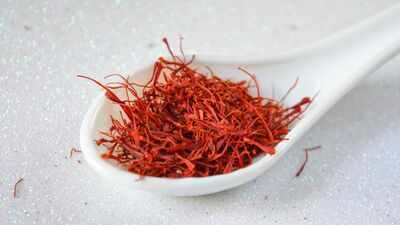
Saffron, often called kesar, is one of the world’s most expensive spices, which also makes it vulnerable to adulteration. The spice comes from the dried stigmas of Crocus sativus flowers, with only a small number of strands obtained from each flower. Because genuine saffron is costly, cheaper materials such as dyed maize filaments, coloured gelatin strands, and other substances can be used to imitate it. The Food Safety and Standards Authority of India (FSSAI) specifically lists saffron among spices that may be adulterated. It provides a simple water-based test to help consumers spot some forms of fake saffron. Genuine saffron is typically dark red, with a slightly bitter, pungent flavour, and should be free from added colouring agents. Here are some simple ways to check whether your saffron is pure before using it in food.
4 simple tests to check whether your saffron is pure or artificially coloured
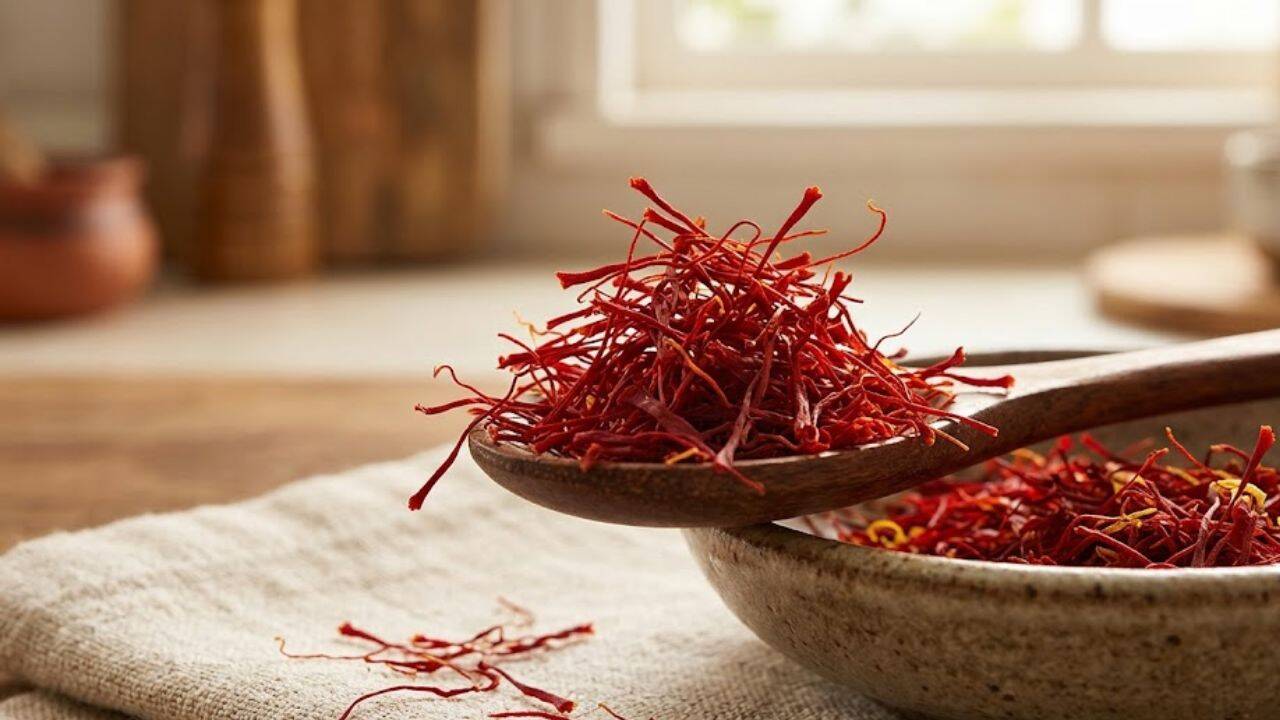
1. Check the colour of the strands
Saffron that appears unusually bright or has an artificial-looking uniform colour may need closer inspection. Real saffron is expected to be dark red; however, colour alone cannot prove whether saffron is genuine, so it should not be treated as a definitive test
PC: AI Generated
2. Try the water test
Place a small quantity of saffron in water and observe how the colour spreads. The pure saffron continues to dissolve, while artificial saffron can release its colour rapidly. It is also noted that genuine saffron does not break easily like artificial saffron.
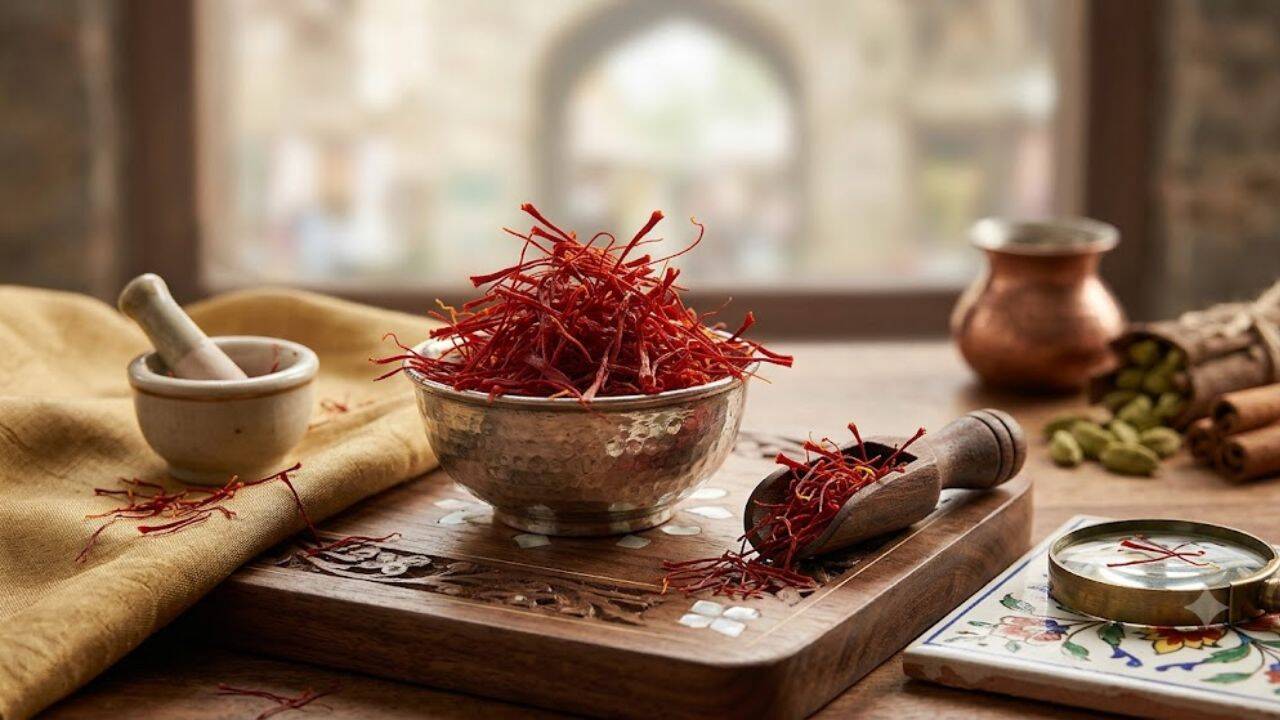
3. Look at the saffron strands before buying
Whole saffron threads are easier to inspect than powdered saffron because you can see the product directly. Saffron is made from the dried stigmas, or the upper parts of the styles, of Crocus sativus. Choosing whole threads can therefore make it easier to spot unusual or suspicious strands before buying.
PC: AI Generated
4. Check the smell and taste
Saffron should have a slightly bitter and pungent flavour and should be free from any foreign odour or mustiness. Its natural aroma should be distinct but not overpowering or unpleasant. Any unusual smell, dampness or musty odour may indicate poor quality or improper storage.Note: Smell and taste should not be used as the only way to establish authenticity.
What to avoid when buying saffron
Do not rely only on a bright red colour
A strong red colour does not automatically mean that saffron is genuine. Saffron should be free from added colouring matter, while its adulteration guidance notes that artificial saffron can be made using coloured materials.
Be cautious with powdered saffron
Powdered saffron can be more difficult to inspect visually because other substances can be mixed into it. Other things can be added more frequently with powdered saffron because cheaper spices or other materials can be added to increase its mass.
Avoid saffron that shows signs of moisture
Good-quality saffron should be properly dried and stored in suitable conditions. Avoid threads that appear damp, unusually soft, or stuck together because moisture can affect their quality. Check the packaging for signs of damage or poor storage before buying. Keeping saffron in a clean, dry, and airtight container after purchase can also help protect its quality.
Check the label details of the product
Choose saffron that comes in properly sealed packaging with clear product information. Check the label for the product name, quantity, batch details, and other required information. Avoid packets that are damaged, poorly sealed, or missing important labelling details. A clear label can help you make a more informed choice when comparing saffron products.
