
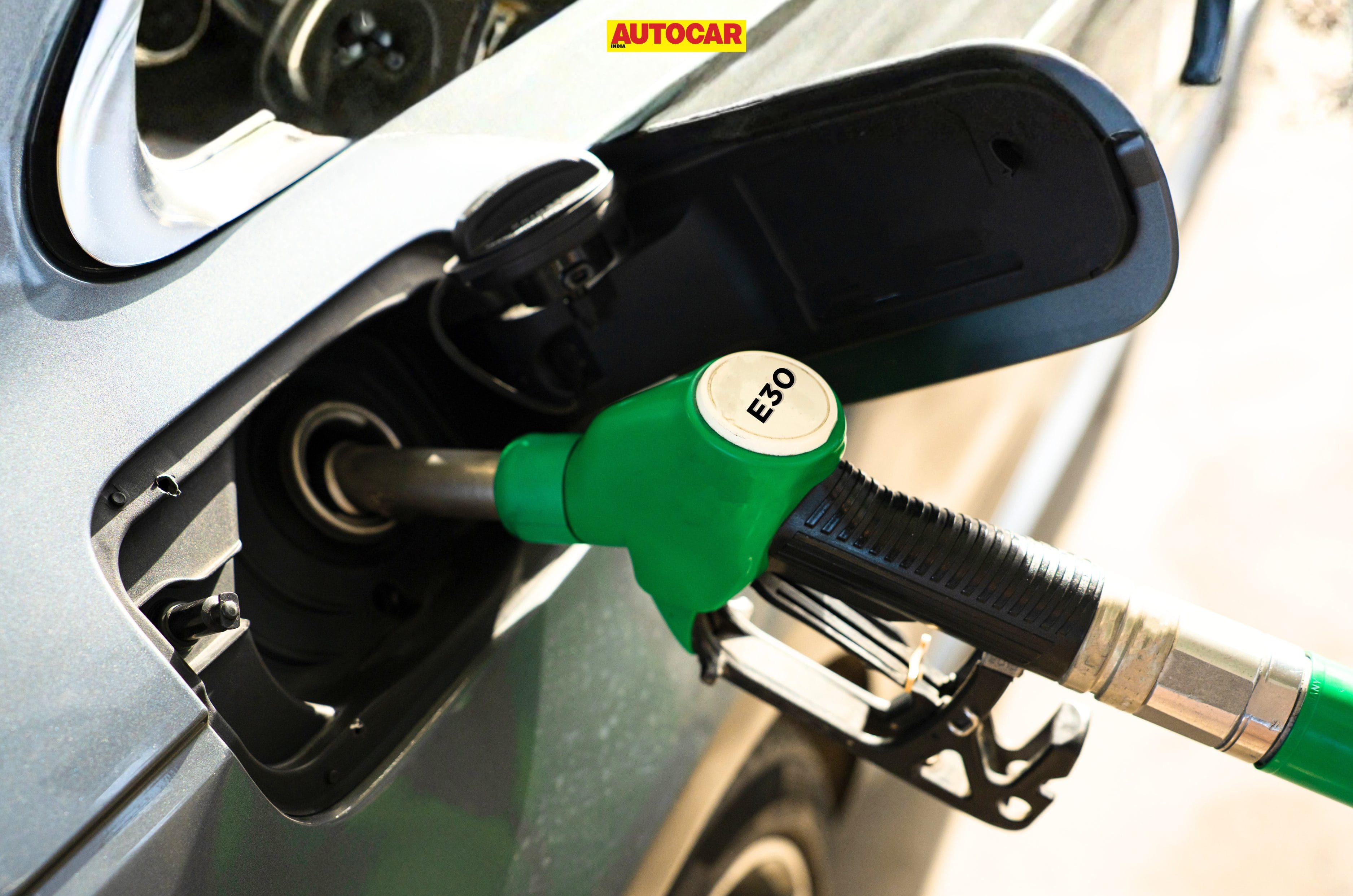
After making E20 blended fuel mandatory across the nation, the government has notified new standards for higher ethanol blends in petrol. The notification, published by the Bureau of Indian Standards (BIS) in the Gazette of India, stated standards for E22, E25, E27, and E30 fuels. It was issued under Rule 15(1) of the Bureau of Indian Standards Rules, 2018.
The document stated that the newly introduced standard, IS 19850:2026, covers specifications for “E22, E25, E27 and E30 Fuel, Admixture of Anhydrous Ethanol and Motor Gasoline for Usage in Positive Ignition Engine Powered Vehicles,” and takes effect from May 15, 2026. The standards dictate permissible levels of anhydrous (water-free) ethanol in the fuel mixture, octane levels, sulphur content, and vapour pressure, while also defining corrosion resistance and fuel stability.
Why has the development of blends beyond E20 arrived?
This development comes at a time when fuel prices have increased due to tensions in the Middle East, as the government aims to reduce its dependence on fuel imports and empower domestic ethanol production. A notification like this is significant, as it formally issues a fuel-quality framework for blends beyond E20, indicating that the government is beginning to prepare the ecosystem for the next stage of ethanol adoption.
The move also comes weeks after the government separately proposed draft amendments to recognise E85 and E100 fuels under the Central Motor Vehicles Rules, signalling a broader policy direction towards higher ethanol and flex-fuel readiness. Automakers have largely completed the transition towards E20-compatible vehicles, but blends such as E30, E85 and E100 will require additional engineering and validation work around engine calibration, fuel-system durability, corrosion resistance and material compatibility.
What do industry stakeholders have to say about this?
Industry stakeholders have also pointed to the need for greater alignment across fuel infrastructure, dispensing systems and nationwide fuel consistency before higher ethanol blends can be rolled out at scale.
Even so, the latest notification gives automakers, suppliers and fuel companies an early regulatory direction as India gradually expands its ethanol-blending ambitions beyond the current E20 programme. Apart from E30 fuel specifications, BIS also notified revised standards for Dimethyl Ether (DME) blended LPG and other industrial specifications.
