
Smartphones tend to slow down as time goes by, and it’s a familiar issue faced by almost everyone. This usually stems from apps running in the background, which causes cache to build up, piling on system processes. This results in even a flagship smartphone feeling sluggish after prolonged use. While clearing out storage and uninstalling apps can help alleviate this to some extent, there are only so many times you’ll have the time to do it manually. One of the simplest and most effective ways to maintain performance is restarting your phone regularly.
On the Samsung Galaxy phones, this process can be automated, ensuring your phone stays smooth without requiring manual intervention.
Why Restarting Helps and What Automatic Restart Means
Restarting your phone clears temporary files, refreshes system memory, and stops background processes that may be slowing things down. In simpler terms, it gives your phone a clean slate, which can help improve responsiveness, fix minor glitches, and even help with battery efficiency.
Samsung, on the other hand, takes this simple yet effective process a step further, with a feature called Auto Optimisation. This allows your Galaxy smartphone to restart itself periodically, which typically occurs at a time when you’re not using it.
With Auto Optimisation, the system can proactively refresh itself at regular intervals, instead of passively waiting for performance issues to occur. Samsung even recommends doing this occasionally to prevent freezing or lag, especially if your phone is used heavily throughout the day.
How to Set Up Automatic Restart on Samsung Galaxy Phones
Setting up automatic restart on a Samsung Galaxy device is straightforward. The exact steps may vary slightly depending on your One UI version. Here’s how to enable Auto Optimisation on your Samsung Galaxy smartphone:
Open the Settings app on your Samsung Galaxy phone.
- Scroll down and tap on Battery and Device Care
- Under the Additional Care tab, select the Auto optimisation setting
- Toggle the Auto-restart feature
- You can also select your preferred day(s) and time for the restart
Once enabled, the Samsung phone will automatically reboot based on the preset schedule. Users are advised to pick a time when their phone is not in use. For example, they can set the feature to early morning hours or late at night.
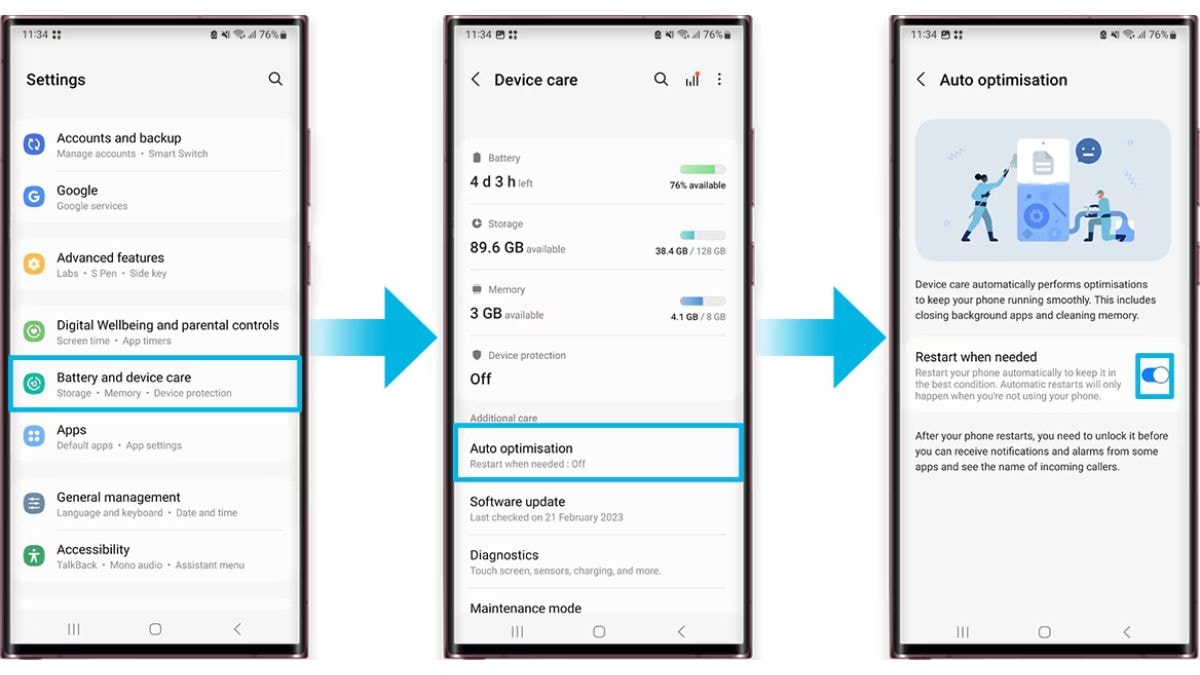
How to enable Samsung’s Auto optimisation feature
Photo Credit: Samsung
Samsung says the Galaxy smartphone will only restart when certain conditions are met. These include when the screen is off, the device is not being used, the battery level is above 30 percent, and the SIM card lock is turned off. This is claimed to ensure the process does not interrupt active usage or critical functions.
Tips to Keep Your Samsung Phone Running Smoothly
Along with automatic restarts, there are several other steps you can take to keep your phone performing at its best:
- Use Device Care regularly – Samsung’s built-in Device Care tool helps optimise battery, storage, and memory. It can be manually activated for a quick refresh. Alternatively, you can set it to perform automatic optimisations
- Clear cache periodically – App-related cache tends to accumulate with prolonged usage. Clearing this up periodically can help free up storage and make sure your phone remains responsive.
- Keep software updated – Install the latest updates for Android and apps to benefit from bug fixes, performance improvements, and security patches.
- Manage background apps – Limit apps, especially those you rarely use, from running in the background to conserve memory and battery.
- Free up storage space – An almost full storage space can often cause your device to become sluggish. Consider deleting apps you no longer use, clearing out old and large files, or moving your data to cloud storage services.
