
A foldable phone’s crease can catch the light every time you open it. Huawei is using magnets to make that line less noticeable.
Huawei unveiled the Mate X8 in China on Nov. 24. The book-style foldable has larger OLED displays, a 6,200mAh battery and a Kirin 9050 Pro processor. It goes on sale Dec. 4 from CNY 12,999.
The standard model and Collector’s Edition share the new screen design, but the pricier model gets a larger main camera sensor. For buyers outside China, the first question is whether the phone will work with their carrier and the apps they rely on.
Huawei Mate X8: Quick specifications cheat sheet
| Specification | Huawei Mate X8 | Mate X8 Collector’s Edition |
|---|---|---|
| Processor | Kirin 9050 Pro | Kirin 9050 Pro |
| Operating system | HarmonyOS 7.0 | HarmonyOS 7.0 |
| RAM | 12GB | 16GB |
| Storage | 256GB/512GB | 512GB/1TB/2TB |
| Inner display | 8.2-inch OLED | 8.2-inch OLED |
| Cover display | 6.54-inch OLED | 6.54-inch OLED |
| Refresh rate | 1-120Hz LTPO | 1-120Hz LTPO |
| Main camera | 50MP, f/1.4-f/4.0 | 50MP, f/1.49-f/4.0 |
| Main camera sensor | 1/1.56-inch | 1/1.28-inch |
| Ultra-wide camera | 40MP | 40MP |
| Periscope camera | 50MP, 3.5x optical zoom | 50MP, 3.5x optical zoom |
| Front cameras | Dual 8MP | Dual 8MP |
| Battery | 6,200mAh | 6,200mAh |
| Wired charging | 66W | 66W |
| Wireless charging | 50W | 50W |
| Water resistance | IP58/IP59 | IP58/IP59 |
| Weight | 237g | 239g |
Design: Thinner body, redesigned magnetic hinge
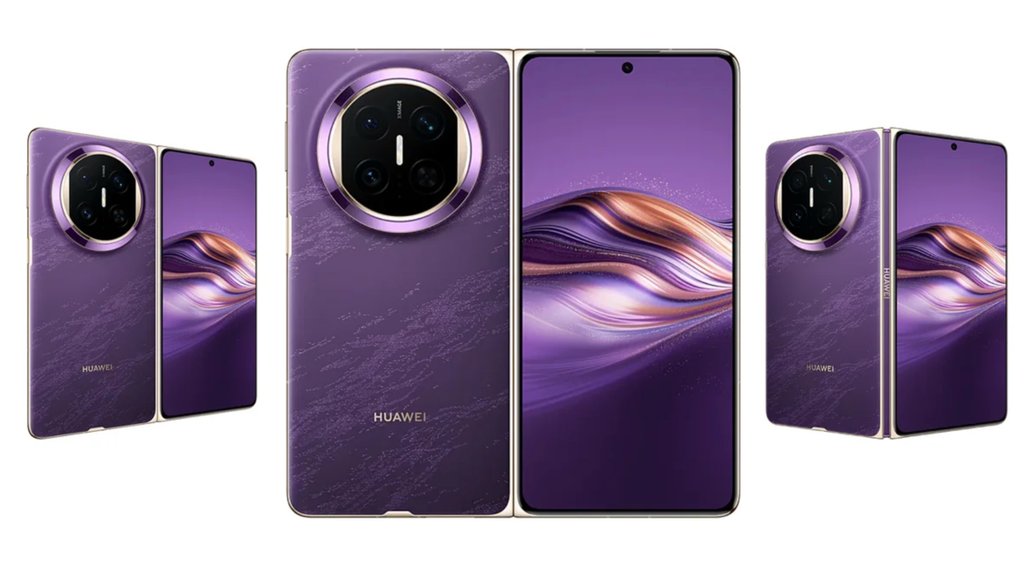
Huawei has made the Mate X8 thinner than its predecessor without sacrificing its large-screen design. The phone measures 8.95mm when folded and just 4.2mm when unfolded. That’s down from the Mate X7’s 9.5mm and 4.5mm measurements, respectively.
The standard model weighs approximately 237 grams, while the Collector’s Edition comes in at 239 grams. The bigger change is under the inner display. Huawei uses a thin magnetic layer and steel supports to help pull the flexible screen flatter when the phone opens.
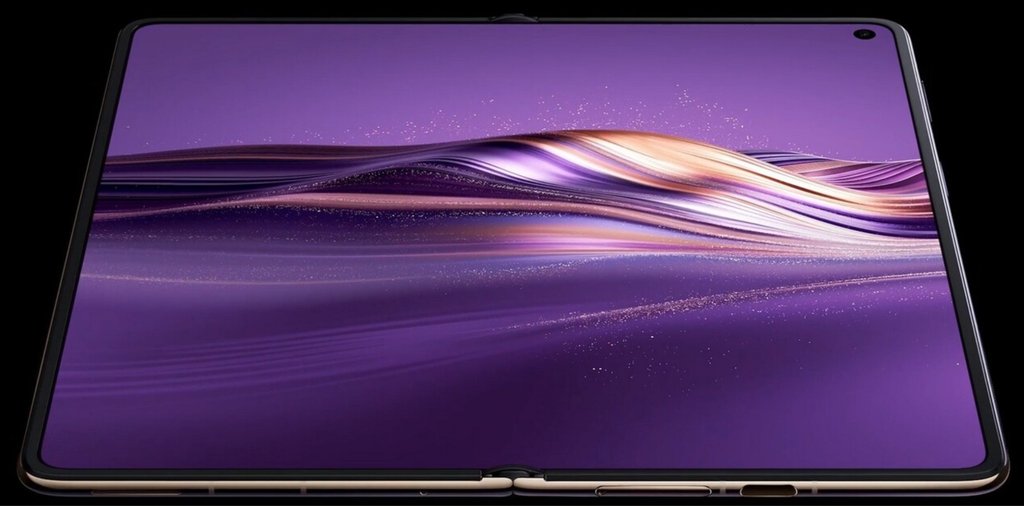
Huawei had teased a flatter screen ahead of launch. At the event, the company showed a 3D scan that measured 15 microns between the highest and lowest points of the crease, down from 142 microns on the Mate X7.
Huawei’s care notes say a visible crease is normal. Independent testing will help show how noticeable it is under different lighting and after repeated use.
Displays: Two large 120Hz OLED panels
The Mate X8 offers more screen space in both folded and unfolded configurations. Its internal display measures 8.2 inches, up from 8 inches on the Mate X7. The external display also grows slightly, moving from 6.49 inches to 6.54 inches.
Both use LTPO OLED technology with adaptive refresh rates between 1Hz and 120Hz.
| Display feature | Inner screen | Cover screen |
|---|---|---|
| Size | 8.2 inches | 6.54 inches |
| Resolution | 2424 × 2340 | 2444 × 1132 |
| Refresh rate | 1-120Hz | 1-120Hz |
| Touch sampling | Up to 240Hz | Up to 300Hz |
| PWM dimming | 1440Hz | 1440Hz |
| Protection | UTG flexible glass | Kunlun/Xuanwu Kunlun glass |
In Huawei’s lab tests, the inner display peaked at 8,000 nits and the cover screen at 12,000 nits with just 1% of each screen lit.
The Collector’s Edition gets Xuanwu Kunlun glass on the cover, while the standard model uses third-generation Kunlun glass. For productivity, reading and multitasking, the larger inner panel should provide a more comfortable workspace. The adaptive refresh rate also allows the display to reduce its refresh rate when high-speed updates aren’t necessary.
Performance: Kirin 9050 Pro and HarmonyOS 7
Huawei equips both Mate X8 versions with its Kirin 9050 Pro processor, paired with HarmonyOS 7.0. The company reports 31% higher overall performance in lab tests comparing the Mate X8 running HarmonyOS 7 with the Mate X7 running HarmonyOS 6.
Memory and storage are where the two models separate.
- Standard Mate X8: 12GB RAM with 256GB or 512GB storage.
- Collector’s Edition: 16GB RAM with 512GB, 1TB or 2TB storage.
The 2TB configuration gives buyers substantially more room for photographs, videos and other large files. However, neither version supports memory card expansion. HarmonyOS 7.0 is the software foundation, although international buyers should wait for Huawei to clarify regional software availability and service support before considering an import.
Cameras: A major difference between the two models
The Mate X8 has a four-sensor rear imaging system built around Huawei’s XMAGE technology.
The lineup includes:
- 50MP main camera: Variable aperture, optical image stabilization and RYYB sensor technology.
- 40MP ultra-wide camera: F/2.2 aperture for wider scenes.
- 50MP periscope telephoto: F/2.2 aperture, OIS and 3.5x optical zoom.
- Third-generation Red Maple sensor: Supports color reproduction and more accurate color information.
The camera system also supports 7x optical-quality zoom and up to 100x digital zoom. Video recording reaches 4K, while the phone supports 1080p at 960 frames per second using AI-based interpolation.
However, the main camera is an important reason to consider the Collector’s Edition.
| Camera specification | Standard model | Collector’s Edition |
|---|---|---|
| Main sensor | 50MP, 1/1.56-inch | 50MP, 1/1.28-inch |
| Aperture | f/1.4-f/4.0 | f/1.49-f/4.0 |
| Optical stabilization | Yes | Yes |
| Ultra-wide | 40MP | 40MP |
| Periscope telephoto | 50MP | 50MP |
The Collector’s Edition has the larger main sensor, potentially giving it an advantage in light gathering and image quality. Buyers who prioritize photography should consider this difference before choosing the cheaper model.
Both versions also feature 8MP front cameras on the inner and external displays.
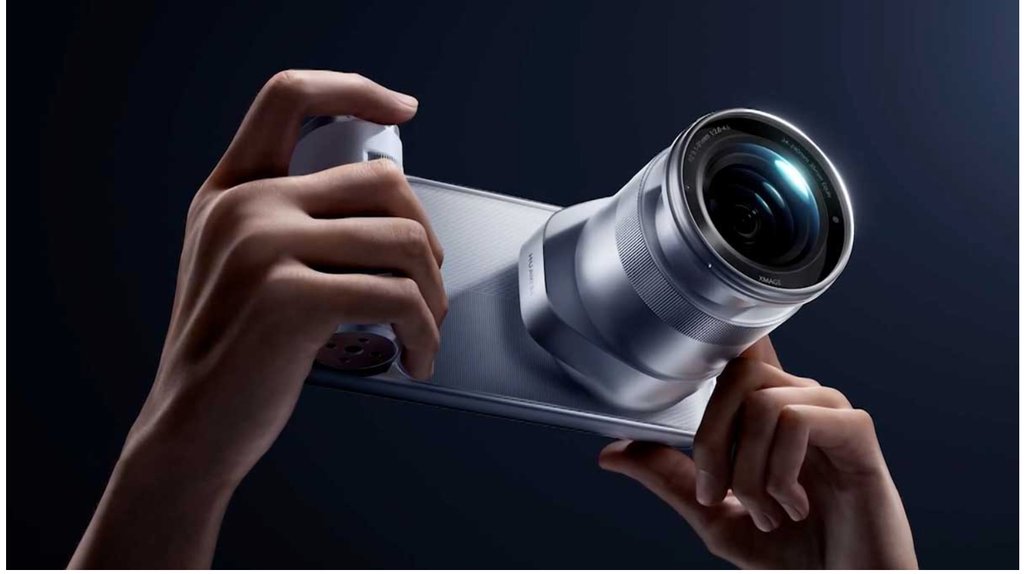
Huawei’s optional Ruiying Z10 modular camera adds a 1-inch, 50MP RYYB sensor with optical stabilization. It requires a software update and a dedicated connection case. In China, Huawei will also sell a 1TB Collector’s Edition bundle with the Z10 for CNY 24,499 starting Dec. 30.
Battery and charging: 6,200mAh capacity
Battery life could be another major selling point.
Both Mate X8 models have a typical battery capacity of 6,200mAh, up from 5,525mAh on the standard Mate X7 and 5,600mAh on the Mate X7 Collector’s Edition in China.
Charging options include:
- 66W wired Huawei SuperCharge.
- 50W wireless Huawei SuperCharge.
- Wireless reverse charging.
The wireless charging speeds require compatible Huawei charging accessories, while the wired maximum requires a compatible 66W or higher Huawei charging kit.
Durability and connectivity
The Mate X8 carries IP58 and IP59 protection ratings, offering resistance against dust, water immersion and high-pressure water jets under controlled laboratory conditions.
However, Huawei warns that this protection can decline with normal wear. Liquid damage is also excluded from the warranty, so the ratings shouldn’t be treated as permission to deliberately expose the phone to water.
Other connectivity features include:
- Wi-Fi 7 support.
- Bluetooth 6.0.
- NFC.
- eSIM support.
- USB-C with USB 3.1 Gen 1 capability.
- Two-way BeiDou satellite messaging.
- Infrared sensor.
Satellite messaging is currently limited to mainland China, while eSIM availability depends on participating mobile operators. The phone also lacks Ultra Wideband (UWB).
Huawei Mate X8 price and availability
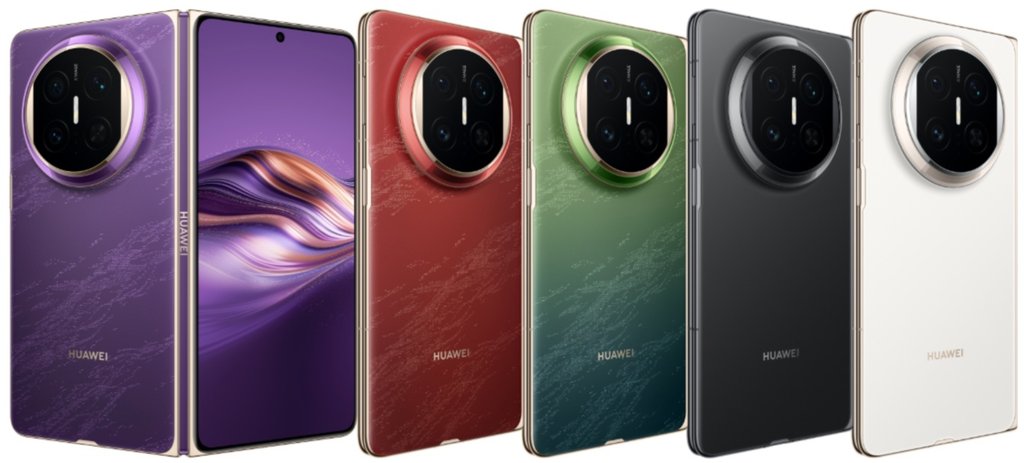
Preorders for the first four configurations opened in China on Nov. 24, with sales starting Dec. 4. The 2TB Collector’s Edition goes on sale Dec. 20 in purple and black, according to Huawei’s China buying guide.
| Configuration | Chinese price | Estimated US price |
|---|---|---|
| 12GB + 256GB | CNY 12,999 | Roughly $1,830 to $1,950 |
| 12GB + 512GB | CNY 13,999 | ~$1,970 to $2,100 |
| 16GB + 512GB Collector’s Edition | CNY 15,999 | ~$2,255 to $2,400 |
| 16GB + 1TB Collector’s Edition | CNY 16,999 | ~$2,395 to $2,550 |
| 16GB + 2TB Collector’s Edition | CNY 20,999 | ~$3,150, limited to purple and black |
What to check before buying or importing the Mate X8
If you’re buying in China, the choice between the two models comes down to what you’ll do with the phone. If you mostly want more room to read documents or run two apps side by side, the standard model gives you the same 8.2-inch inner screen. At 512GB, the Collector’s Edition costs CNY 2,000 more and gets you 4GB more RAM, a larger main camera sensor and different cover glass. If the camera is what would make you pay extra, wait for side-by-side photos of moving subjects indoors or scenes in low light.
If you already own a Mate X7 and the crease bothers you, try the X8 under the kind of light you work in. Open a white document, tilt the phone toward an overhead light and scroll across the middle. Then swipe a finger over the fold. Those quick checks tell you more about whether the change matters to you than a close-up of the phone on a launch stage. If battery life is your main concern, look for a test that uses the inner display for video calls or multitasking. The higher capacity alone doesn’t tell you how far it will get you through a workday.
Check the exact model before you import it
For buyers outside China, a listing that says “unlocked” or “supports eSIM” leaves a few steps between paying for the phone and using it as your daily device.
| If you rely on… | Check this before paying |
|---|---|
| Your carrier for calls and data | Ask the seller for the exact model number. Give it to your carrier and confirm it can activate that model, including eSIM if you use one. |
| Work apps and sign-in | Check for the exact apps you need on HarmonyOS 7. Include your authenticator, email and VPN. If you can try the phone, sign in and open a shared file to check the workflow you actually use. |
| Local repairs | Ask who handles a damaged inner display or hinge. Get the repair location, warranty terms and return window in writing, including who pays for shipping if the phone has to go back. |
The app check matters even if the phone can get online. You might be able to open a work app and still hit a sign-in policy that requires the device to be enrolled. If employees want to bring the Mate X8 to work, start with your BYOD policy. Have IT verify enrollment on the exact model and test access to one resource that requires a compliant device, such as work email or a shared document, before approving it.
If you’re buying your first foldable, apply the same checks to any model you’re considering. Open the apps you use most and see what they do with the extra space. Can you keep a spreadsheet open beside a video call? Does a document stay where you left it when you close the phone and switch to the cover screen? The iPhone Duo and Galaxy Z Fold8 comparison gives you two other approaches to compare.
If the Mate X8 passes those checks and you can get it serviced where you live, the decision comes down to the screen and the price. If you need it as your only work phone and can’t confirm enrollment or repair coverage, wait for local availability details before buying.
Read more: If repair costs factor into your foldable purchase, see what Apple charges for iPhone Duo parts, including the inner display assembly.