
Telling Motorola smartphones apart is getting increasingly difficult. Whether you pick up a Rs. 70,000 flagship or a Rs. 25,999 mid-ranger, there is a good chance the first thing you will notice is just how familiar the design looks. The Lenovo-owned company has carried this design language across its lineup for some time now, and the new Moto G77 Power is the latest example. On paper, though, it has a few things going for it, including a massive 7,000mAh battery, a 120Hz display, a clean Android experience, and a capable 50-megapixel primary camera.
But with plenty of competition around in an increasingly tough Rs. 25,000 price bracket, does the Moto G77 Power offer enough to stand out? Here’s our review.
Moto G77 Power Design and Display: Familiar Territory Yet Again
- Dimensions and Weight – 166.23 x 76.50 x 8.89mm, 215g
- Colours – Pantone Fuchsia Red, Pantone Impenetrable, Pantone Nautical Blue
- Ingress rating – IP64
Now, it is clear that the Moto G77 Power isn’t going to win any awards for originality. The company has essentially carried forward the same design language that we’ve seen on several smartphones over the years. This makes it particularly difficult to distinguish this phone from even flagship phones in Motorola’s portfolio at first glance.
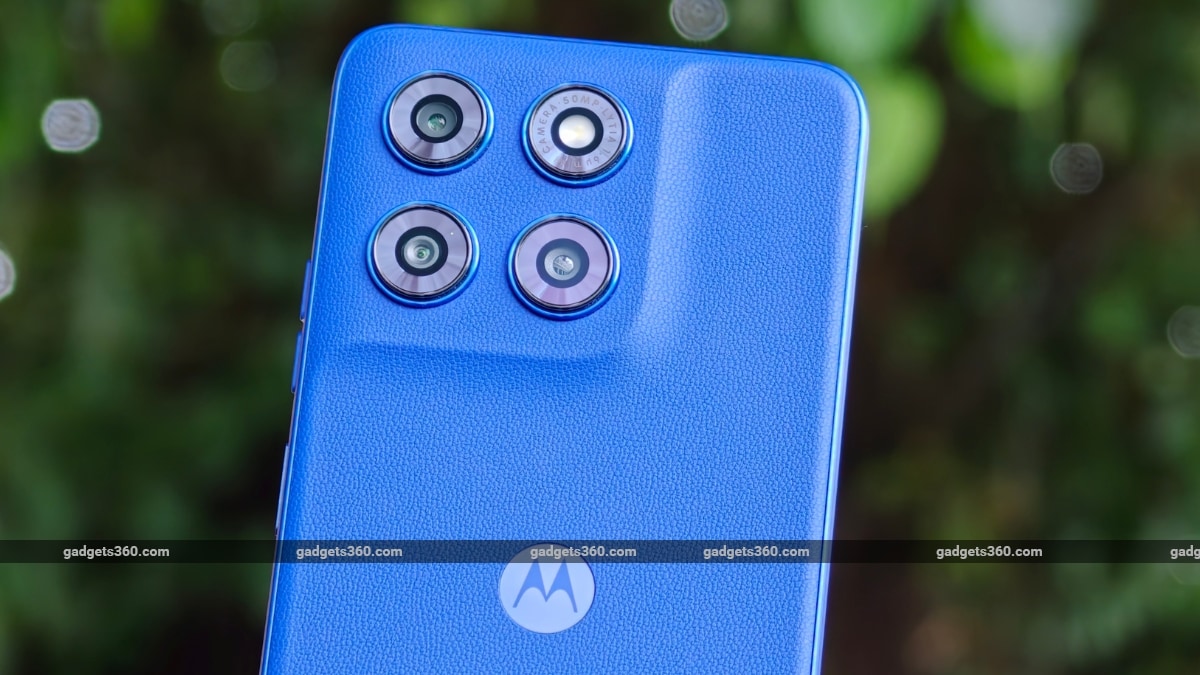
But that doesn’t necessarily mean bad. The phone feels solid in hand. You get a vegan leather finish on the rear panel that lends it a nice, grippy texture. While it doesn’t shout premium, the handset is comfortable to hold, and the rear panel doesn’t attract fingerprints in the way a glossy glass back would. We have the Pantone Nautical Blue shade of the handset, and it is just about the right balance between being understated and loud.
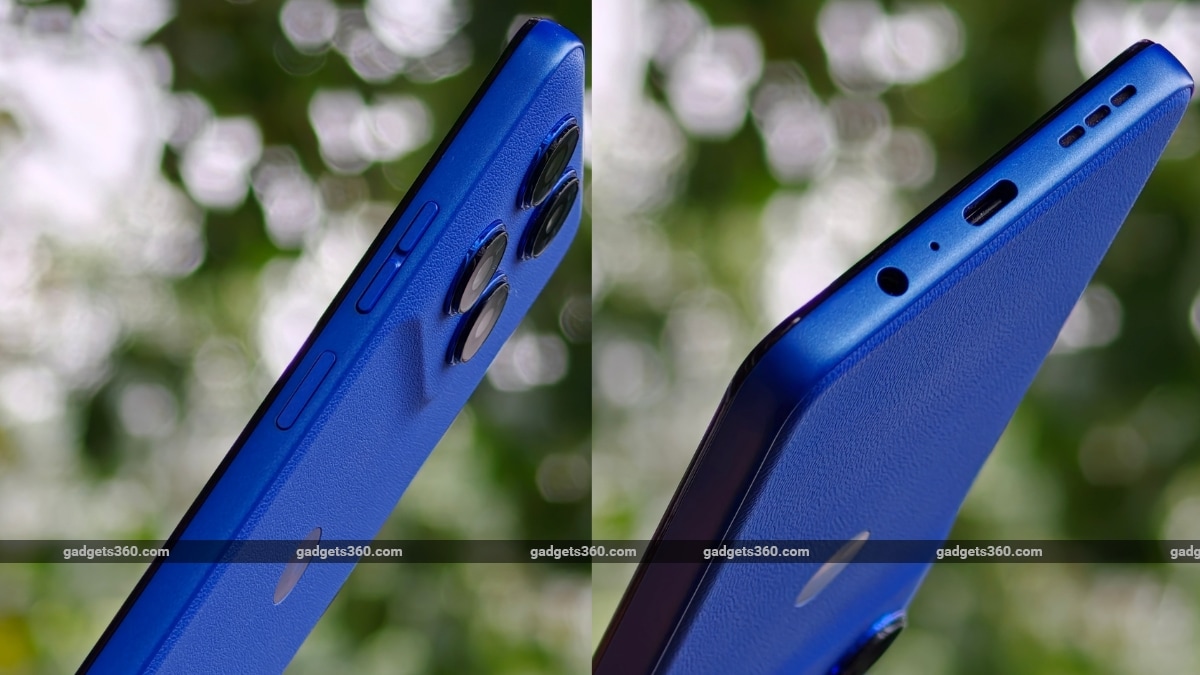
The trade-off is in terms of weight. The phone weighs about 215g and is heavier than many rivals in this segment. Durability is decent, with an IP64 rating for dust and water resistance, along with MIL-STD-810H certification. I think the addition of the 3.5mm headphone jack is a thoughtful addition, especially for anyone who still prefers wired earphones.
The display is a more complicated story.
Motorola has equipped the G77 Power with a 6.72-inch Full HD+ LCD screen with a 120Hz refresh rate. I’ll begin with the positives. The display offers decent resolution, with sharp text and UI elements. I did not encounter any problems browsing the web, scrolling through social media, or watching YouTube videos. The 120Hz refresh rate also made scrolling feel smooth on most occasions.
The LCD panel itself, meanwhile, is pretty mediocre. It cannot hold a candle to the deeper blacks and contrast offered by an AMOLED panel even on mid-range phones like the company’s very own Motorola Edge 70 Fusion. This meansbinge-watching Netflix shows or Crunchyroll episodes on your phone isn’t an entirely pleasing experience. Colours also slightly shift when the display is viewed from an angle, hampering the viewing experience for those sitting beside you.
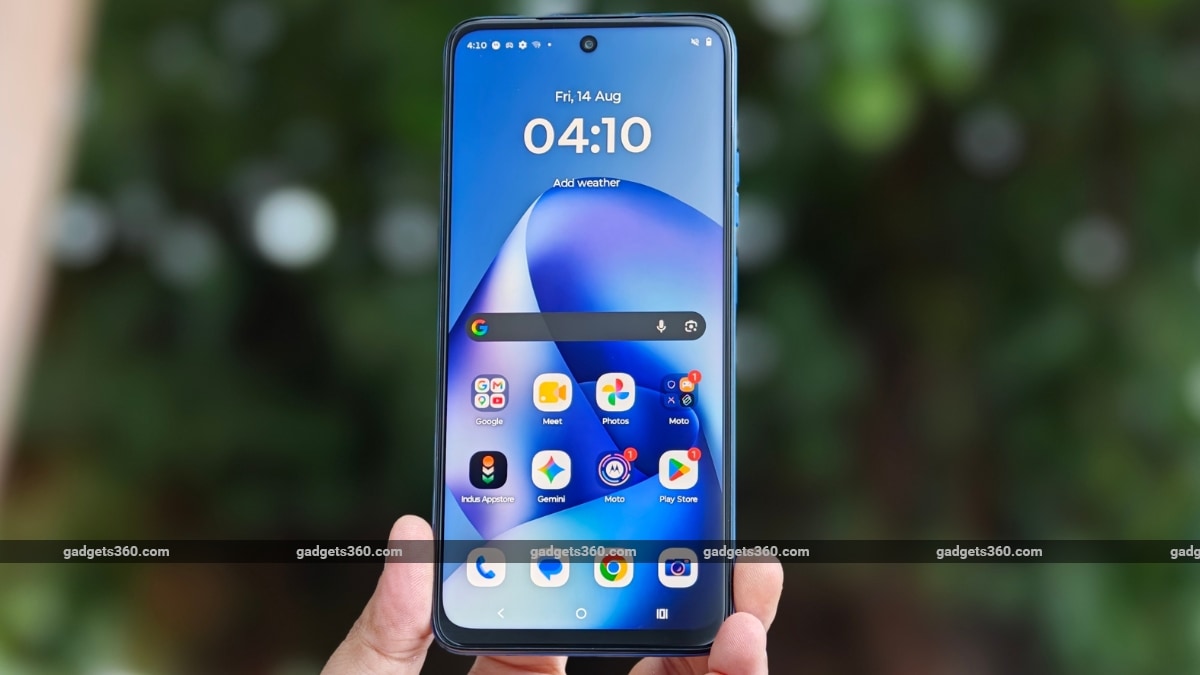
On the brightness front, the Moto G77 Power gets bright enough and is usable in overcast conditions. However, using it outside on a sunny day isn’t as pleasing, with just about average outdoor legibility. Moving on, the stereo speakers are a welcome addition here. They get the job done, although I did notice the lack of bass, which is pretty much the case with every phone in this segment.
Moto G77 Power Performance and Software: Does Not Excite
- Processor – MediaTek Dimensity 6400 (6nm)
- RAM and Storage – 8GB LPDDR4x (RAM), 128GB UFS 2.2 (Storage)
- Operating System – Android 16
- Updates Promised – 1 Year OS + 3 Years SMRs
Motorola’s latest battery-focused handset runs the Dimensity 6400 chipset, and it is the elephant in the room. This is because the company has used the same processor in the considerably cheaper Moto G37 Power. Thus, the G77 Power getting the same SoC despite costing Rs. 10,000 more feels like an odd decision.
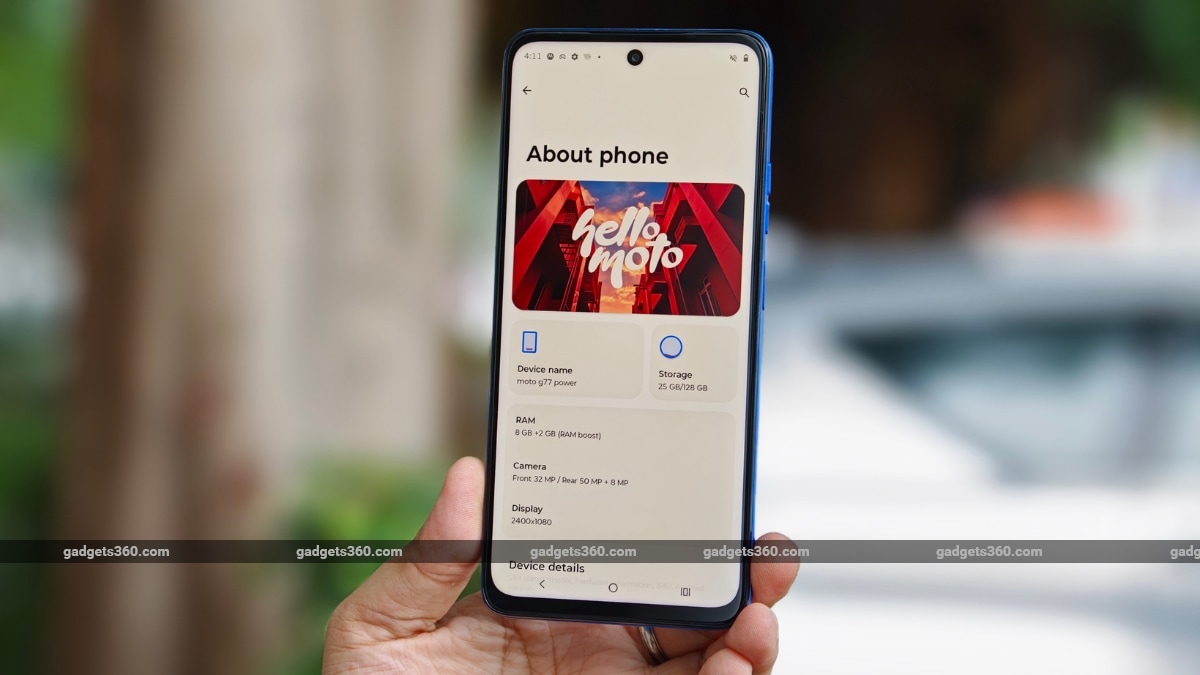
Now, the handset performs reasonably well for everyday tasks. During my time with the Moto G77 Power, I did not face any issues switching between social media apps, messaging, Chrome, Instagram, and other everyday apps. The problems, however, become apparent when you begin to push the hardware harder.
The biggest instance of this is during gaming. I played BGMI at Balanced graphics settings, and it was playable. However, frame drops became immediately noticeable once I bumped up the graphics. Call of Duty: Mobile delivered a similar experience. The phone does tend to warm up during extended gaming sessions, but not uncomfortably hot.
On the software front, the Moto G77 Power runs on Android 16 with Motorola’s Hello UI skin. As expected from a Motorola handset, the software experience is relatively clean with minimal bloatware and smooth performance. I didn’t encounter any major software-related issues during my time with it.
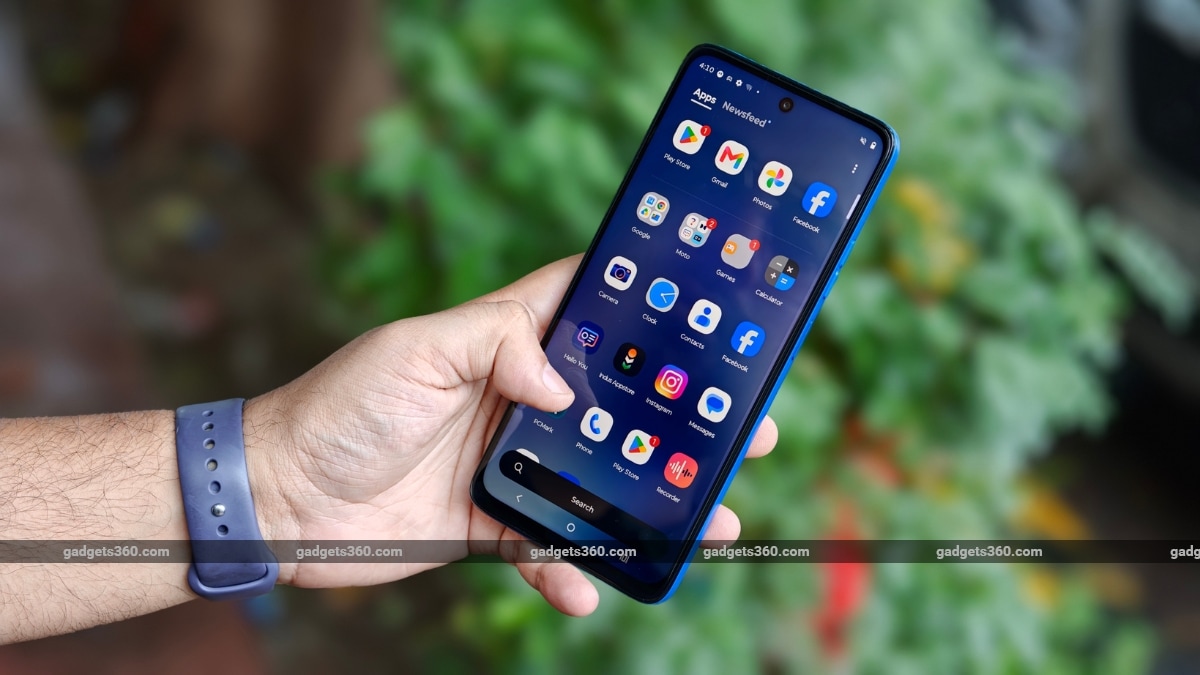
The update policy, however, is disappointing to say the least. Motorola has promised just one major Android update (to Android 17), and that is likely to come out this year or early 2027. This means even if you buy the phone a couple of months down the line, there won’t be any major software changes in the foreseeable future.
This is less than mediocre for a phone in this segment, particularly when some rivals like Samsung and OnePlus offer substantially longer software support.
Moto G77 Power Cameras: Good Enough in Daylight
- Rear Cameras – 50-megapixel (f/1.8) + 8-megapixel (f/2.2)
- Front Camera – 32-megapixel (f/2.2)
On the back of the Moto G77 Power, you’ll find a dual camera setup, comprising a 50-megapixel primary camera and an 8-megapixel ultra-wide-angle shooter. On the front is a 32-megapixel selfie sensor.
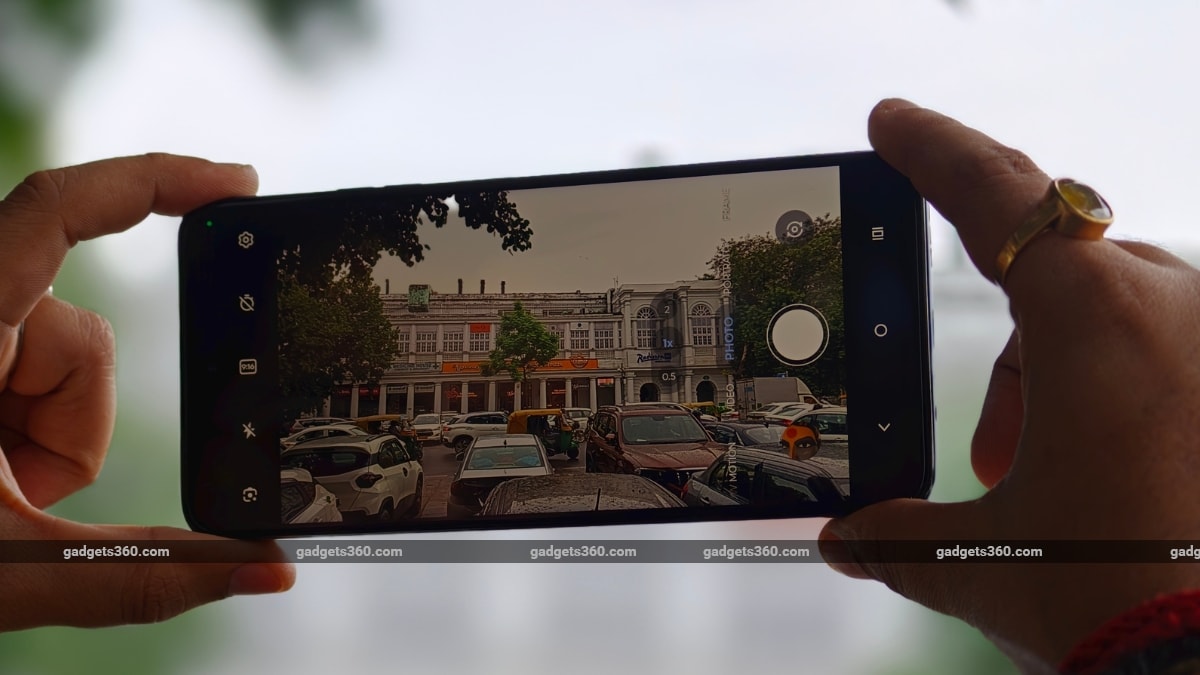
In daylight, the primary camera delivers usable results with decent dynamic range. However, colours tend to have a warmer tone and appear boosted at times. While details appear to be plenty at first glance, zoom in a little, and you’ll see things begin to fall apart.
Motorola has omitted optical image stabilisation (OIS) on the G77 Power, which means I had to keep my hand really steady when capturing shots in ultra-low light. Despite this, some amount of noise does creep in.





Moto G77 Power camera samples (tap to expand)
The ultra-wide-angle shooter, meanwhile, isn’t particularly impressive. While it attempts to provide a similar level of dynamic range as the primary camera, details are on the softer side.
The 32-megapixel selfie camera does a better job. Selfies often have a decent amount of detail and do not look excessively processed. Shots also carry natural colours and dynamic range.
Moto G77 Power Battery Life: USP
- Battery capacity – 7,000mAh
- Wired charging – 30W
- Charger in the box – Yes
Battery life is one key area where the Moto G77 Power excels, truly. With binge-watching videos, listening to music, video calls, and regular social media and messaging, the 7,000mAh cell comfortably lasted for around a day and a half. The battery life can likely be stretched to up to two days with lighter usage.
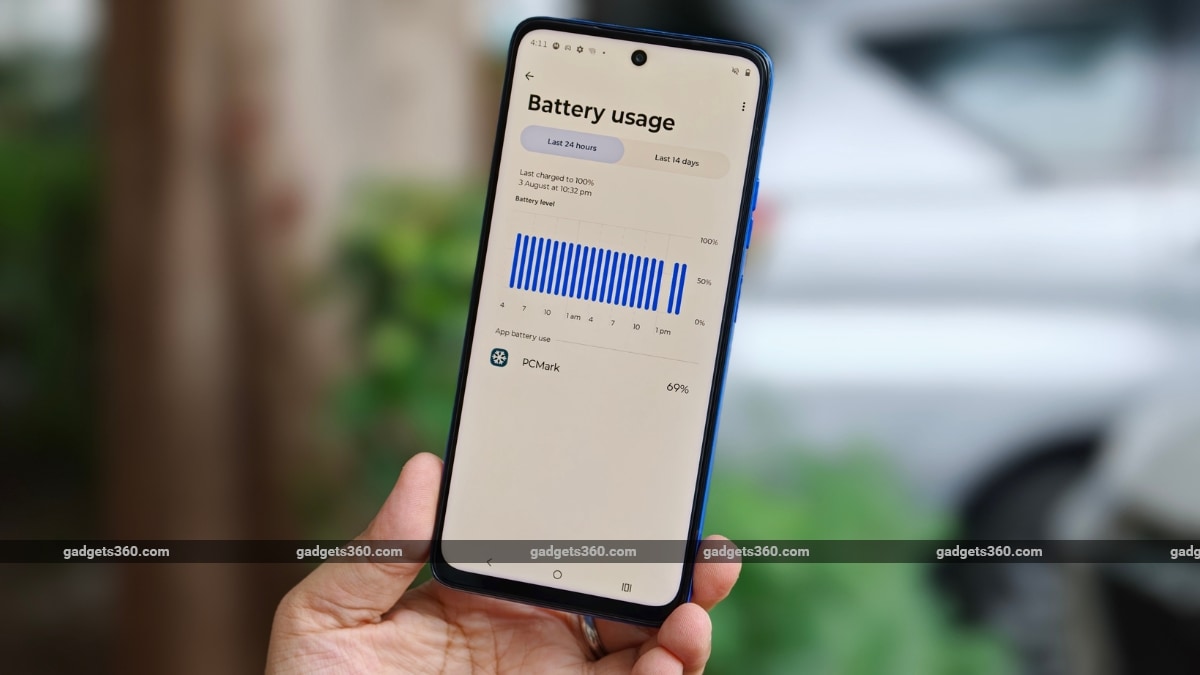
Complementing the large battery pack is a 30W TurboPower charger. It takes about one hour and 30 minutes to juice up the Moto G77 Power from 0 percent until the “fully charged” notification appears, which is decent considering its battery capacity.
Moto G77 Power Verdict
The Moto G77 Power is an interesting phone because its biggest strength isn’t likely to sway you into overlooking its shortcomings. Its USP is the battery that can last for up to two days with light usage. If battery anxiety is something you regularly deal with, the handset makes a strong case for itself.
But at a price tag of Rs. 25,999, there are several questionable compromises. The LCD screen does not offer an enjoyable viewing experience, while the Dimensity 6400 chip is just about okay for everyday use. Cameras aren’t anything special, either. Then there’s the design, which has become so repetitive that it is difficult to distinguish one Motorola phone from another.
The Moto G77 Power only makes sense for buyers who prioritise battery life above almost everything else. For a few thousand rupees more, the OnePlus Nord CE 6 will offer a more polished experience, while the company’s own Motorola Edge 70 Fusion delivers more value for your money.
