
A water purifier isn’t an appliance you upgrade regularly. In fact, most of us spend years with the same machine, only replacing it when it is finally on its last legs. I’m in the same boat. I’ve used the same water purifier for more than a decade. Even though it has seen its fair share of repairs over the years, it still goes strong. But through all these years, one sore thumb has been the maintenance cost.
Most water purifiers require an annual filter change, while some even need it twice a year. So, while the initial cost of the purifier may not have been much, the expense of replacing filters over the years can really add up. One alternative is to buy an AMC. But anyone who has stuck with the same machine for years will know the hassle of keeping up with rising AMC prices. The fine print can sometimes mean the issue you are facing isn’t covered at all.
Native, Urban Company’s D2C brand, aims to alleviate this. Its new offering, the Native M3 Pro, promises up to three years of maintenance-free usage. It also brings smart features that are more in line with what we expect from appliances today. But is it worth the premium? Here’s our review.
Native M3 Pro Specifications
- Purification: 10-stage RO + UV
- RO processing: 100 percent RO
- Storage tank: 6-litre food-grade stainless steel
- Mineralisation: DualFlow Mineraliser with calcium, magnesium and copper
- Display: Dot-matrix
- Dispensing modes: Glass, Bottle and Free Flow
- Filter life: Up to 3 years
- Water recovery: Up to 60 percent
- Purification capacity: Up to 25 litres per hour
- Input water TDS: Up to 2,000mg/l
- Smart monitoring: Urban Company app
- Power backup: Built-in battery
- Dimensions: 326 x 294 x 555mm
- Weight: 8.5kg
- Price: Rs. 25,999
Native M3 Pro Design and Build: Finally, a Purifier That Looks Like a Gadget
I never thought I would have much to say about the design of a water purifier. Yet, here we are.
At first glance, you can see that the Native M3 Pro is a tall, rectangular appliance with a predominantly black finish. The upper section has a glossy front panel with the Native branding, while the lower portion has a more matte texture. It is a big departure from the bulky, mostly white water purifiers that have been a familiar sight in Indian kitchens for years. I think it is a change for the better.
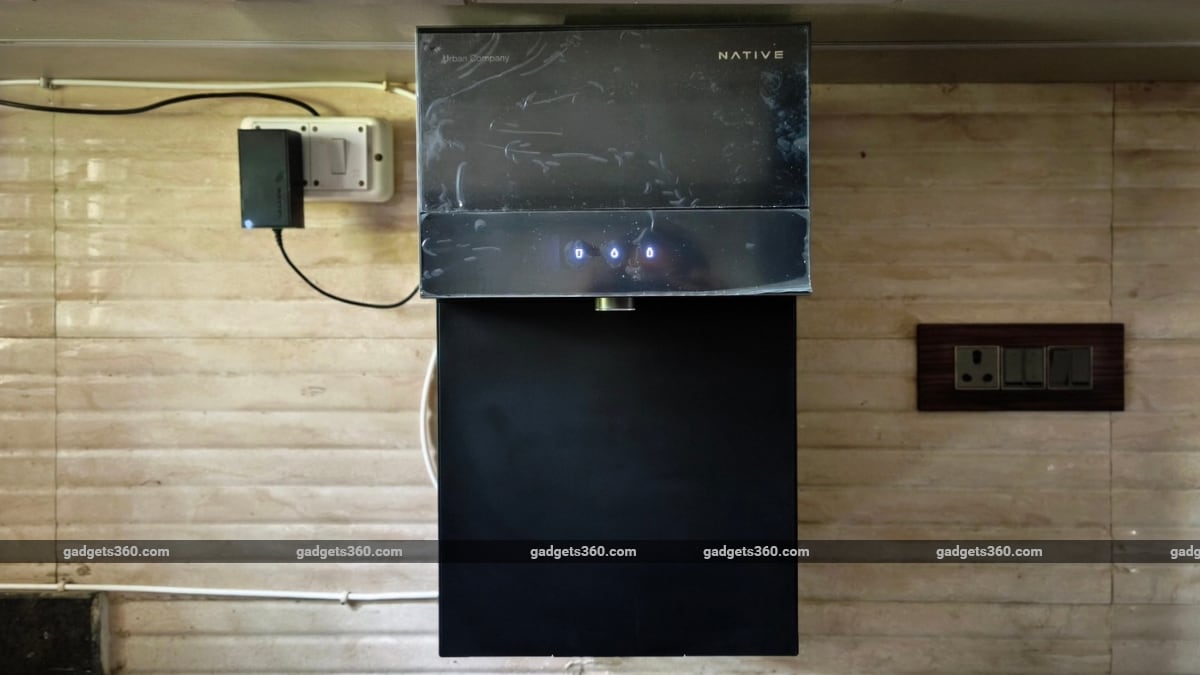
But despite its unique appearance, it remains restrained in its look. There are no unnecessary curves or loud branding. When placed on a countertop, it looks more like a premium kitchen appliance than a conventional water purifier.
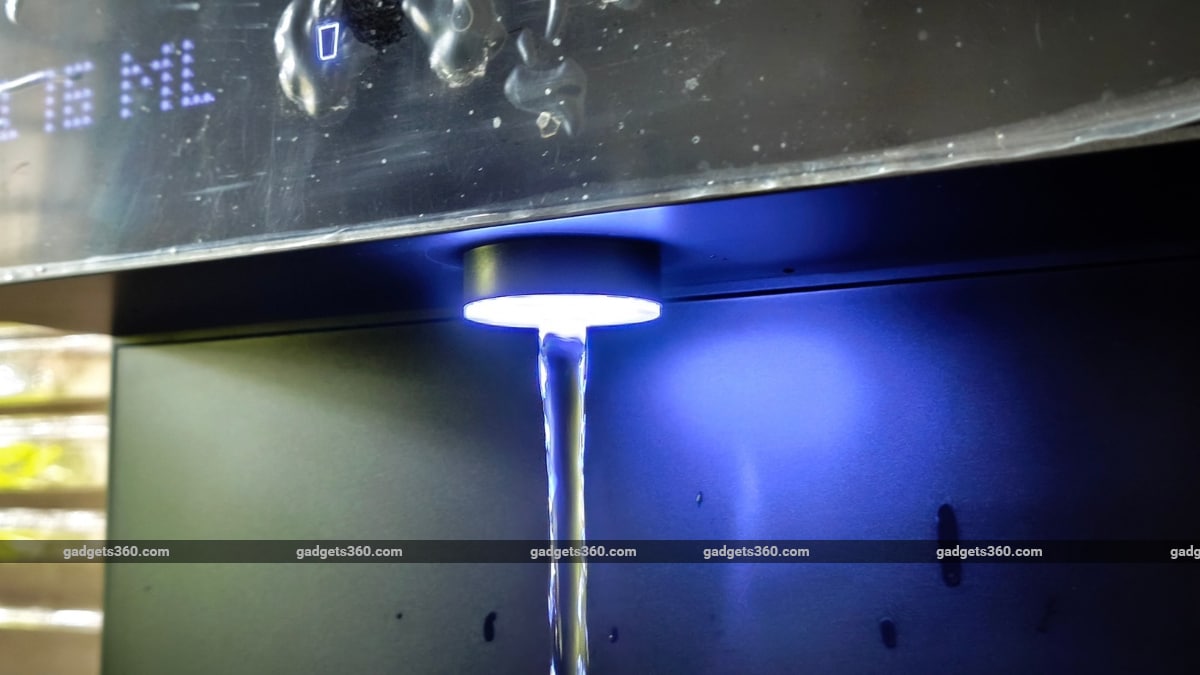
The dispensing area sits in a recessed section below the main front panel. There is enough room underneath to place a bottle or glass. Meanwhile, the water outlet sits towards the top of this cavity. A subtle but really cool addition, in my opinion, is the small light, which illuminates the area when water is being dispensed. This is handy when using the purifier at night.
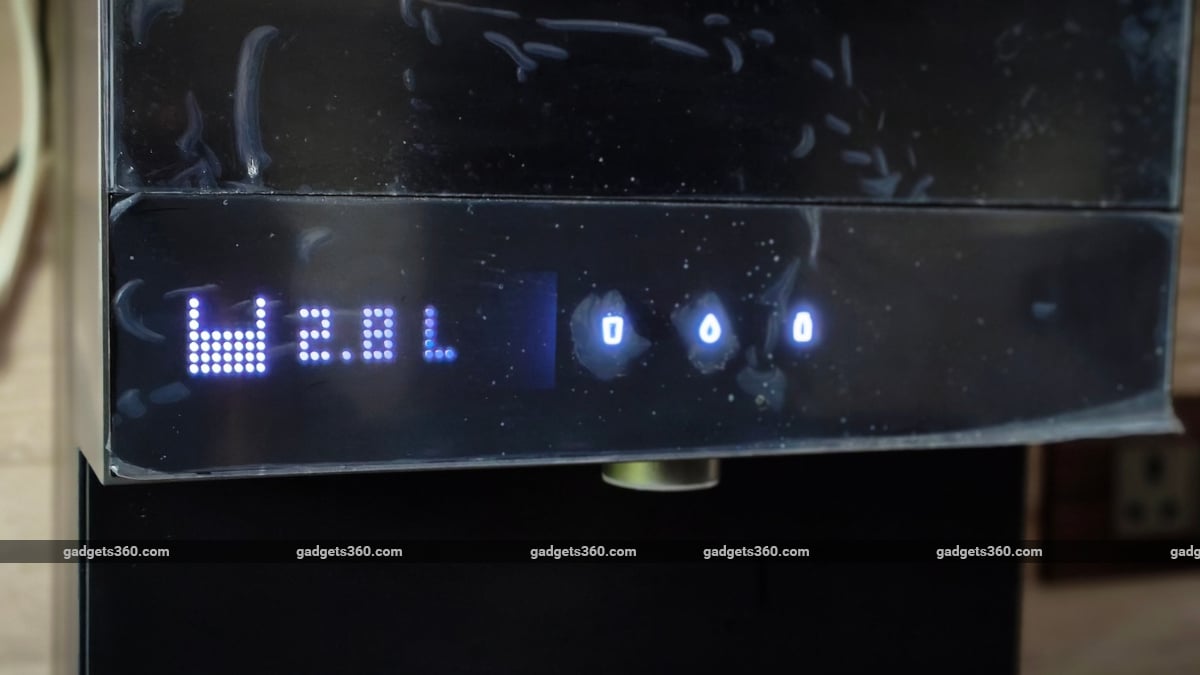
You will see three touch-sensitive controls just above the dispensing area. These light up when the purifier is in use. They handle the different dispensing options, and you can also configure the quantities through the companion app. The controls look neat and fit nicely into the minimalist design. However, I had to be a little careful while wiping the front of the purifier. The last thing you want while cleaning a dispenser is to start dispensing water accidentally.
The build quality, however, feels really solid. Very little about the M3 Pro feels flimsy or cheap. A notable part of the overall build is the stainless steel water tank, although you are unlikely ever to see it from the outside. Native says the 6-litre tank is made of food-grade stainless steel and uses UV sterilisation.
Native M3 Pro Companion App and Features: More Than Just a Water Dispenser
This is where the M3 Pro starts to feel different from the purifier I’ve used for the past decade.
The Native M3 Pro connects to the Urban Company app, which lets you monitor a mind-boggling amount of information. You can check the input and output TDS, monitor water consumption, see the amount of water in the tank, and keep an eye on filter health. The app can also show the purifier’s activity and alert you when something requires attention.
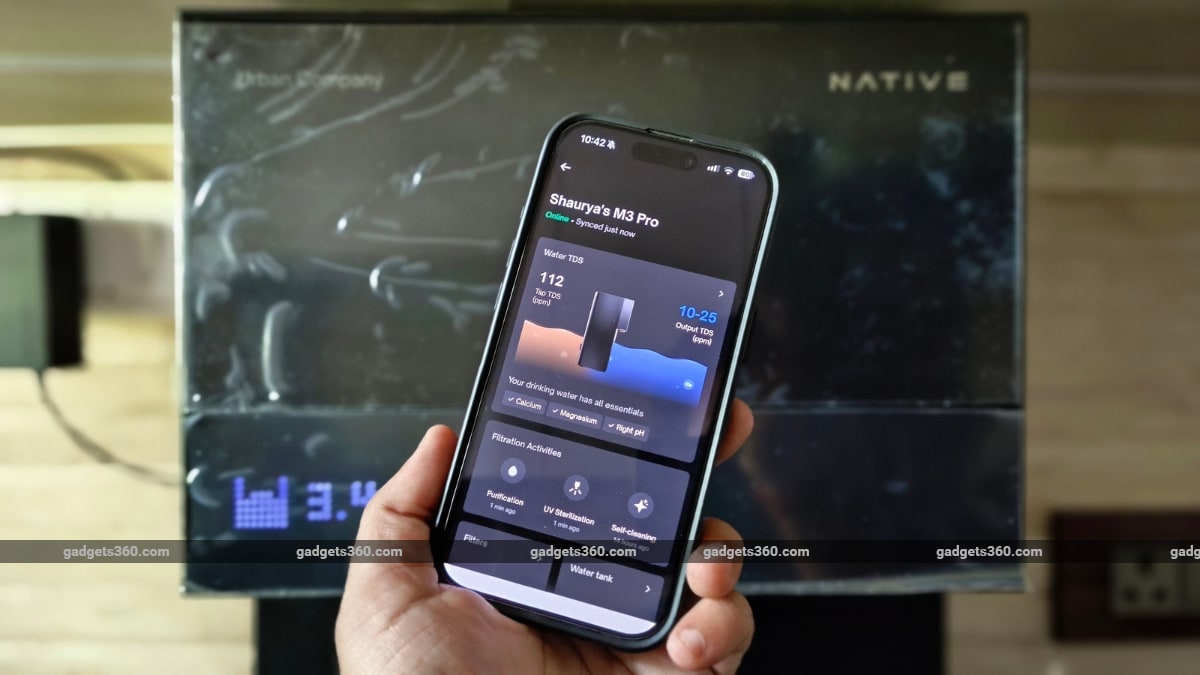
A really cool feature is the on-demand health check that can diagnose the purifier and provide information about its condition. This can be useful when you think the M3 Pro is acting up but aren’t sure whether to call a technician. With my old machine, I usually realised something needed attention because the water started tasting different or the technician told me it was time for a service. Here, at least, you can see what is happening inside the machine.
The app also lets you customise the quantity dispensed in the Glass and Bottle modes. Once you have set the quantity for your regular bottle, you can tap the option and let the purifier do its thing.
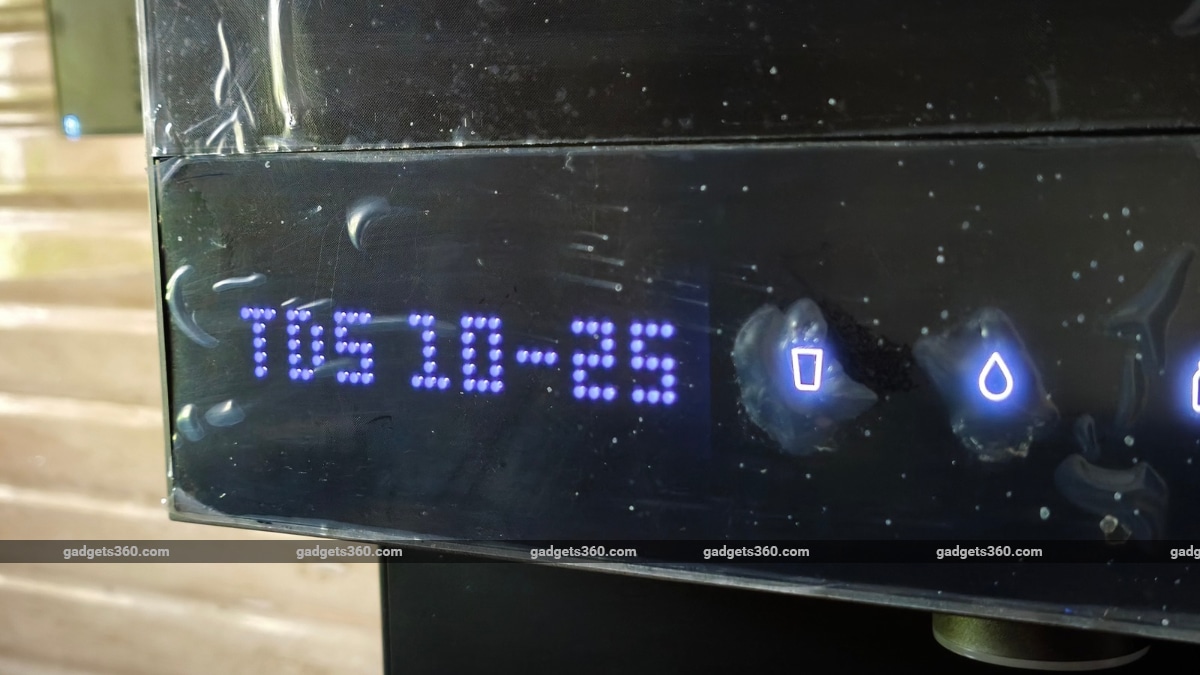
The dot-matrix display is probably the most obvious attempt to make the M3 Pro feel like a modern gadget. It keeps in line with screens that have begun showing up on every device imaginable (Samsung’s Family Hub refrigerator being an example). It can show the dispensing quantity, pre- and post-processing TDS, and weather information.
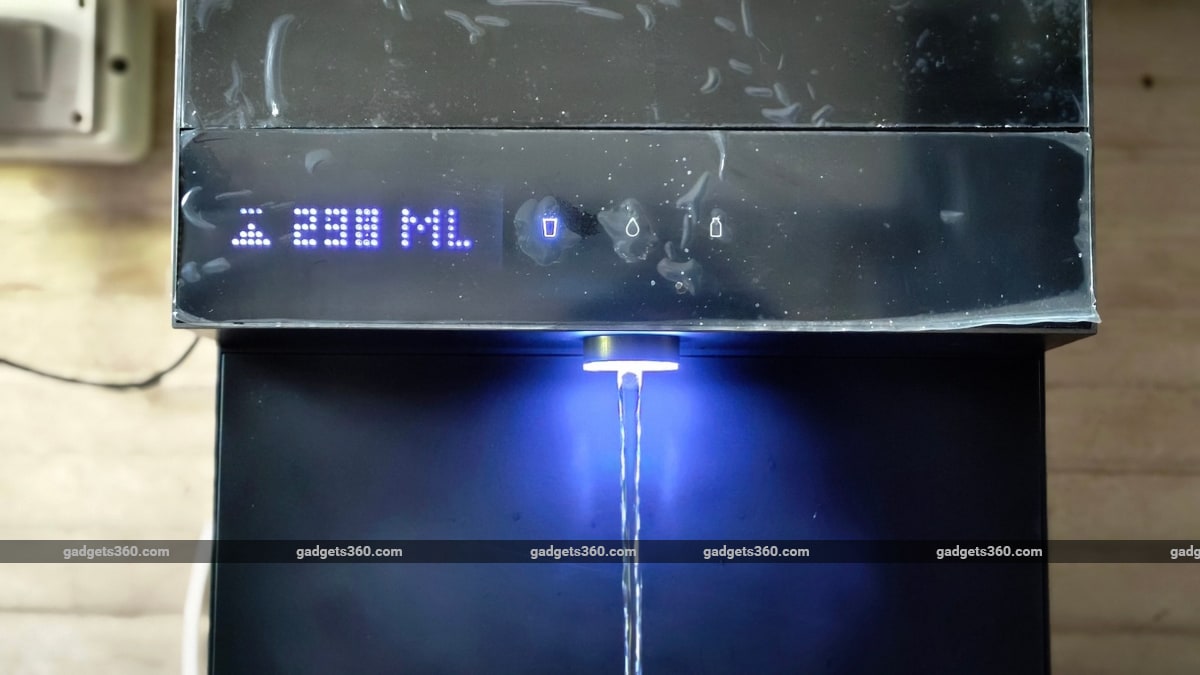
I like the way it looks, especially with the dot matrix font. However, Native seems to have missed a big opportunity to take advantage of it. It would have been nice to have the ability to display a custom message, since the display is clearly capable of it.
Then there is the part that you don’t see from the outside: the tank. The M3 Pro has a 6-litre food-grade stainless-steel tank, with UV sterilisation. Stainless steel isn’t necessarily a flashy feature, but I like having it here. It gives the purifier a slightly more upmarket appeal compared to the plastic tanks commonly found on conventional models.
The M3 Pro uses a 10-stage RO+UV purification system and, importantly, says that 100 percent of the water passes through the RO membrane. Instead of mixing untreated water back into the purified output to increase the TDS, the purifier uses its DualFlow Mineraliser to add minerals such as calcium, magnesium, and copper back into the water after purification. It also adds alkaline properties and balances the pH.
Native also uses larger filters, Smart Rinse Technology, and RO Life Booster technology as part of its effort to extend filter life.
Finally, there is a built-in battery. The battery does not allow the purifier to continue purifying water when the power is out. However, you can still dispense the water already stored in the tank for up to an hour. It is a simple idea, but a very useful one.
Native M3 Pro Performance: Excellent TDS Reduction, Better-Tasting Water
This was the part I was most curious about. My tap water has a TDS level of around 160, which is considerably lower than what many people in other parts of the NCR deal with. In some areas, TDS can climb into the thousands. So, my M3 Pro isn’t exactly dealing with the toughest possible water supply. Even so, the purifier managed to bring my input TDS down to between 24 and 30 PPM. That is a massive reduction, and it is probably the clearest indication I have of how well the purifier is actually doing its job.
Put the numbers aside, and the bigger difference for me was the taste.
I switched from a fairly basic Aquaguard that uses UV filtration rather than RO, so the first few glasses from the Native M3 Pro tasted very different. If you have been using an RO purifier already, you will probably recognise the taste immediately. For me, however, the transition was obvious after more than a decade of drinking water from a UV purifier.
The good thing is that the M3 Pro doesn’t have the strong RO bitterness that I have noticed with some purifiers. In fact, I compared it with water from a Kent RO purifier in my locality, and I preferred the Native M3 Pro. The Kent had a more pronounced RO taste, perhaps even bitter. On the other hand, Native water tasted cleaner, more neutral. It is obviously subjective, but taste is one area where I think the M3 Pro has done particularly well.
This could partly be the mineralisation system. After the RO process strips minerals from the water, the DualFlow Mineraliser adds calcium, magnesium, and copper back in. Native says the system is also designed to maintain the mineral-enriched output over the long term.
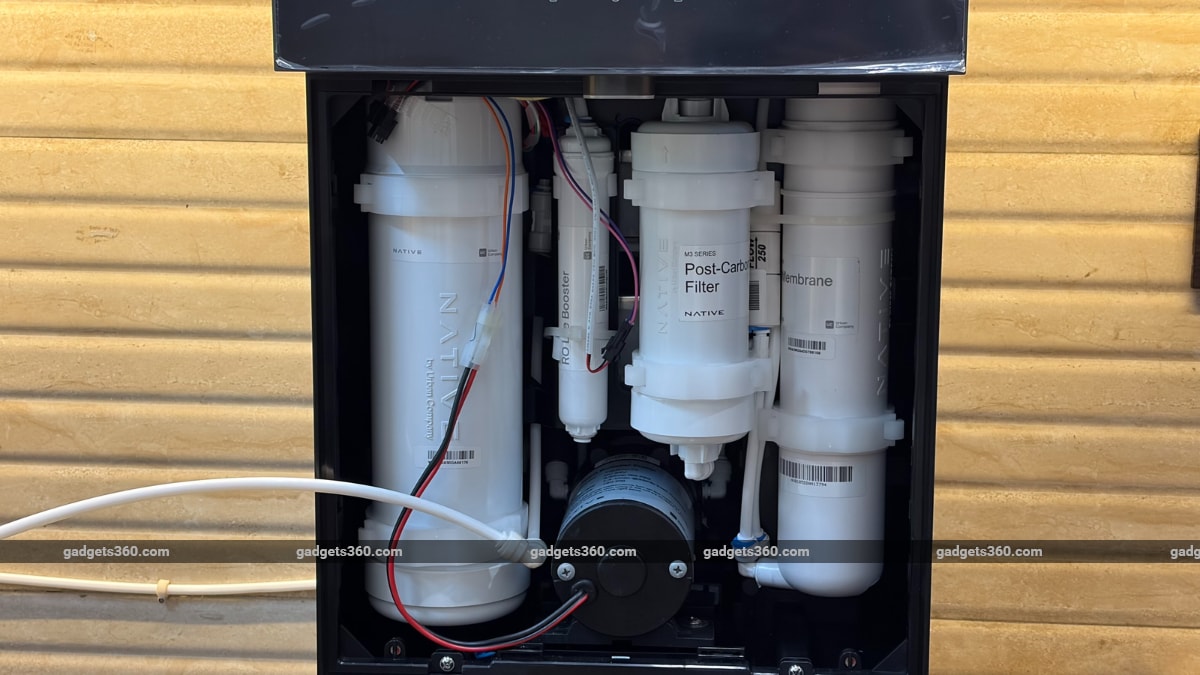
The purifier is designed for much tougher water conditions than what I have at home. Native says it can handle input water with TDS levels of up to 2,000 PPM, while the filter capacity is rated at up to 18,000 litres.
One area for improvement is water flow. The Native M3 Pro takes about eight to nine seconds to fill a standard glass. While this may not sound like much, filling a one-litre water bottle takes more than 30 seconds. This won’t be a hassle when you’re just filling up once a day. But in summer, refilling bottles back-to-back can get cumbersome.
The biggest question surrounding this purifier is the three-year maintenance-free claim. Native says the filters can last up to three years without routine replacement or servicing. The M3 Pro also comes with a three-year unconditional warranty covering the filters, membrane, and electrical components.
I have been using the Native M3 Pro for around a month now, and the companion app currently shows the filter life at 99 percent. I know that’s nowhere near enough to validate the three-year claim. But it is encouraging to see that a month of regular use has barely made a dent in the estimated filter life.
That said, I would still put a small asterisk next to Native’s three-year promise. I haven’t owned the purifier for three years, and neither has anyone else who has reviewed it today. Time will have to prove that part of the M3 Pro’s story.
What I can say is that I haven’t had to deal with any maintenance intervention during my month with the purifier. For someone coming from a purifier that needs regular filter changes, that is already a very compelling proposition. If the filter-life estimate holds up over the long term, this could be the M3 Pro’s biggest advantage, rather than all the smart features around it.
Native M3 Pro Verdict
This is an unusual review for me because I have never reviewed a water purifier before. Usually, when I finish testing a device, I have a fairly straightforward list of things to judge. The priorities, however, are different with a water purifier. You want it to do its job quietly. You want the water to taste good. And you don’t want to think about it again until it is time to pour yourself another glass. The Native M3 Pro comes close.
I like the design, the stainless-steel tank, and the fact that the machine doesn’t look like a relic from another era. The app is useful for monitoring the purifier, even though I think the dot-matrix display could do with more customisation. The preset dispensing modes are handy, and the built-in battery is one of those features that you might not think you need until the power goes out.
The biggest attraction, however, is the three-year maintenance-free promise. At Rs. 25,999, the Native M3 Pro isn’t cheap. You can certainly find conventional RO purifiers for less. But with a product like this, the upfront price is only part of the equation. If you keep a purifier for years, the cost of filters, servicing, and AMCs can quietly eat into the money you saved by buying a cheaper machine in the first place.
That is the problem Native is trying to solve. If it can actually keep you away from filter changes and service calls for three years, the M3 Pro might be the rare appliance you pay more for once and then forget about.
Pros:
- Excellent TDS reduction
- Water tastes clean and neutral
- Three-year maintenance-free promise
- Useful companion app and health monitoring
- Built-in battery for dispensing during power cuts
Cons:
- Relatively slow water dispensing
- Dot-matrix display has limited customisation