
3 min readNew DelhiJul 15, 2026 07:00 PM IST
Former video jockey and content creator Shenaz Treasury recently shared that she almost always gets food poisoning during the monsoon. Taking to her Instagram Stories, Shenaz, 45, wrote, “I have bad food poisoning. Every single monsoon, I end up with food poisoning. What’s in your food and water?”
In another story, she wrote, “Something I ate. And now, I am flat out. But this happens every monsoon. Why?”

DISCLAIMER: This article is based on information from the public domain and/or the experts we spoke to. Always consult your health practitioner before starting any routine.
To understand why food poisoning may be more common during the monsoon, we reached out to Dr Saiprasad Girish Lad, consultant gastroenterologist at Wockhardt Hospitals, Mumbai Central, who affirmed and said: “High humidity, changing temperatures, and frequent water contamination create perfect conditions for bacteria, viruses, and parasites to grow. Food spoils faster during this season, especially if it isn’t stored, cooked, or reheated correctly. Contaminated water used for drinking, washing vegetables, or preparing food can increase the risk of stomach infections.”
Dr Shankar Zanwar, senior consultant gastroenterologist at Gleneagles Hospital, Mumbai, added that during the rains, humidity and heat create the perfect breeding ground for bacteria such as E. coli and Salmonella, as well as viruses. “At the same time, water gets contaminated easily. Roads flood, pipelines leak, and drinking water can mix with sewage,” said Dr Zanwar.
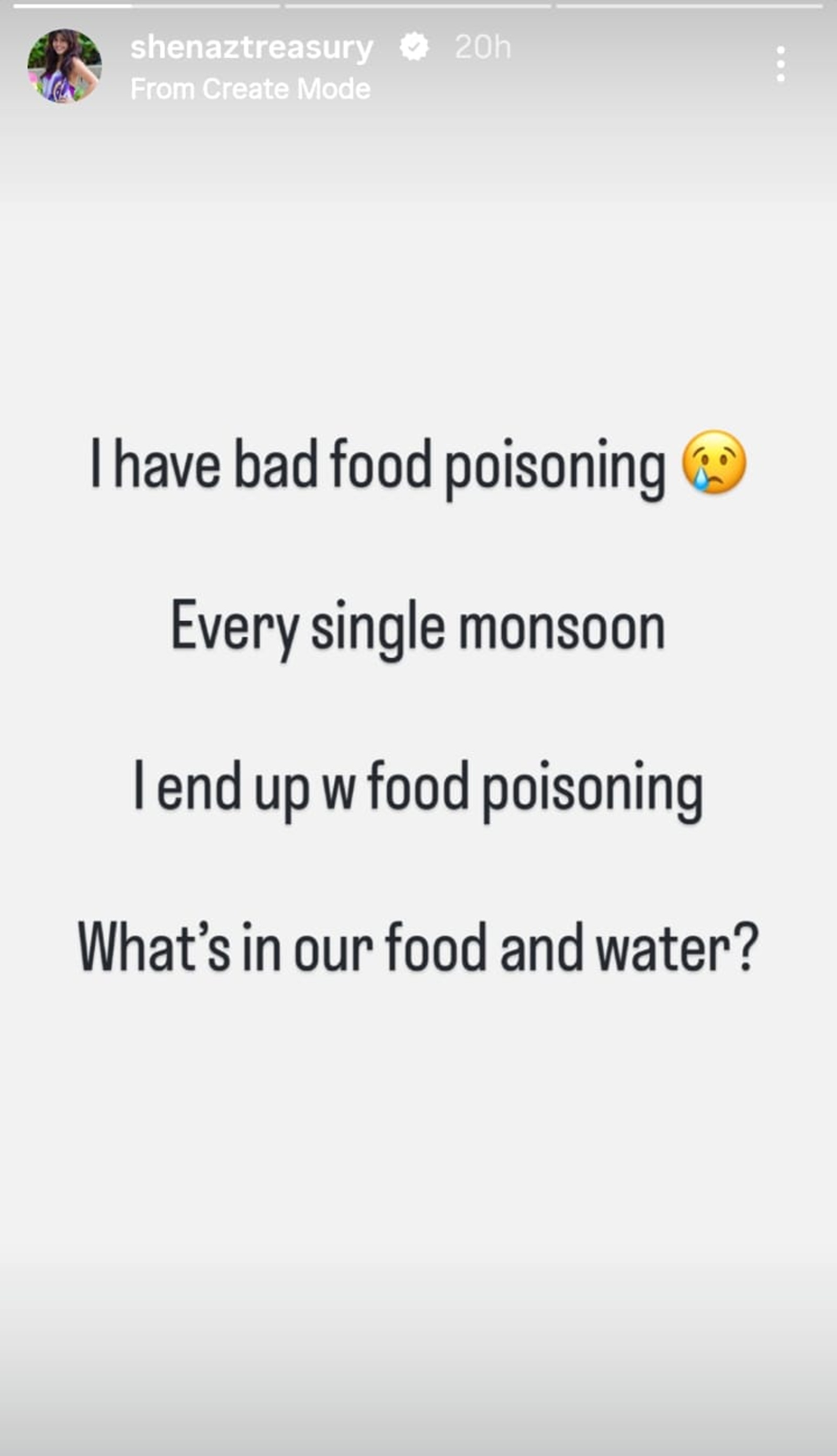 Shenaz Treasury asks why monsoon brings food poisoning (Photo: Shenaz Treasury/Instagram Stories)
According to Dr Lad, people who often eat street food, consume raw salads, cut fruits, or undercooked meat and seafood are especially at risk during the rains. “Typical symptoms include nausea, vomiting, diarrhea, abdominal cramps, fever, and dehydration. Symptoms can appear within hours or a couple of days after consuming contaminated food or water,” said Dr Lad.
 Shenaz Treasury on being bedridden owing to food poisoning (Photo: Shenaz Treasury/Instagram Stories)
The best way to reduce the risk is to eat freshly prepared, well-cooked meals, drink safe or boiled water, maintain good hand hygiene, and avoid food that has been left out at room temperature for long periods. “Most cases are mild and can be managed with hydration and rest. However, persistent vomiting, severe diarrhea, blood in stools, high fever, or signs of dehydration need prompt medical attention, especially for children, older adults, and people with weakened immune systems,” said Dr Lad.
Story continues below this ad
Monsoon cravings are great, but food safety has to come first, urged Dr Zanwar.
DISCLAIMER: This article is based on information from the public domain and/or the experts we spoke to. Always consult your health practitioner before starting any routine.
