
3 min readNew DelhiApr 10, 2026 05:56 PM IST
Rashmika Mandanna rang in her 30th birthday surrounded by friends and family in her hometown, Coorg, resplendent in a blush pink Kodava sari that looked stunningly beautiful and felt deeply rooted. “My 30th birthday was kinda different this time,” she captioned her Instagram post, sharing snippets of visiting the temple, her childhood school and meeting her friends and family who could not make it to her wedding to co-actor Vijay Deverakonda in February.
Rashmika Mandanna styled the ensemble with gold jewellery, layered neckpieces, matching earrings and bangles, a tiny black bindi and hair pulled back in a bun with a floral wreath wrapped around it. But her sari was not draped like a regular sari. The Coorgi drape has a history steeped in martial traditions.

The Kodavas, primarily a warrior clan to which the Animal actor belongs, fashioned the traditional sari into a functional, practical drape that allowed for easy movement without compromising style. From coffee plantations to the kitchen, the inverted pleats and a pallu that is pulled from the back to the front offer mobility to be at ease at work or during festivals and celebrations.
Costume designer Shilpa GNS explained that Mandanna’s choice to embrace her culture felt like a styled moment, more like a return to heritage, memory, and to Coorg herself. Talking about the ensemble’s cultural significance, the designer elaborated on the silent power of the Kodava sari.
“It is not simply worn — it is inherited. It carries within it the stillness of Coorg’s forests, the rhythm of its hills, and the dignity of a people shaped by land, clan, and courage. In its drape rests a history both intimate and enduring of women who moved through home, ritual, and ceremony with a grace that never needed excess, only assurance,” Shilpa told indianexpress.com.
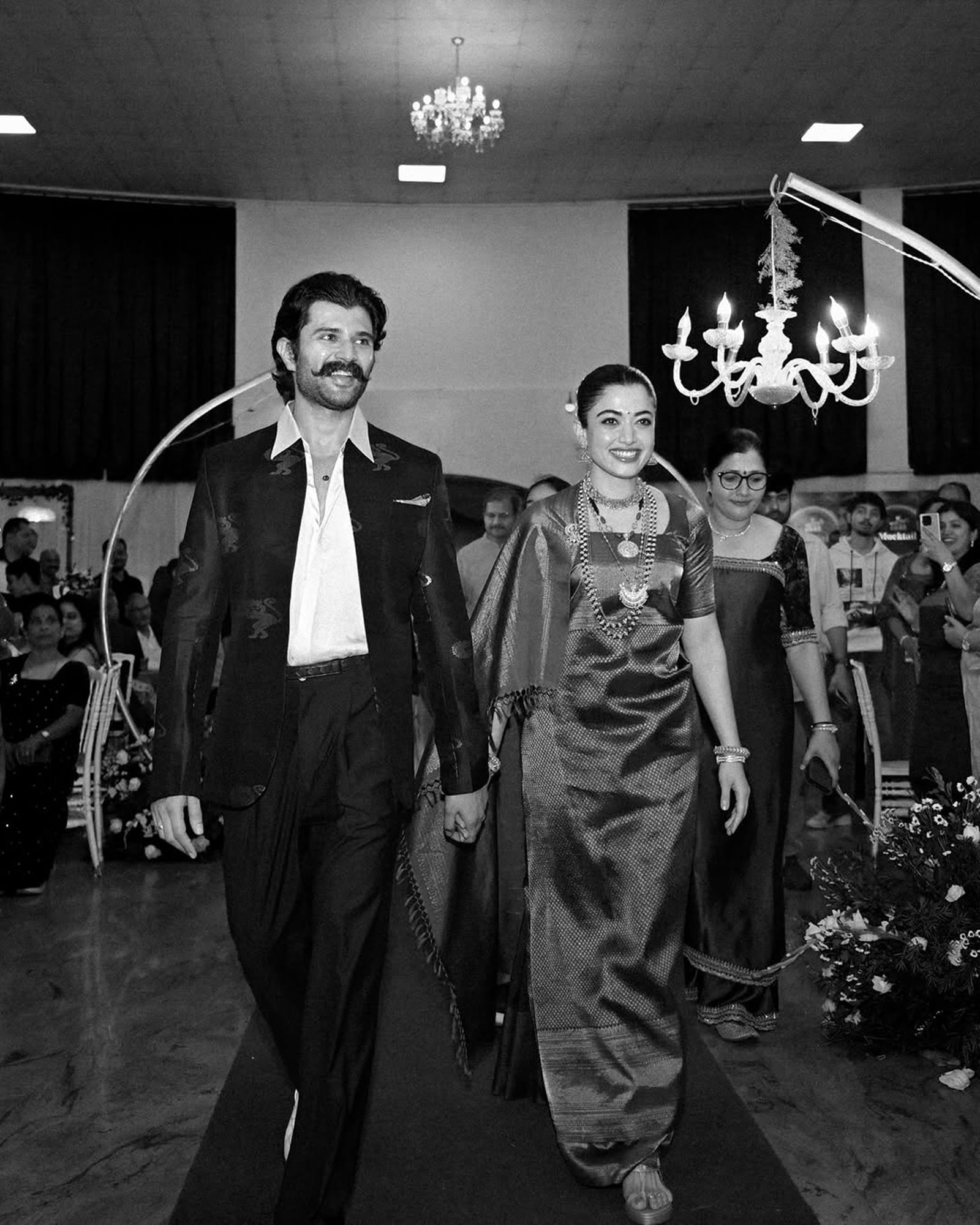 Rashmika in a Kodava drape. (Source: Instagram/@rashmika_mandanna)
What makes it special?
“Its distinctive style, with pleats gathered at the back and the pallu drawn in its own singular way, is believed to have emerged from the life of Kodava women themselves from the hills they walked, the homes they held, and the customs they carried,” said Shilpa, adding, “What once began in practicality, became elegance; what served movement became identity.” The traditional Kodava ensemble is incomplete without a fitted blouse, and in ceremonial dressing, a head gear or vastra is added.
And that is what made Mandanna’s look so resonant. In the Kodava style, she seemed framed not merely by fabric, but by lineage. According to Shilpa, the drape did not feel like attire alone; it felt like belonging made visible, poised, restrained, and deeply rooted.
