
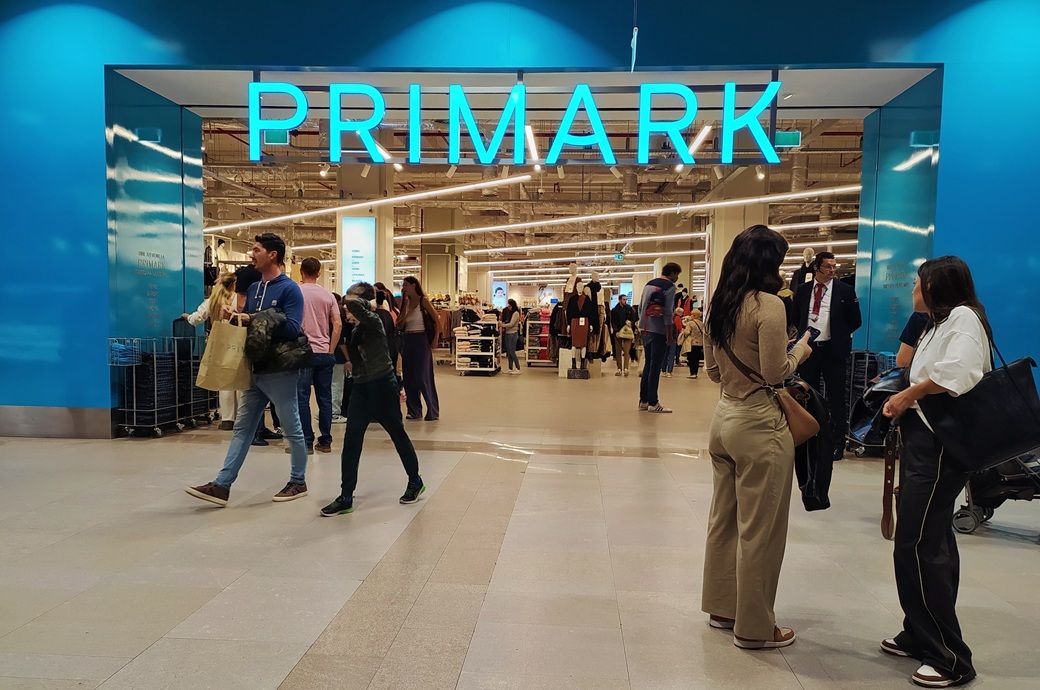
Primark’s sales rose 2 per cent for the 24 weeks ended February 28, 2026, supported by store expansion and stronger UK performance, where like-for-like sales increased 1.3 per cent alongside market share gains. However, European trading remained weak, with like-for-like sales down 5.6 per cent amid subdued consumer confidence. The retailer continued to invest in product, marketing, and digital capabilities, reporting an adjusted operating margin of 10.1 per cent.
Primark led AB Foods’ H1 FY26 performance with 2 per cent sales growth, driven by the UK, though Europe remained weak.
The group’s revenue was steady at £9,470 million (~$12,784.5 million), while adjusted operating profit fell 17 per cent amid cost pressures and investments.
Cash flow improved but debt rose.
The company expects stronger second-half performance.
George Weston, chief executive of the Group said that Primark continued to make strong progress in re-energising its customer proposition in a challenging clothing market. The company’s actions in the UK since the autumn drove like-for-like sales growth and market share gains.
“While trading in Europe remained weak, initiatives and investments to improve performance are underway. Primark also continued to invest in stores and digital capabilities across its markets to support medium- and long-term growth,” added Weston.
Meanwhile, AB Foods total revenue stood at £9,470 million (~$12,784.5 million) compared with £9,509 million a year earlier, broadly in line in actual terms but down 2 per cent on a constant currency basis. Adjusted operating profit declined 17 per cent to £691 million, while adjusted profit before tax fell 19 per cent to £663 million, AB Foods said in a press release.
“We knew the first half of this financial year was going to be challenging and that’s borne out in our financial results. However, we still expect improved group performance in the second half,” said Weston.
Statutory operating profit decreased 7 per cent to £657 million, and profit before taxation fell 9 per cent to £632 million. Basic earnings per share (EPS) declined 12 per cent to 62.7 pence (p).
Gross investment totalled £534 million, down 4 per cent year on year. Free cash flow improved to £71 million from £27 million, reflecting seasonal working capital movements. Net cash before lease liabilities stood at £3 million, compared with £201 million a year earlier, while total net debt increased to £3,027 million.
“We are managing the impacts of the Middle East conflict. Given what we know today, we expect the cost consequences in 2026 to be manageable. However, there is a risk to Primark sales if the conflict persists and consumer spending deteriorates. Our strong balance sheet underpins the Group’s resilience,” he said.
Looking ahead, AB Foods expects full-year adjusted operating profit and earnings per share to remain below last year, with performance weighted towards the second half. Continued store expansion and strategic investments are expected to support longer-term growth despite ongoing macroeconomic uncertainties.
Fibre2Fashion News Desk (SG)
