
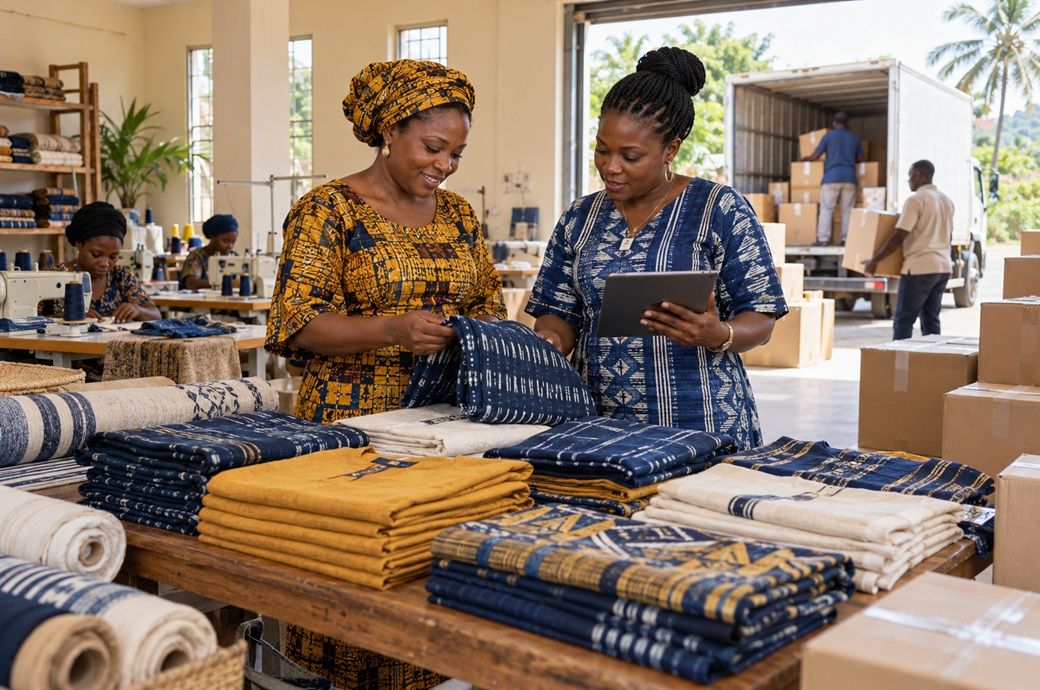
The project places particular emphasis on strengthening productive capacities, helping SMEs access finance and digital technologies, and supporting women-led SMEs. The wider Mano River Union (MRU) region comprises Côte d’Ivoire, Guinea, Liberia and Sierra Leone.
The MRU region faces structural constraints including limited economic diversification, low levels of industrialisation, significant gender inequalities and vulnerability to external economic shocks. Intra-regional trade remains limited, largely informal and concentrated in low value-added products, limiting opportunities for productive transformation and job creation, UNCTAD said in a press release.
UNCTAD has set out a project for Guinea, Liberia and Sierra Leone to diversify exports, build regional value and supply chains, and expand SME participation in AfCFTA markets.
Diagnostics, policy dialogues and digital tools will identify priority industries and export opportunities, improve SME access to finance and technology, and target women-led SMEs and gender parity.
At the same time, the region has considerable potential through abundant natural resources, strong agricultural prospects and a growing young population. Effective AfCFTA implementation could help the countries build on these strengths by diversifying exports, strengthening regional value chains and increasing SME participation in regional markets.
The project will conduct national diagnostic studies and sector-specific assessments to identify export diversification opportunities, priority industries and constraints to SME participation in regional value chains. National consultations, regional policy dialogues and capacity-building workshops will aim to strengthen public and private stakeholders’ ability to assess trade and industrial development opportunities, improve policy coordination and support the implementation of AfCFTA commitments.
Other activities include peer learning on SME financing, digitalisation and regional value chains, as well as the development and enhancement of digital tools for trade data collection, market intelligence and identifying export opportunities. The work will be complemented by assessments of digital and financing solutions and targeted capacity-building for policymakers and SMEs.
Expected outcomes include stronger institutional and policy capacities for export diversification and inclusive industrial development; better SME access to digital technologies, market information and finance; stronger regional partnerships for value-added cross-border trade and regional industrial clusters; deeper regional economic integration; increased capacity among women-led SMEs and underserved economic actors; and more diversified, competitive and resilient economies in the MRU region.
On gender equality and women’s economic empowerment, the project will address barriers faced by women in informal trade and small-scale business, particularly in accessing finance, digital technologies and regional market opportunities. It aims to strengthen women’s participation in regional trade and ensure they benefit from export diversification and more inclusive financing opportunities. The project is classified as GEN II under the African Development Bank (AfDB) Gender Marker System.
Gender will be mainstreamed across the project through national consultations that identify gender gaps and opportunities in regional value chains and export diversification, with both women and men consulted and their experiences reflected in studies, assessments and validation workshops. A country gap assessment will examine how small-scale traders, women-owned and women-led businesses and young entrepreneurs use digital technologies along potential supply chains, while a cross-border trade mobile application will include options to collect and analyse sex-disaggregated data.
AfCFTA workshops will include an agenda on the operationalisation of the Women and Youth Protocol. Links with the AfDB’s Affirmative Finance Action for Women in Africa initiative and opportunities to access climate finance will be explored for women-led SMEs. Two regional reports will assess how leveraging the MRU’s export potential can promote gender equality and environmental sustainability, and women’s associations will participate in the regional stakeholder workshop.
The project will aim for gender parity across its activities, with a target of 50 per cent women and 50 per cent men. Sex-disaggregated data will be collected throughout implementation to monitor participation and results.
UNCTAD said the project supports the MRU’s regional integration and economic development priorities, the African Union’s Agenda 2063 and AfCFTA implementation. It also contributes directly to Sustainable Development Goals (SDGs) covering no poverty; gender equality; decent work and economic growth; industry, innovation and infrastructure; reduced inequalities; responsible consumption and production; climate action; peace, justice and strong institutions; and partnerships for the goals.
Fibre2Fashion News Desk (SG)